
Marble and jewellery in OBRAS Portugal
In September 2025, jewelry artists Ginta Grube and Rasma Puspure spent three weeks in Portugal’s Alentejo region, in a beautifully restored farmhouse that was fully equipped to accommodate seven to eight artists. Foundation OBRAS runs an Art Residencies program there. “General aim of foundation OBRAS is to provide space, support and hospitality necessary for effective working on art and science,” owners Ludger van der Eerden and Carolien van der Laan explain. The purpose of the stay was to work on new jewellery – Rasma was interested in working with local materials, namely marble. Ginta experimented with various local materials, including marble and cork.
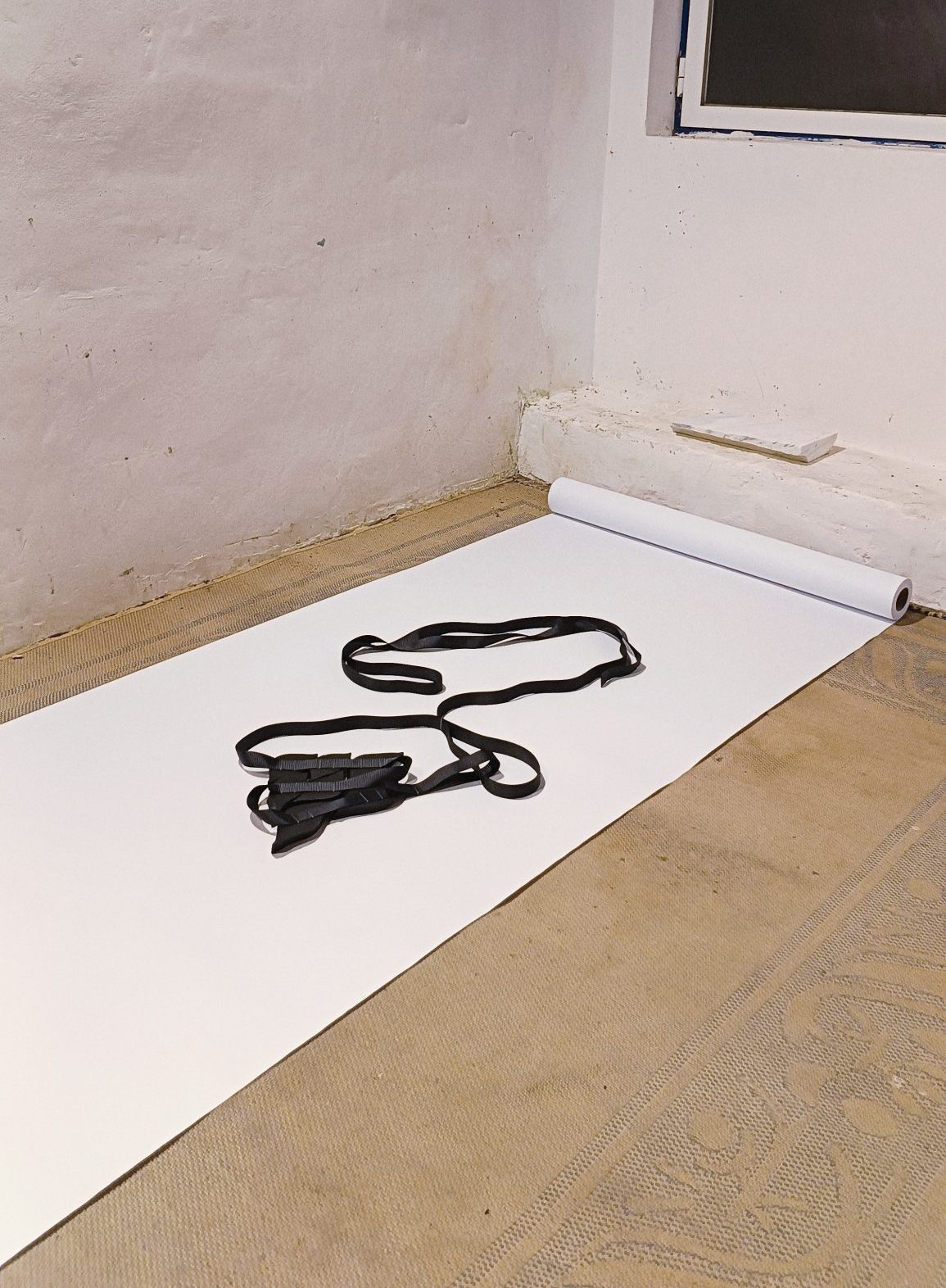
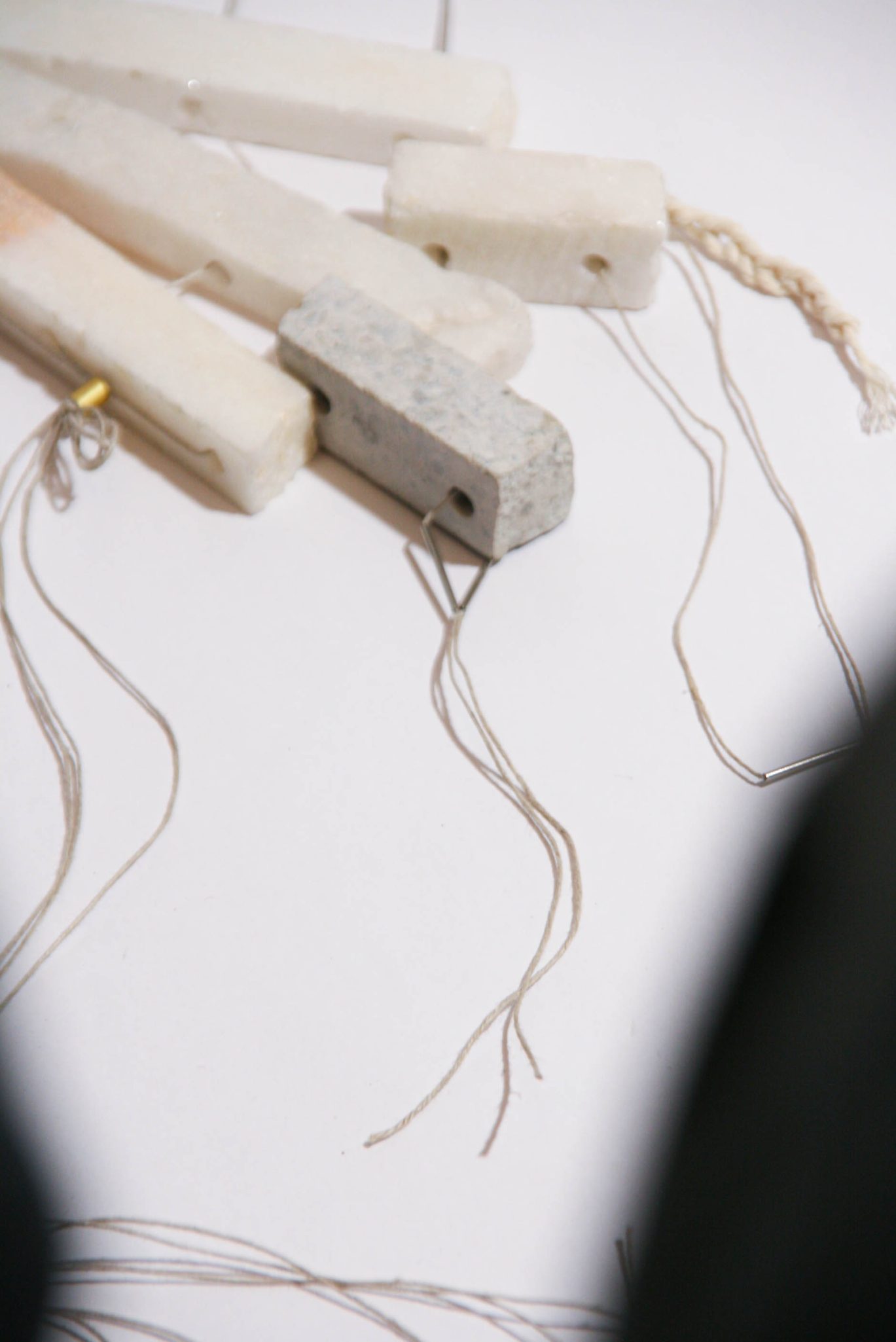
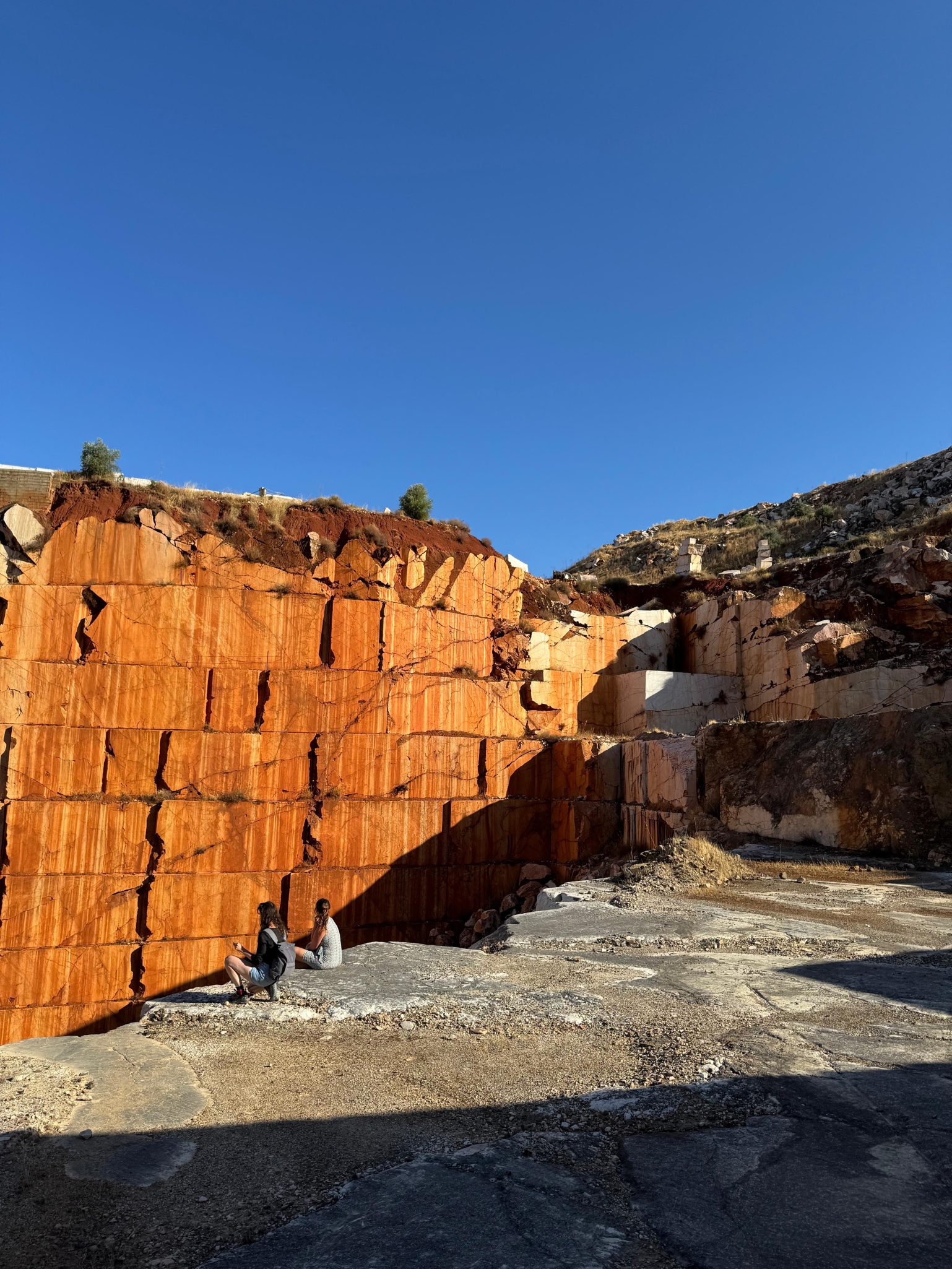
The time spent in Portugal did not disappoint. The location and local excursions to material extraction sites were very inspiring. Rasma began work on several marble jewelry pieces and objects, which she will continue in her workshop in Riga. Ginta used both found materials and experimented with drilling holes in marble and shaping cork to develop a new collection of works, which she named after the residency, “OBRAS”. Translated from Portuguese, this means “work in progress.”
The residency hosts – Ludger van der Eerden and Carolien van der Laan – described their work in the following words:
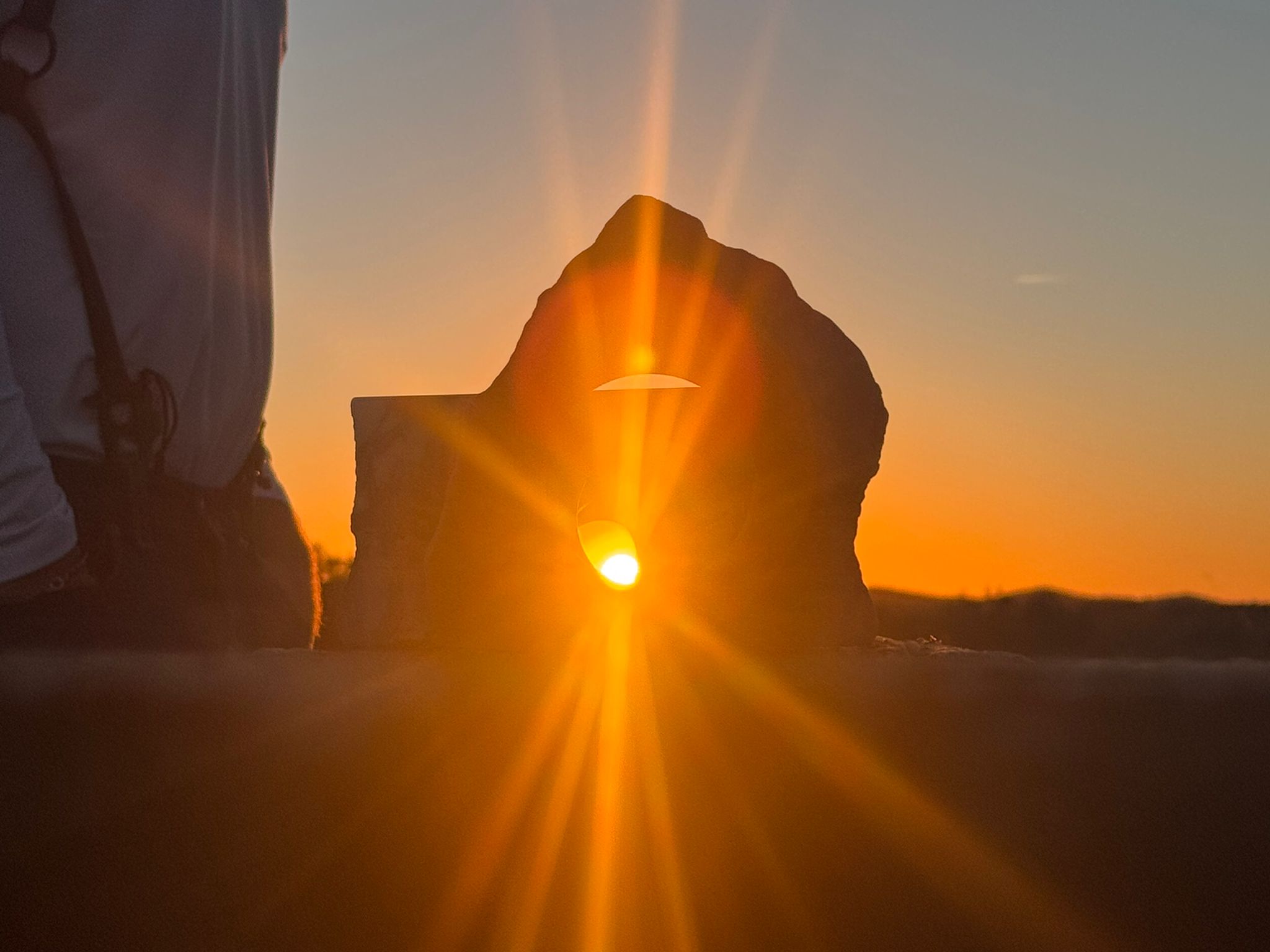
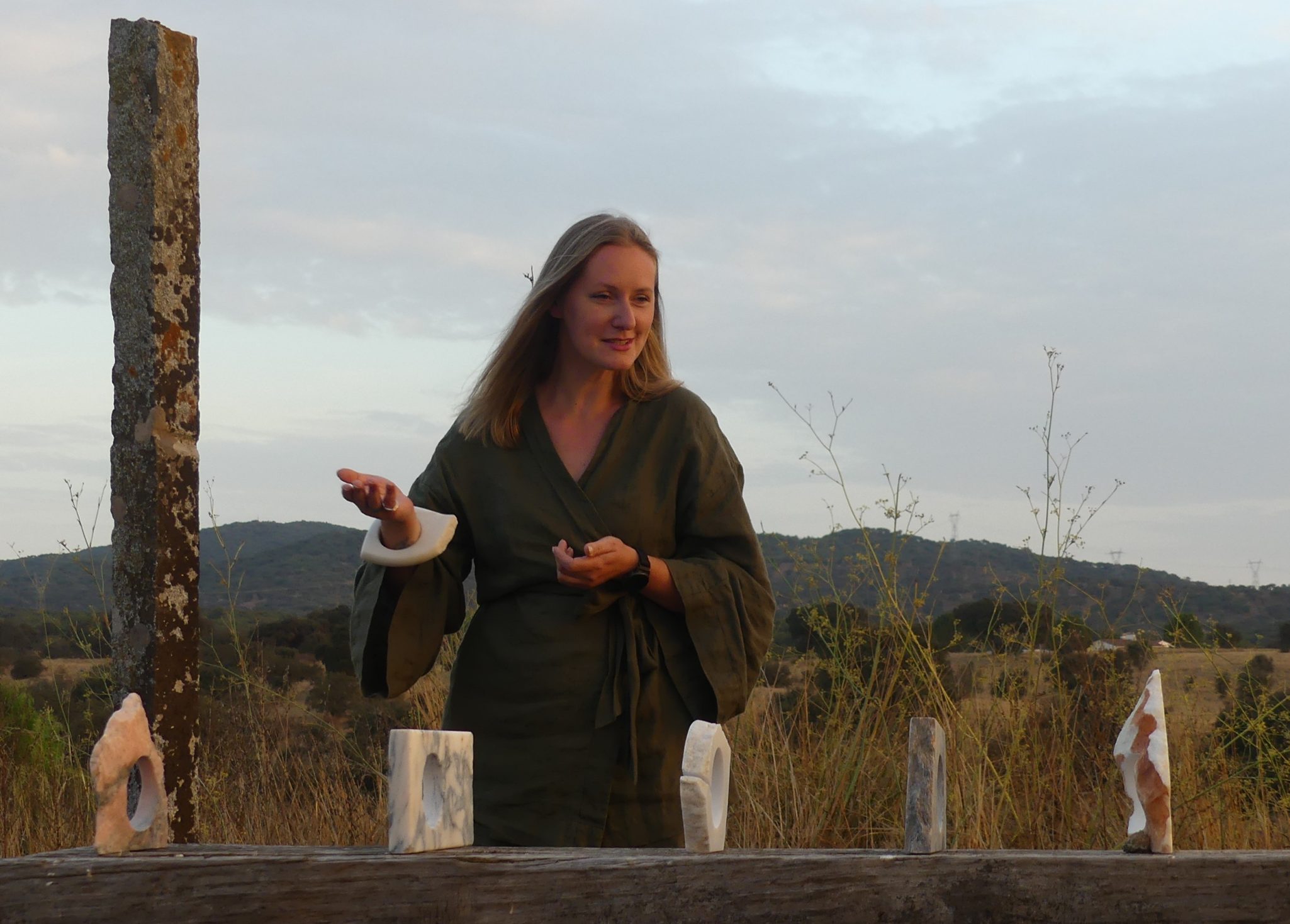
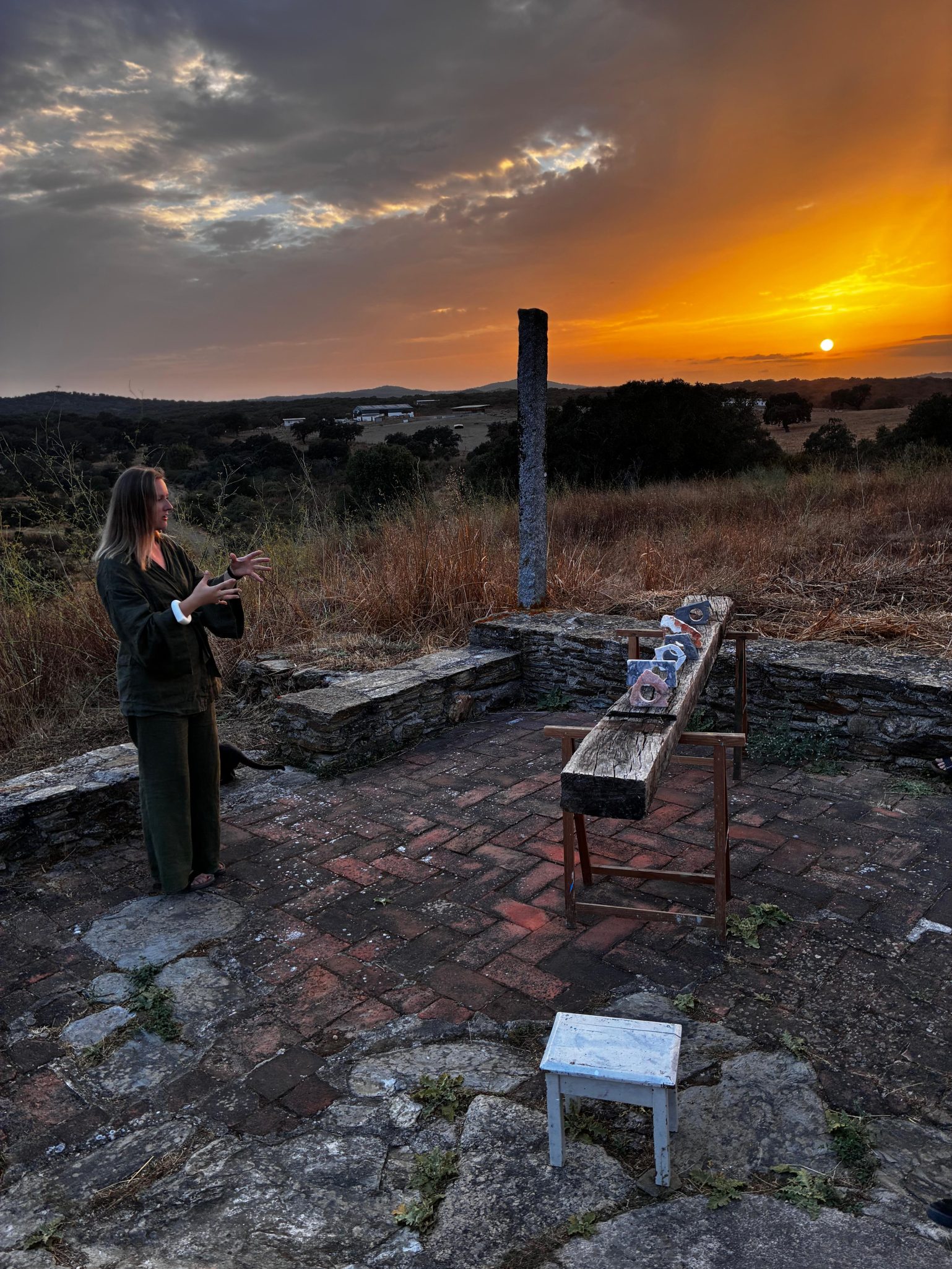
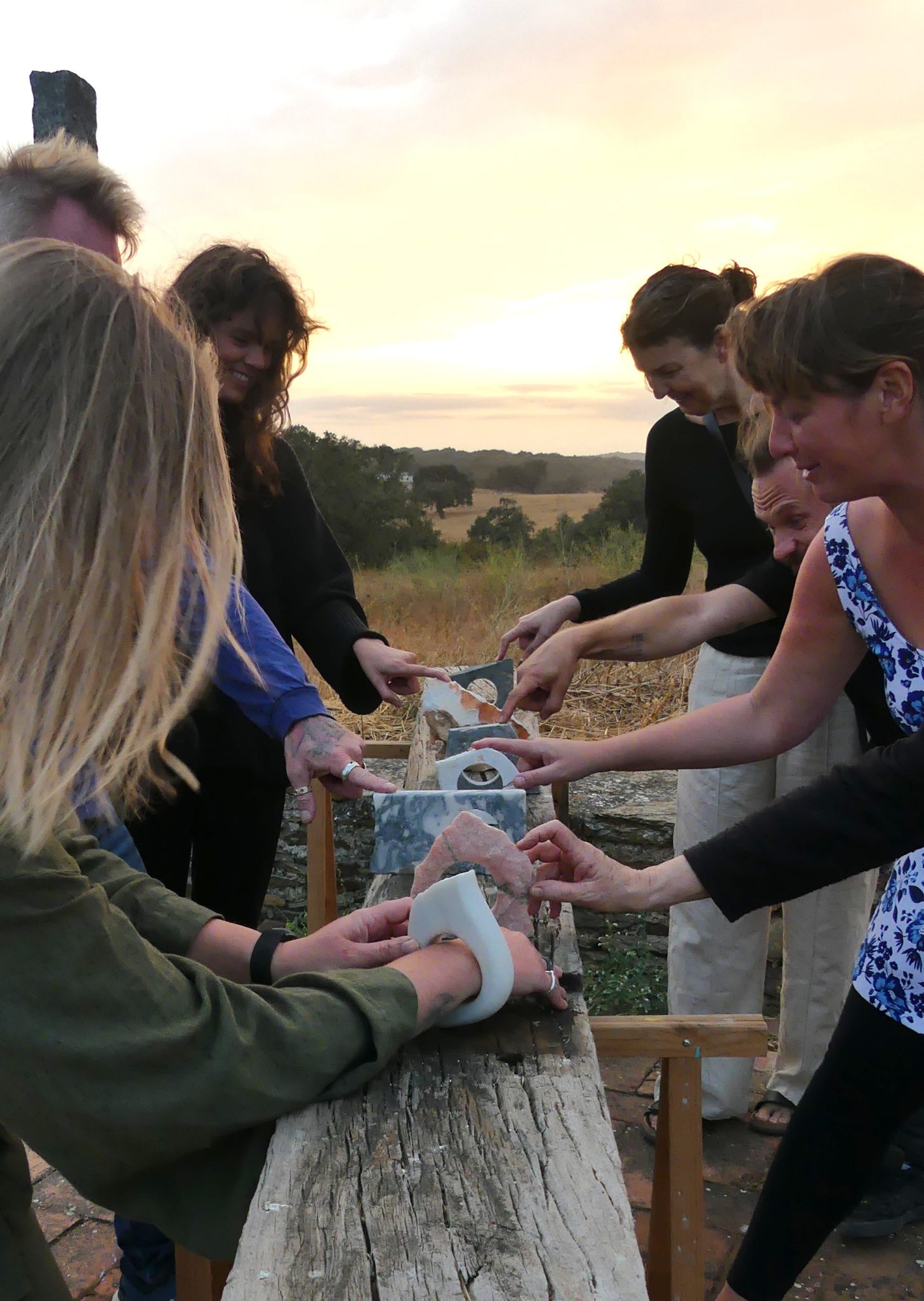
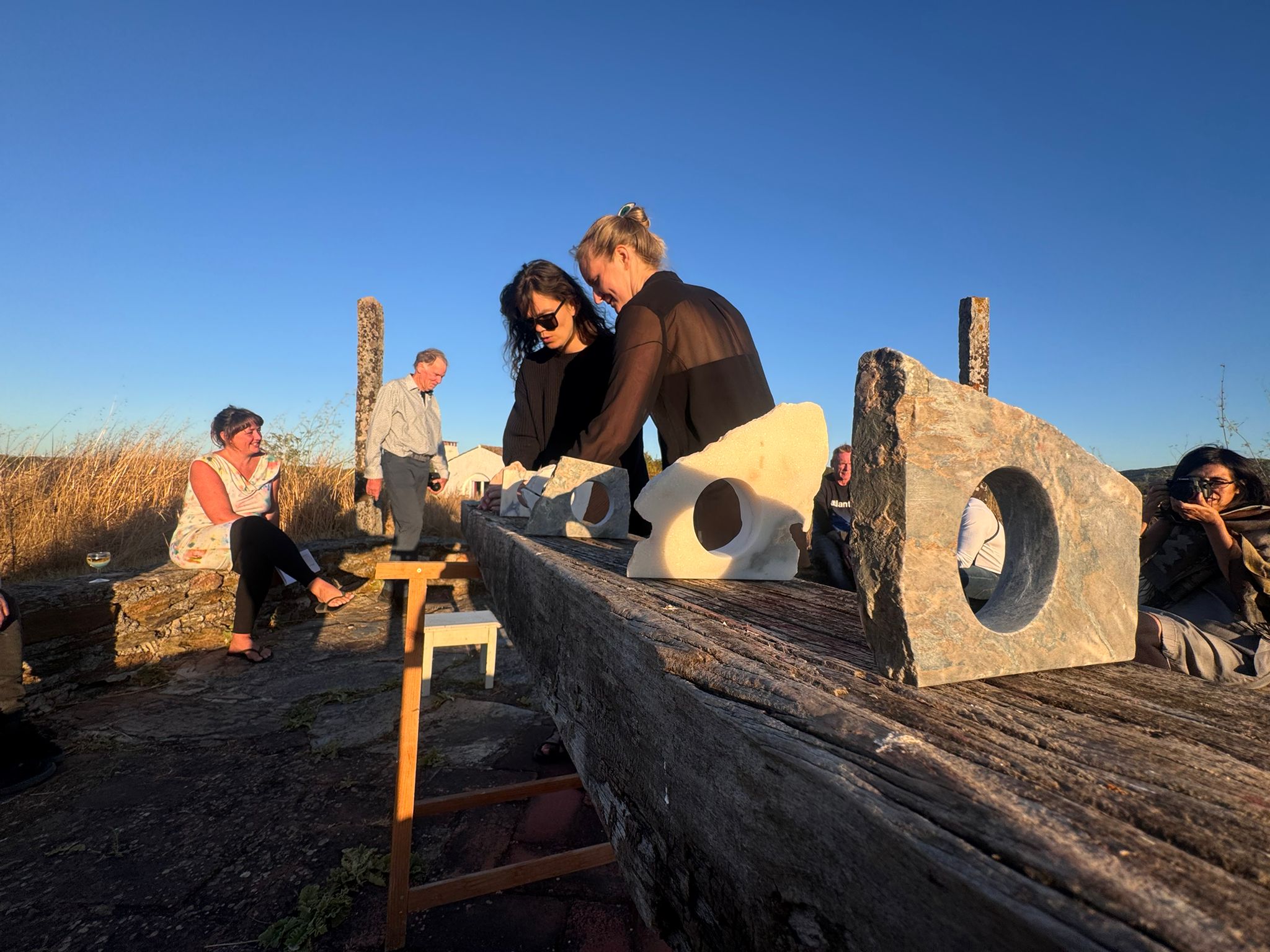
“Rasma Puspure (Latvia), a jewellery maker, came to explore the possibilities of working with Portuguese marble. During her residency, she deepened her technical skills and experimented with creating wearable pieces of marble. For some of these, she collaborated with a local stonecutter whose daily craft is shaping gravestones. Particularly captivating was the installation she created to catch the sunset during the equinox: viewers were invited to gaze through six marble bracelets aligned with the setting sun.”
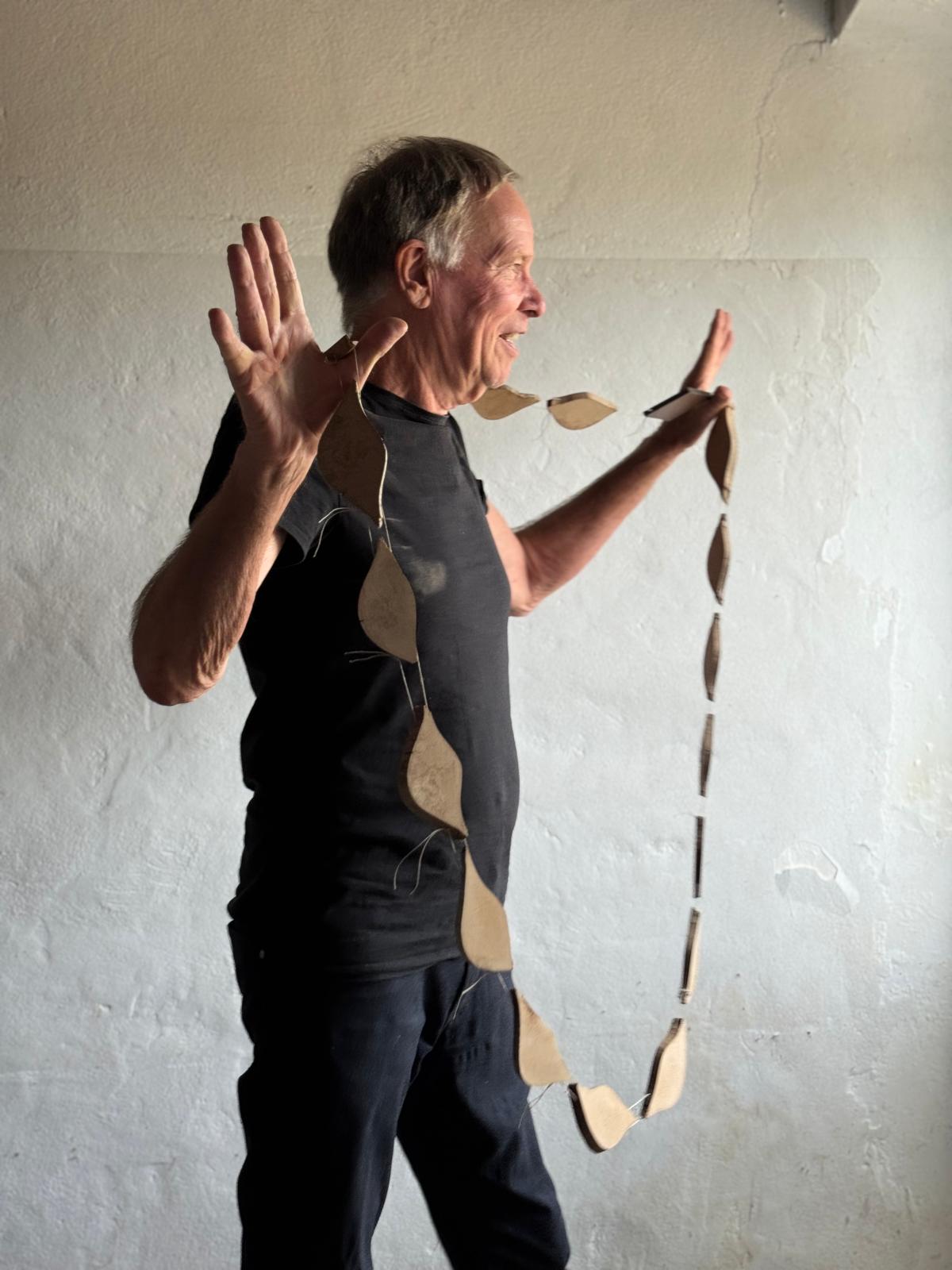
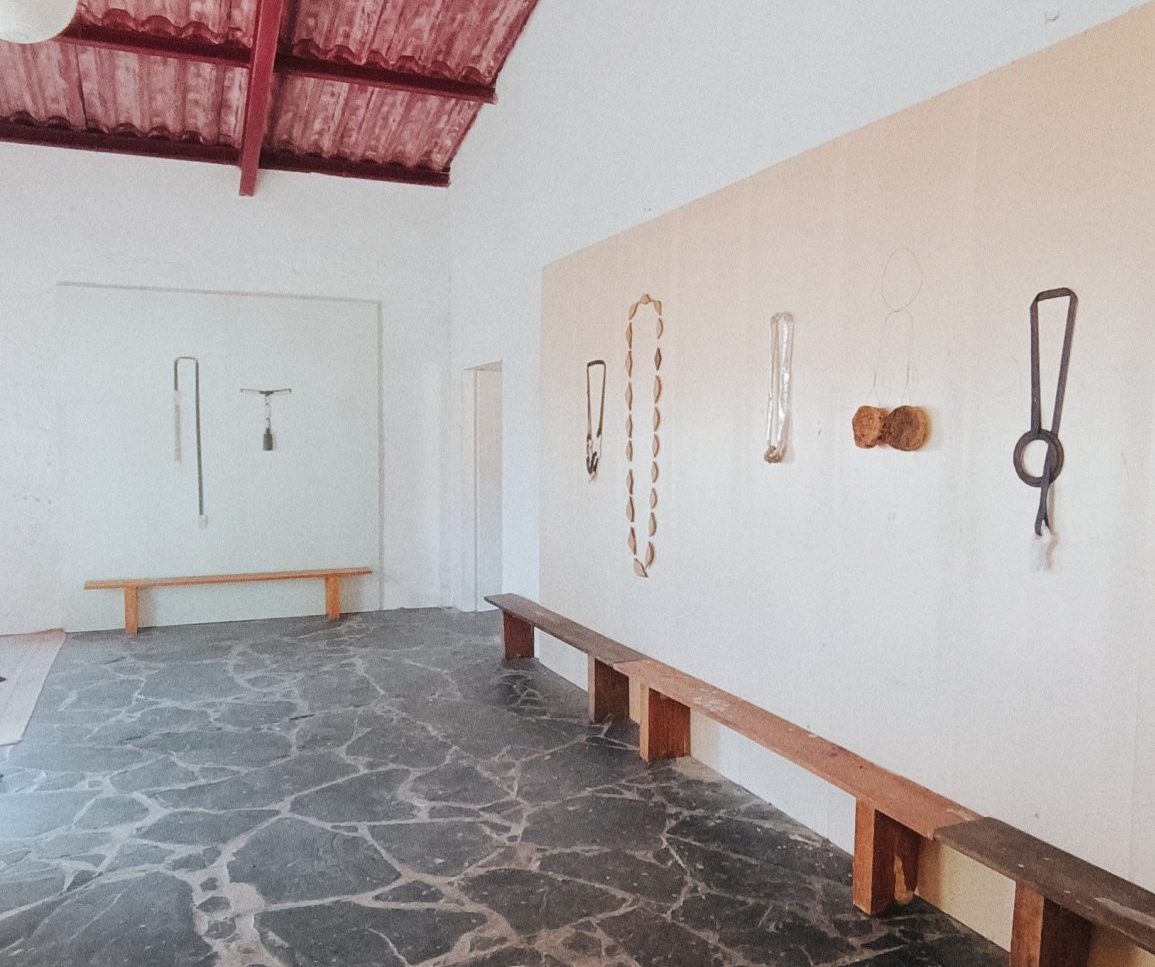
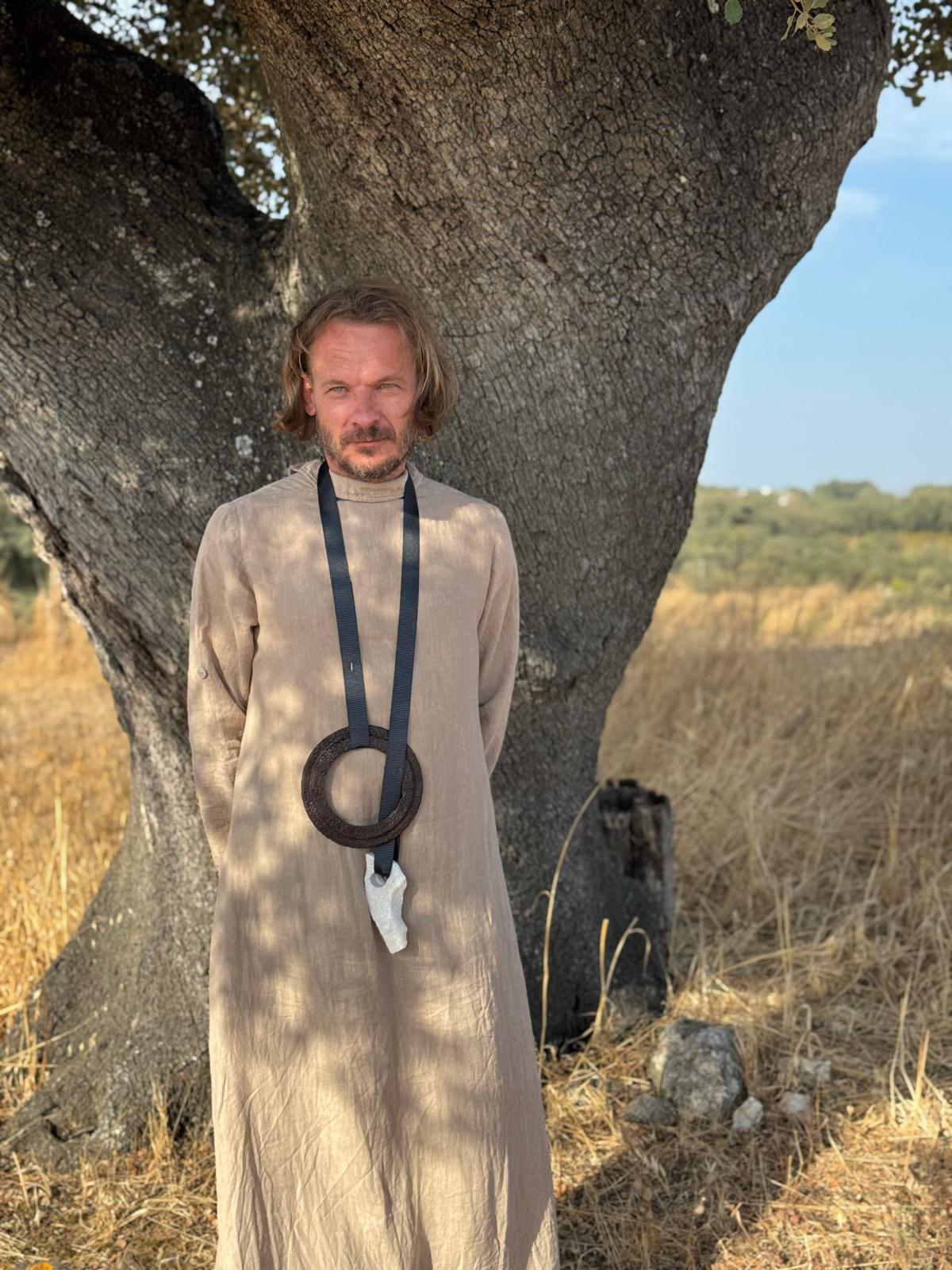
“Ginta Grūbe (Latvia) describes herself as a conceptual jewellery artist. Her work is crafted from found objects and leftover materials, often blurring the line between adornment and sculpture. Some pieces resemble wall mosaics more than traditional jewellery. One striking example was a two-meter-long necklace composed of linked slices from the bases of dried palm leaves. She also incorporated cork, small marble blocks, and old iron sourced from the flea market. Volunteers among her fellow residents were eager to model her unusual and evocative creations.”