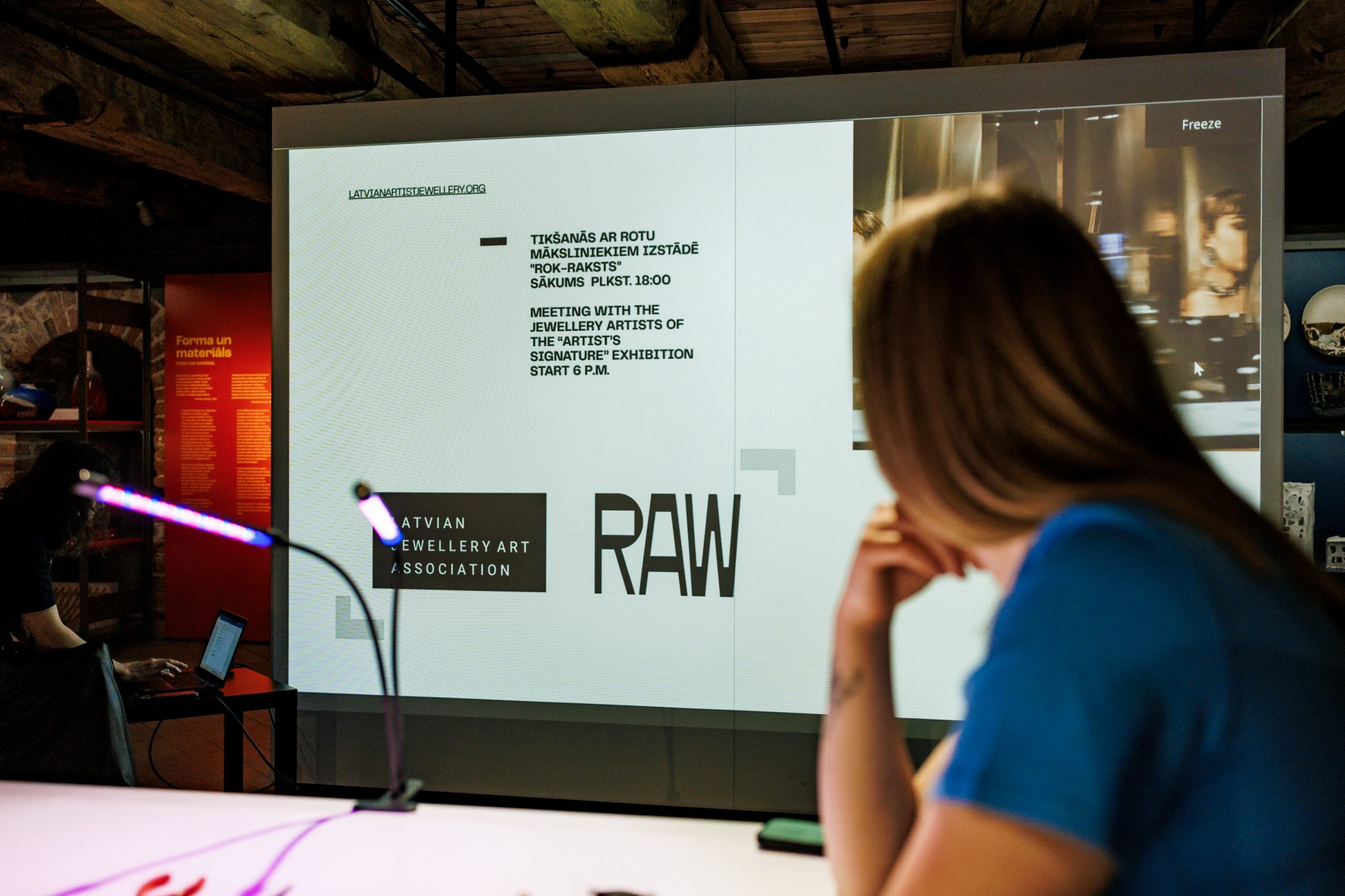
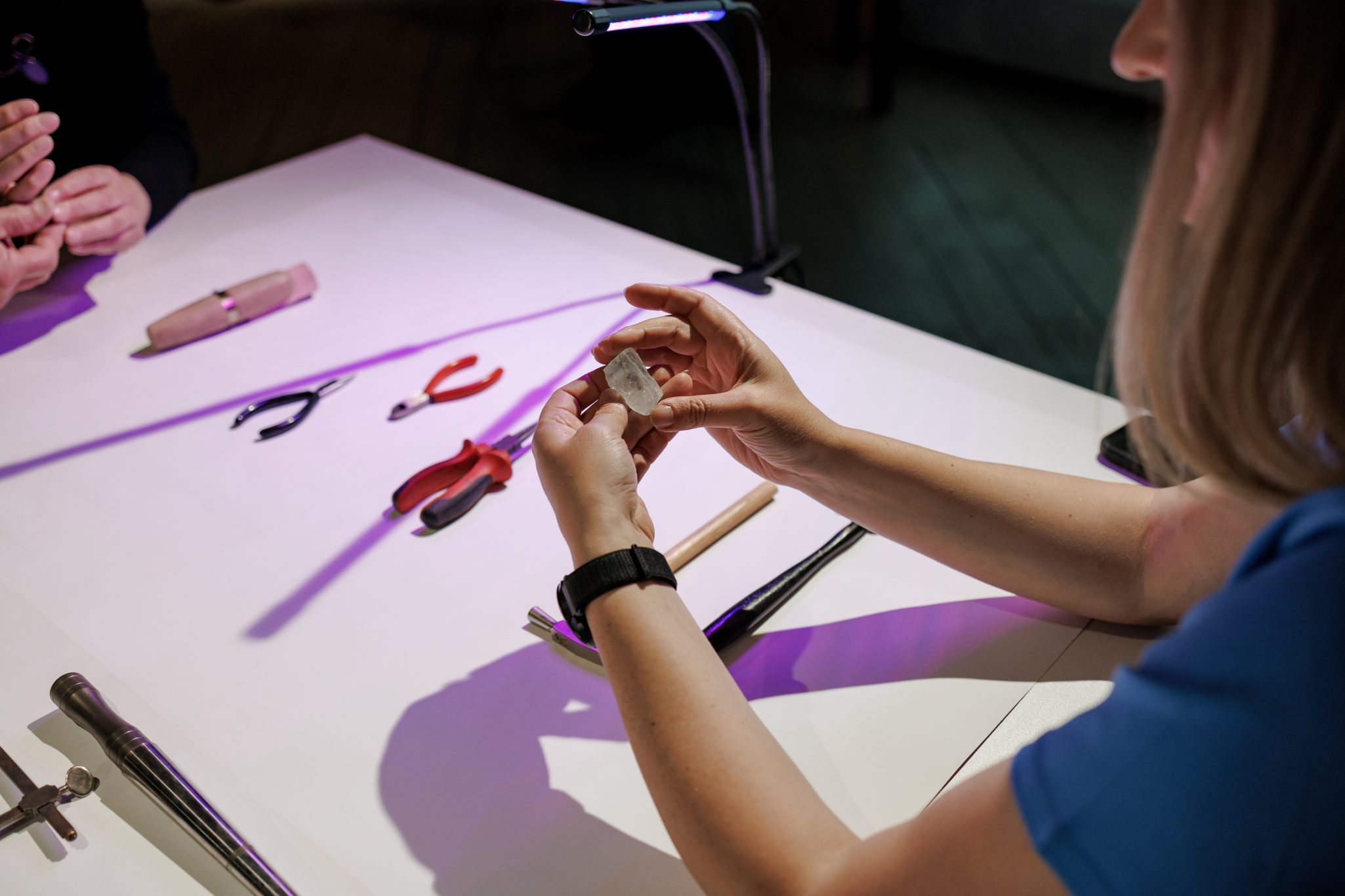
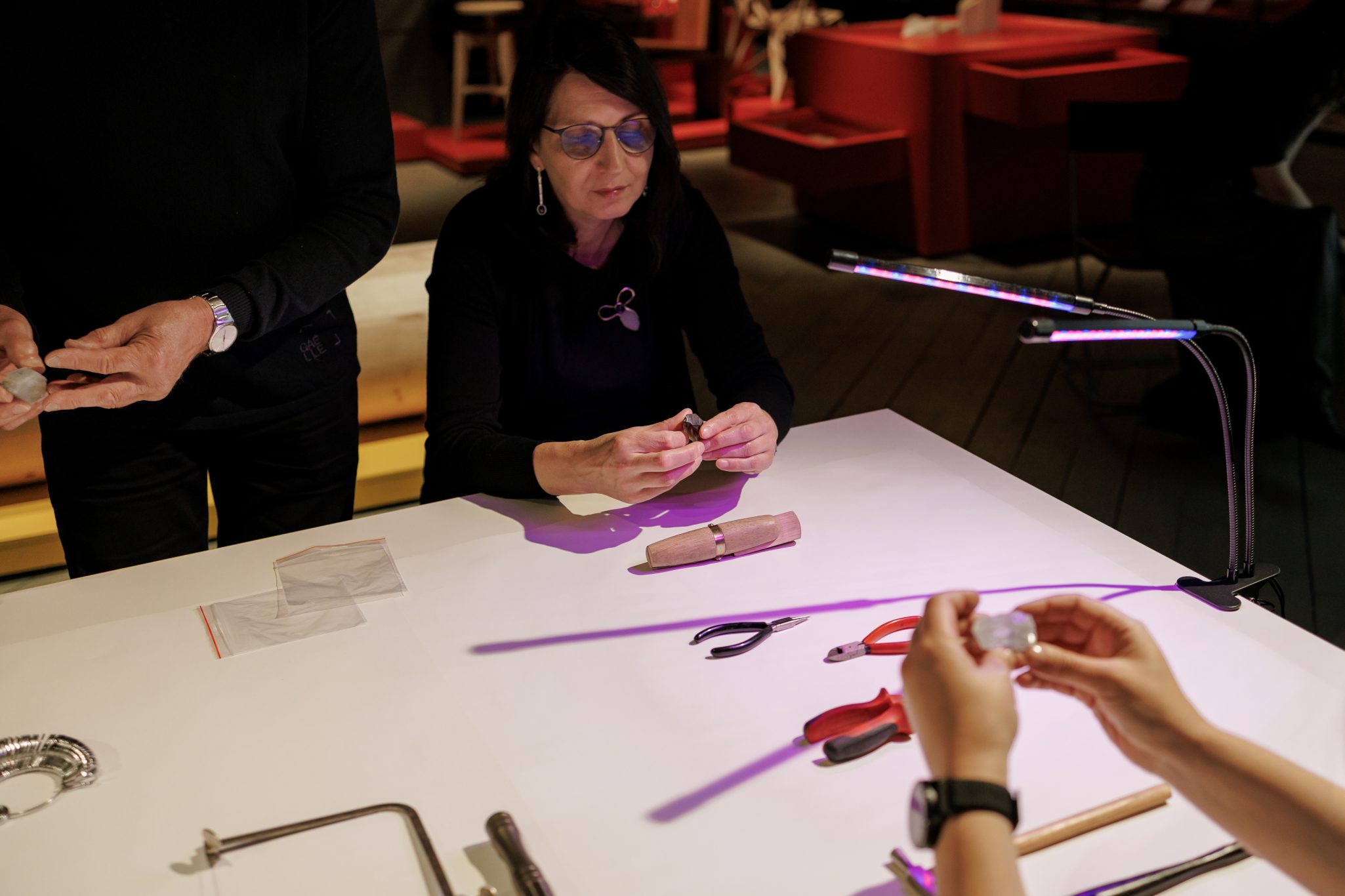
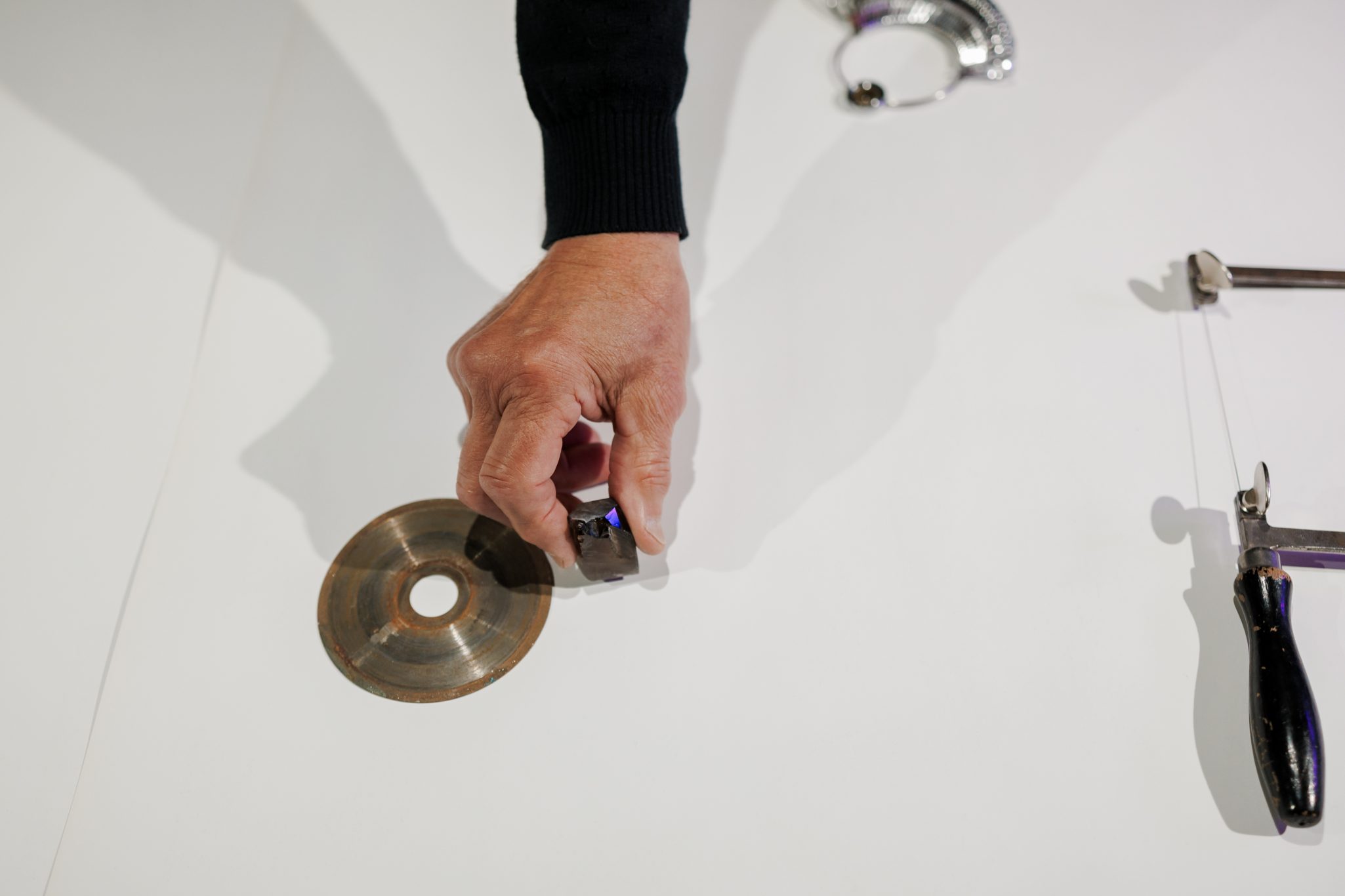
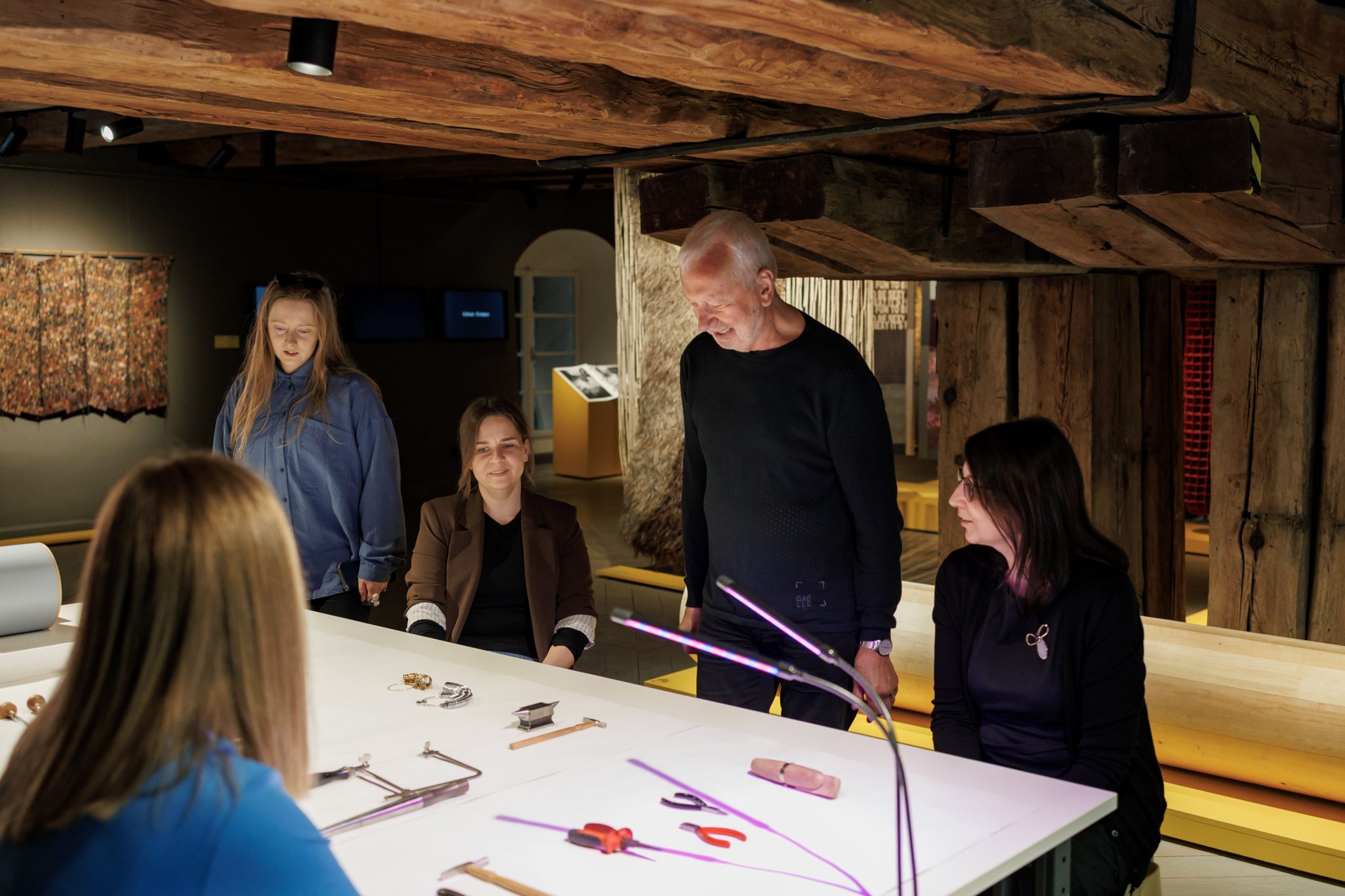
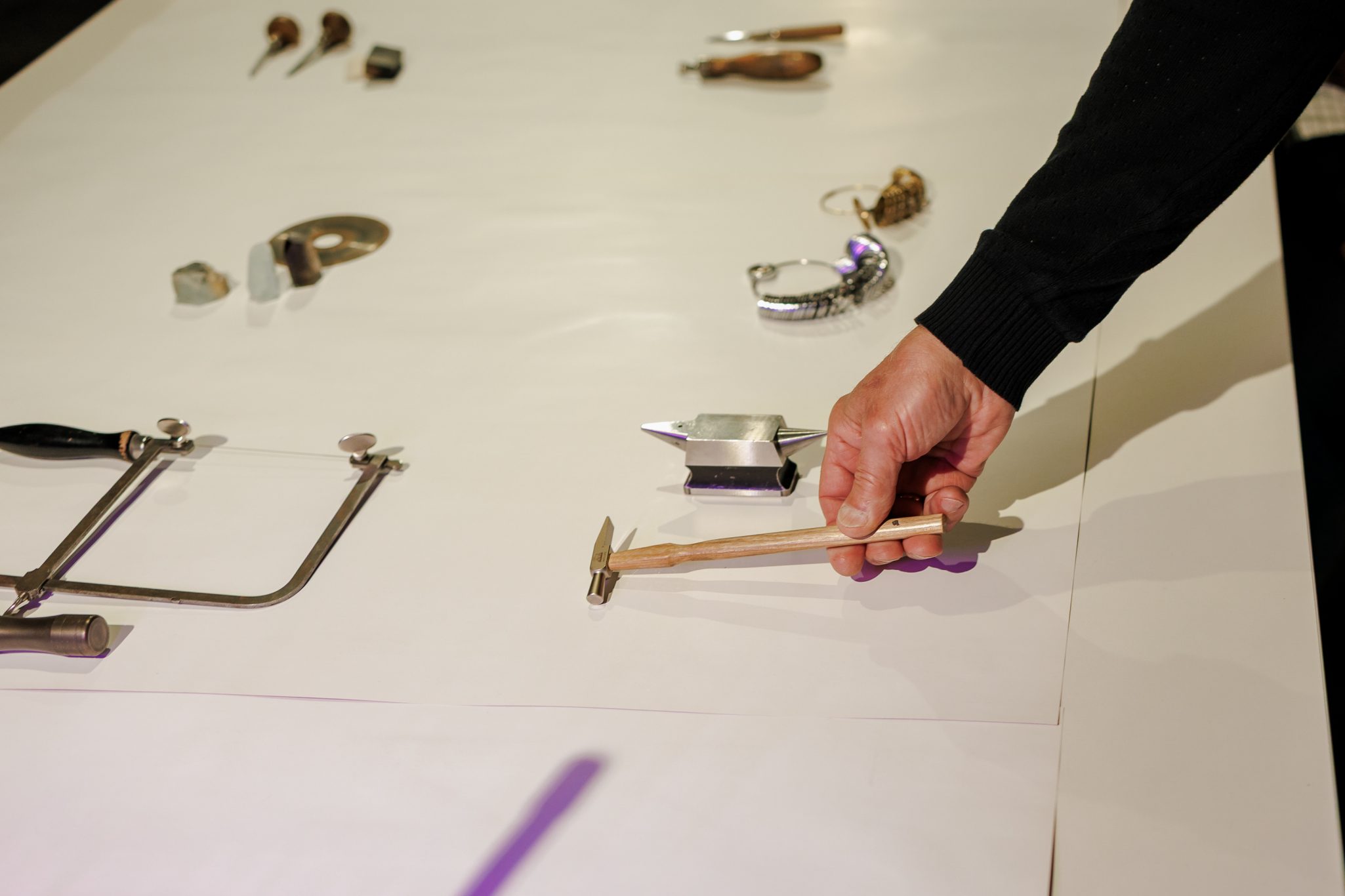
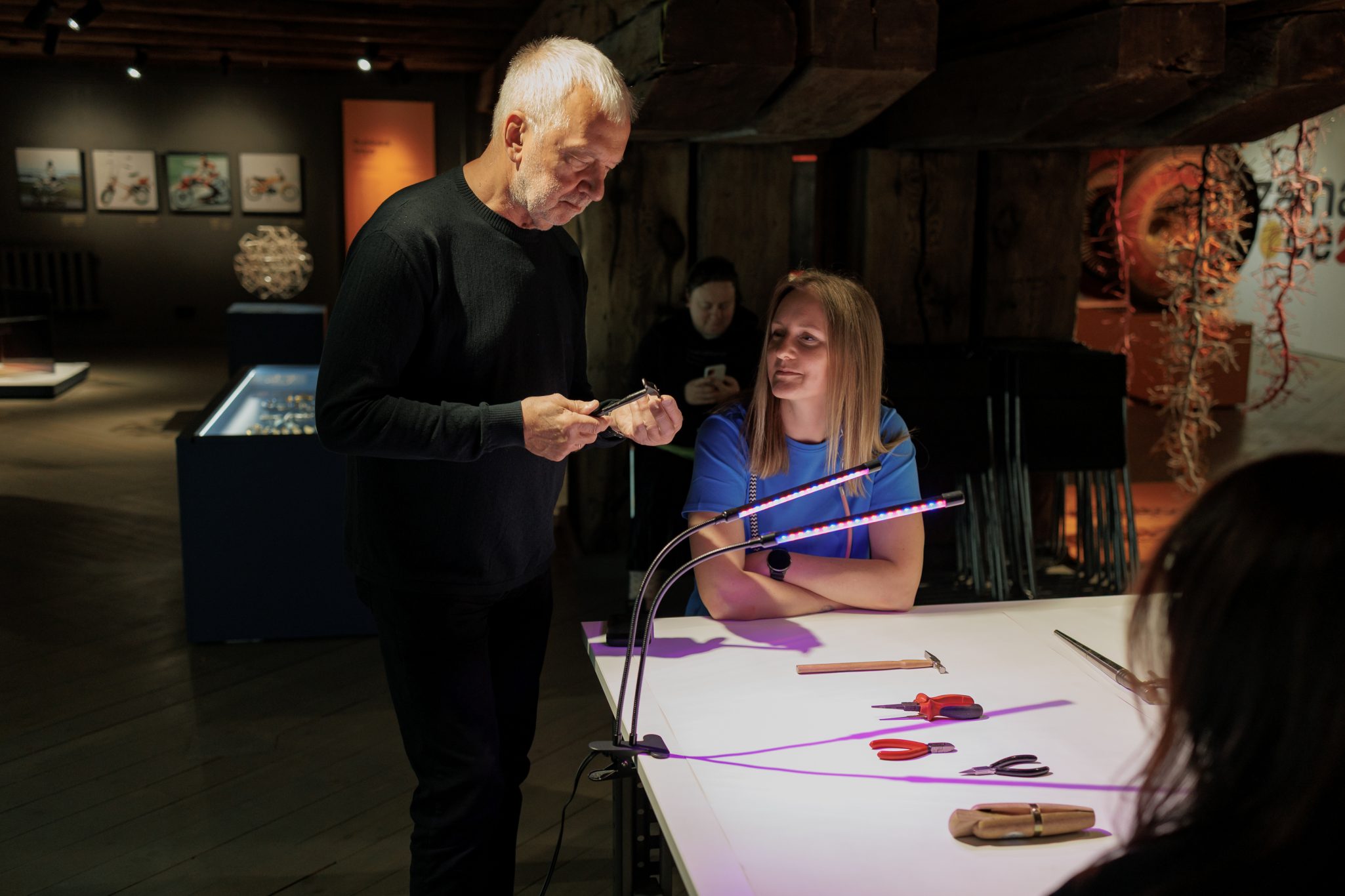
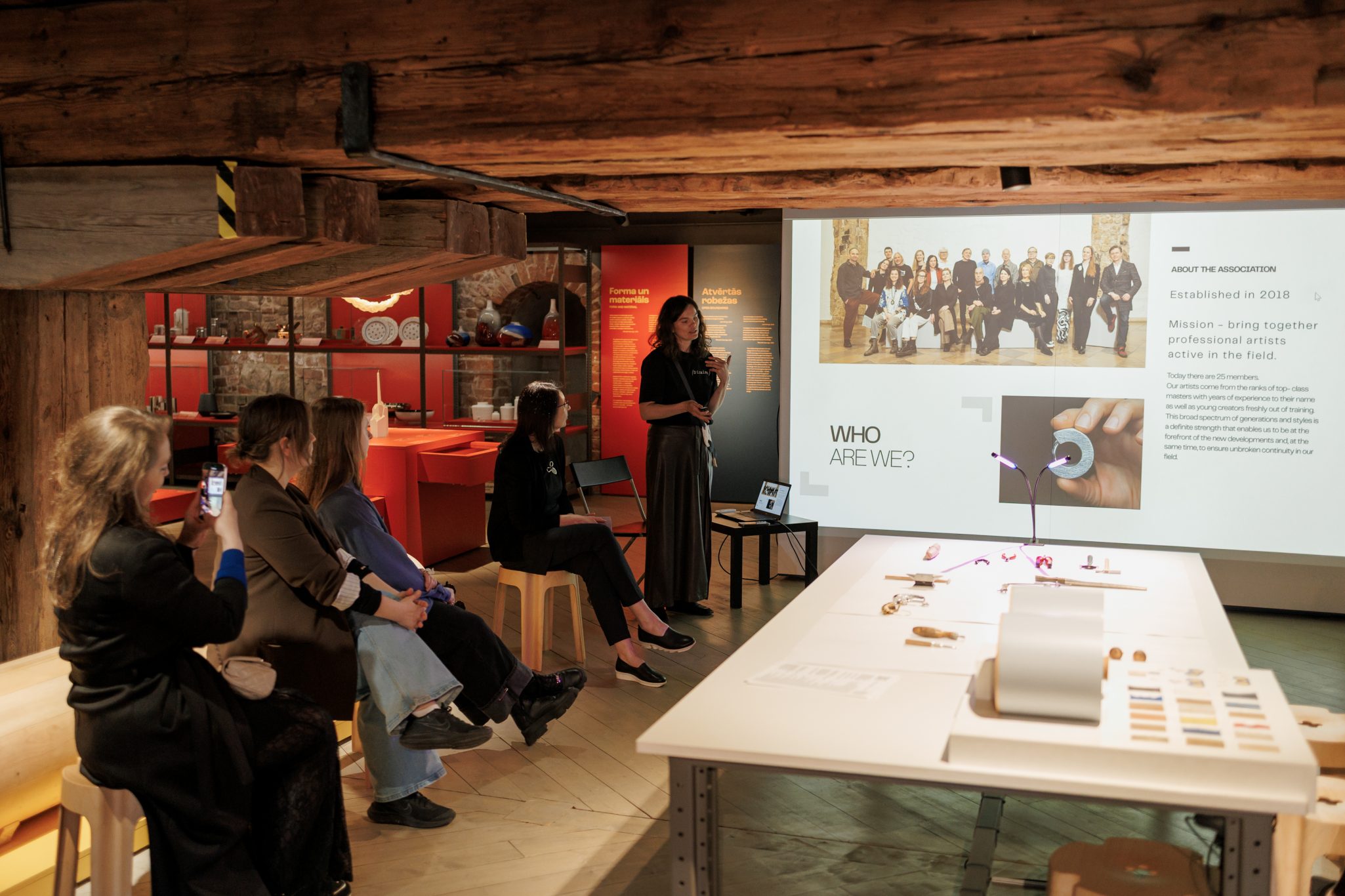
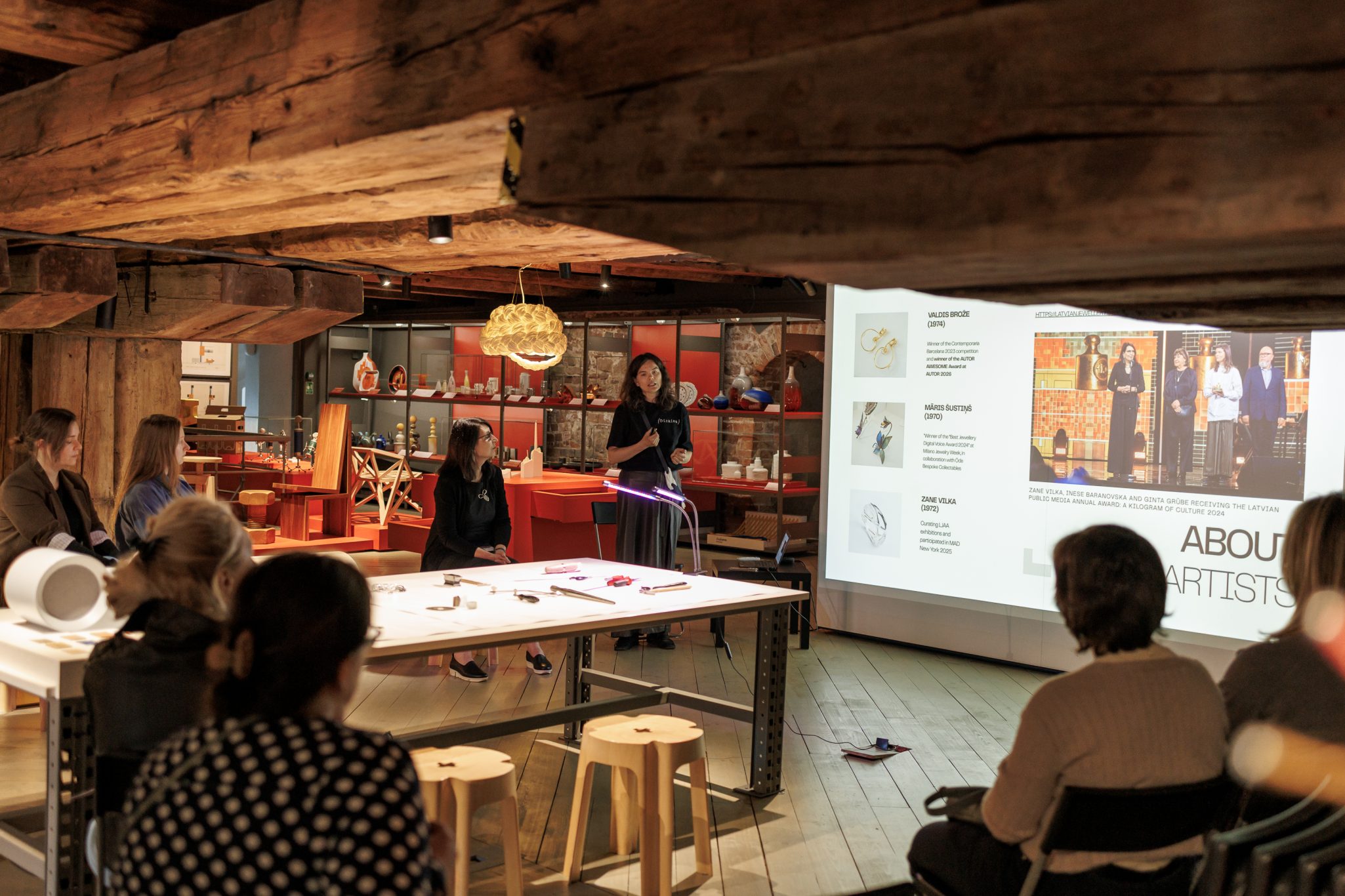
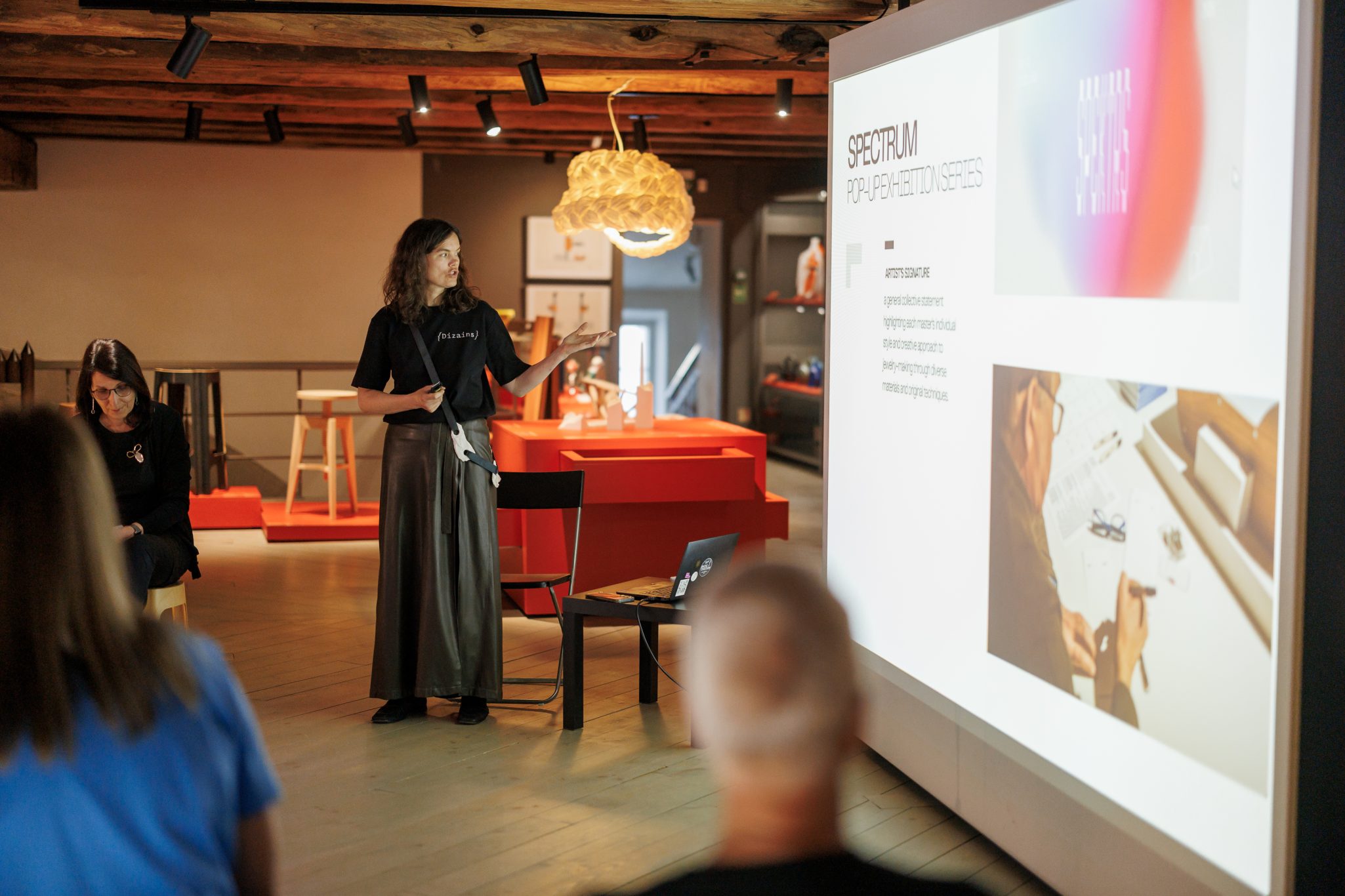
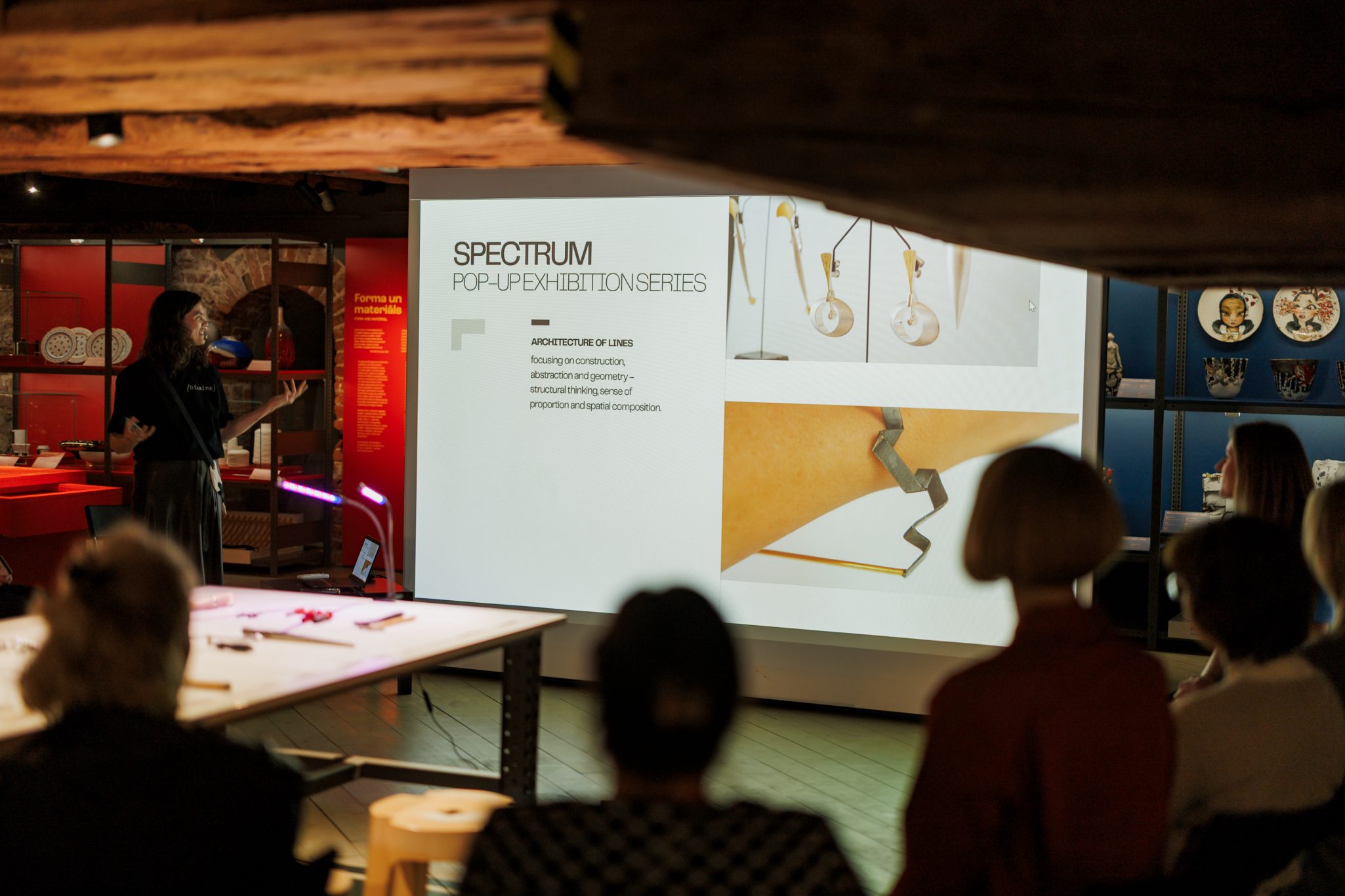
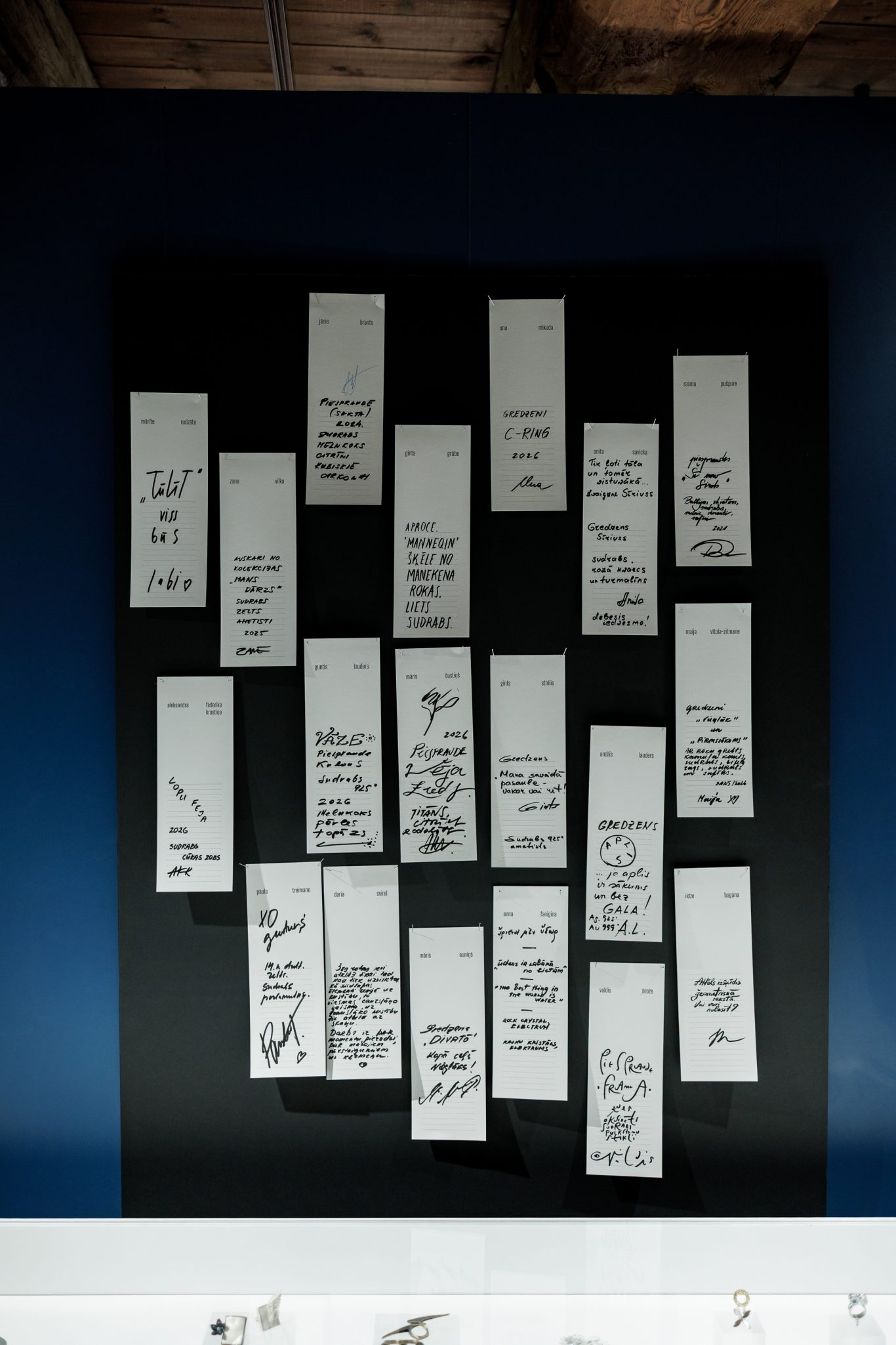
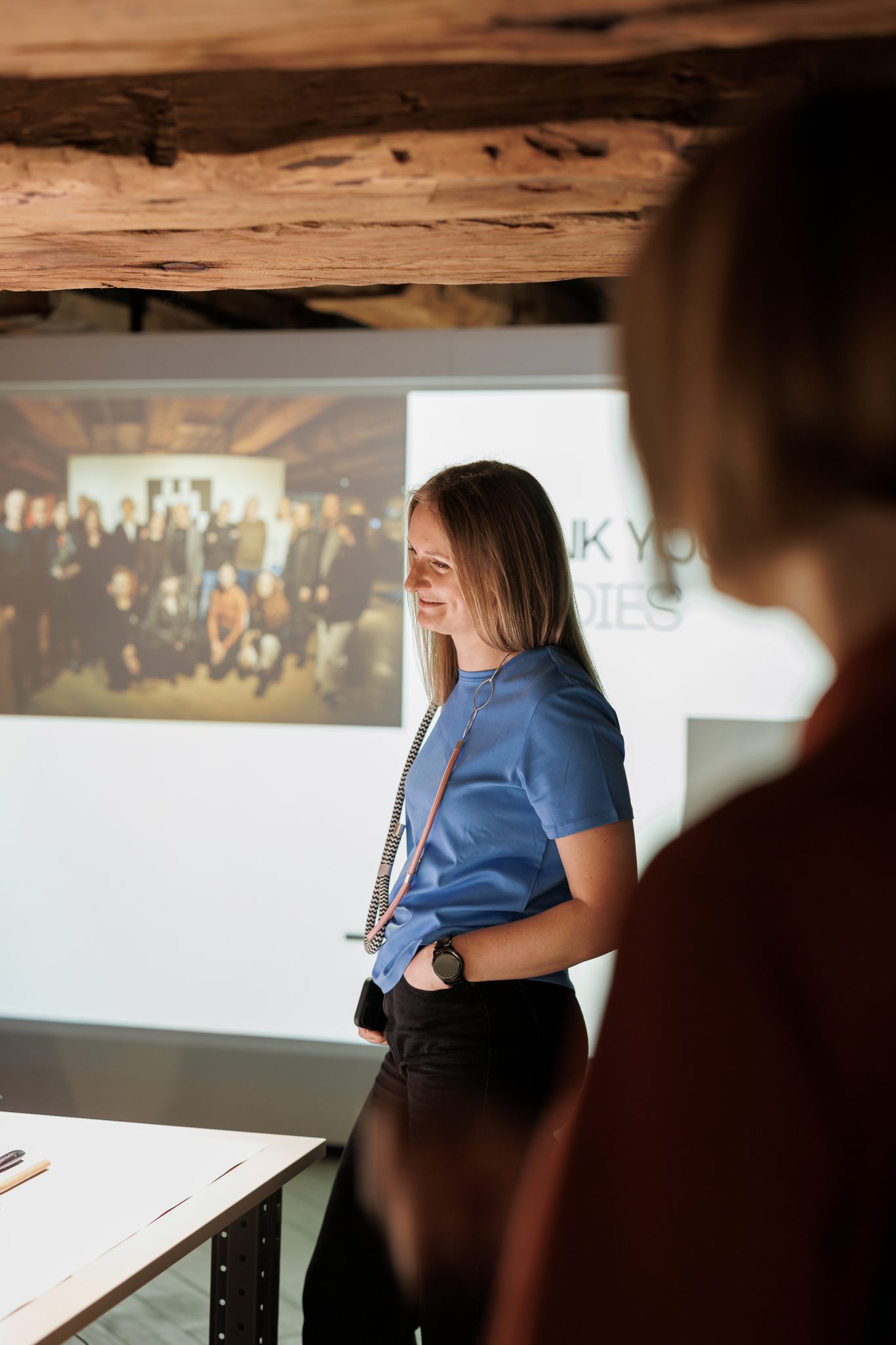
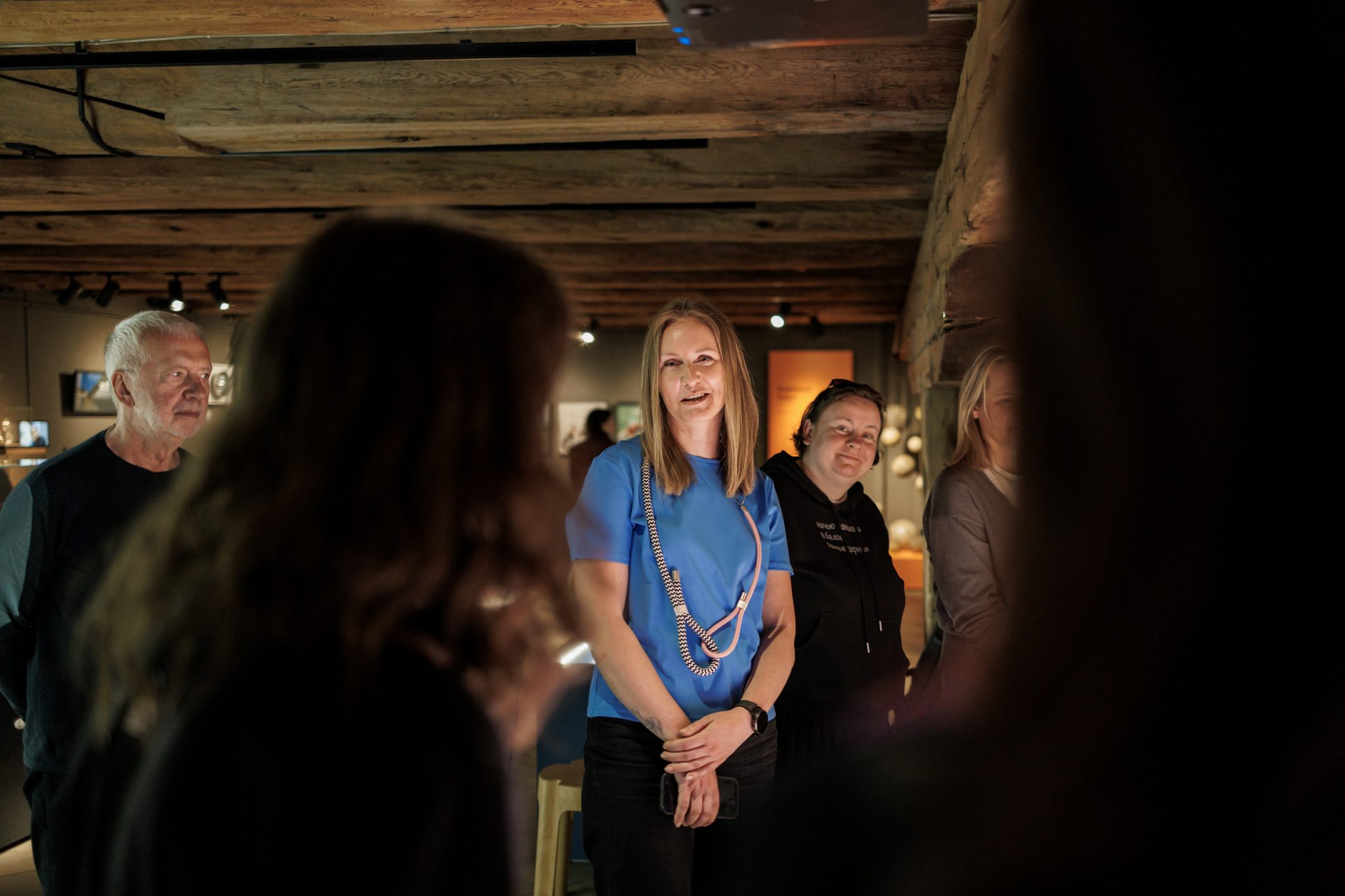
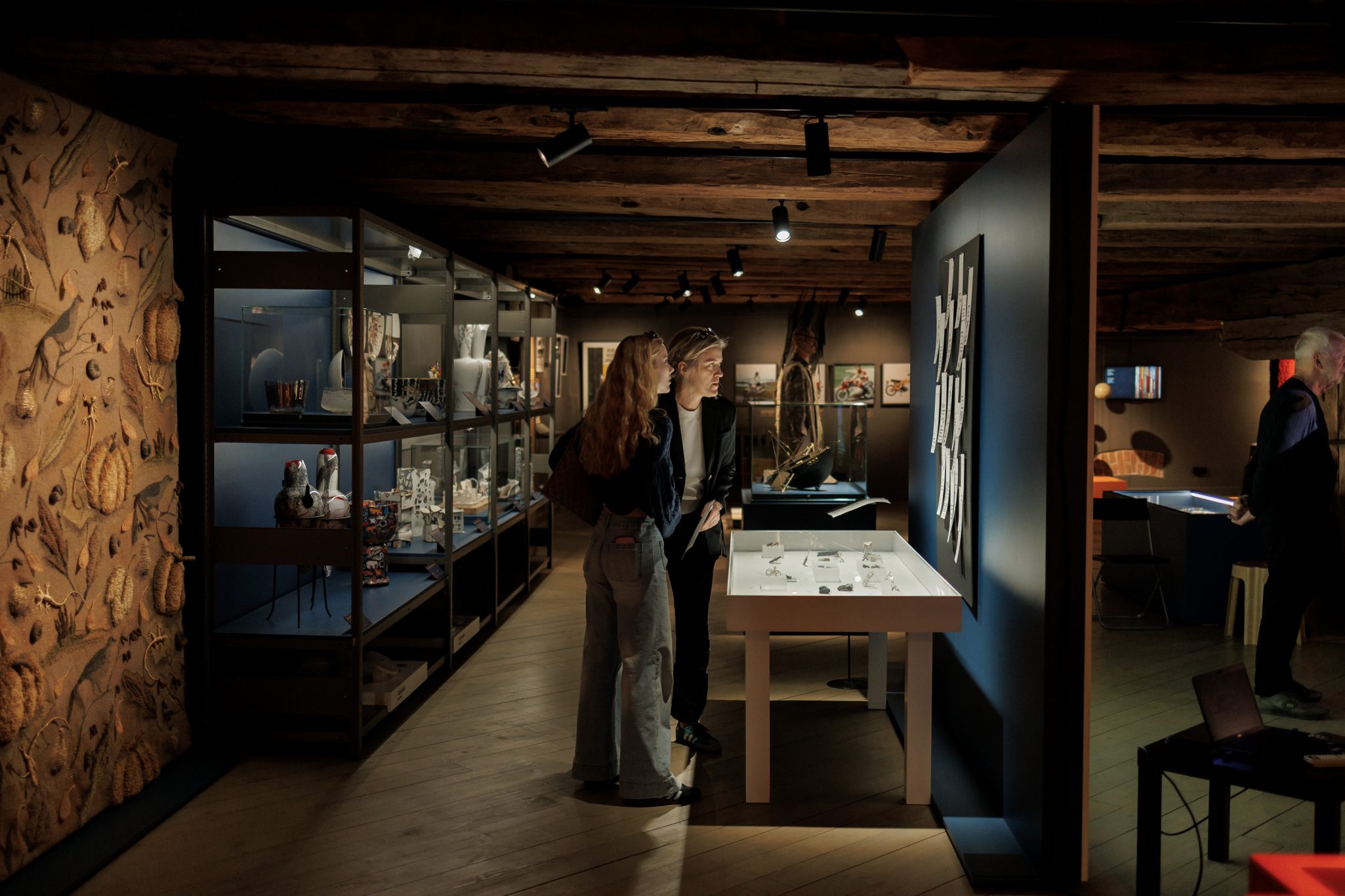
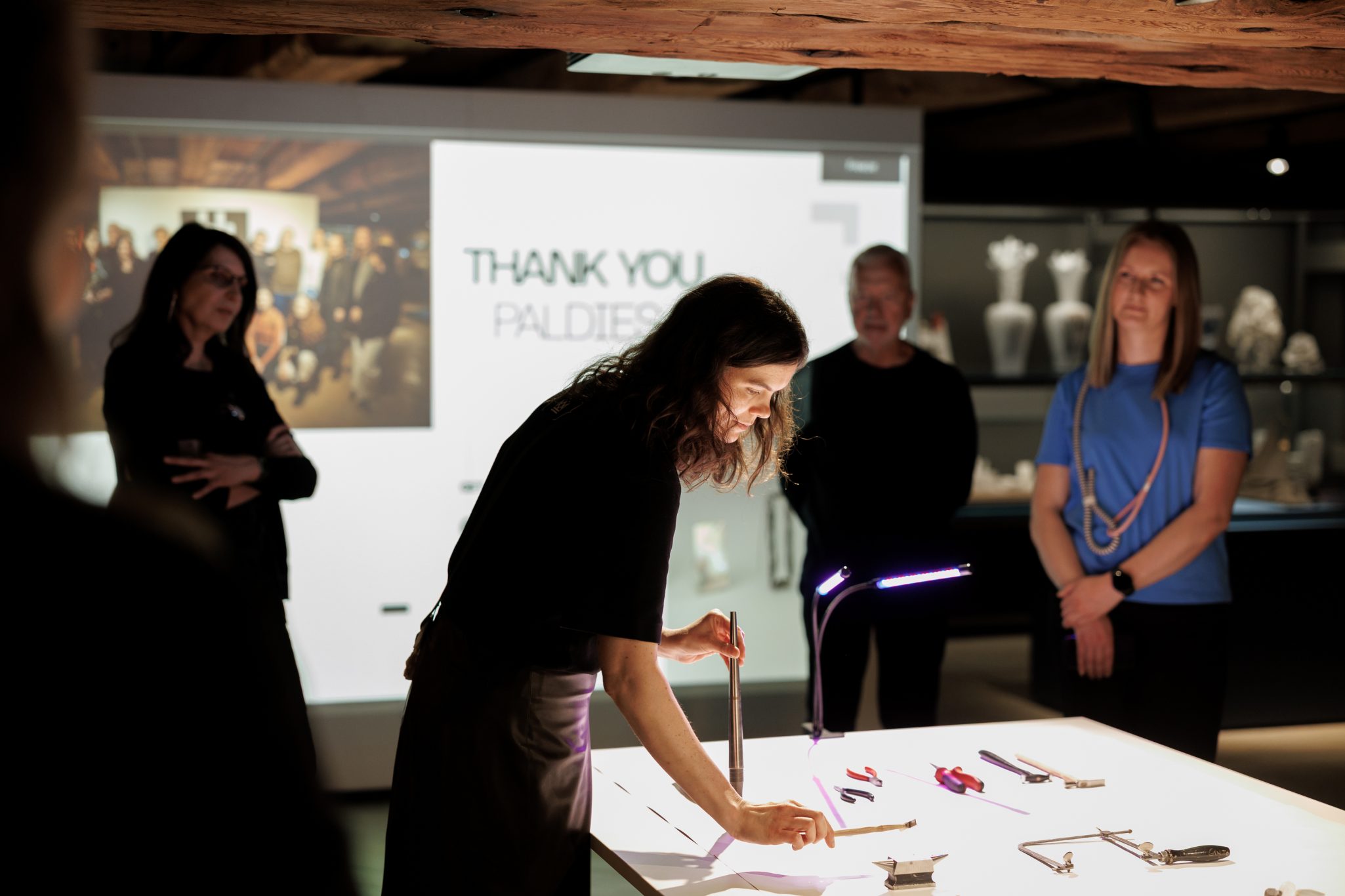
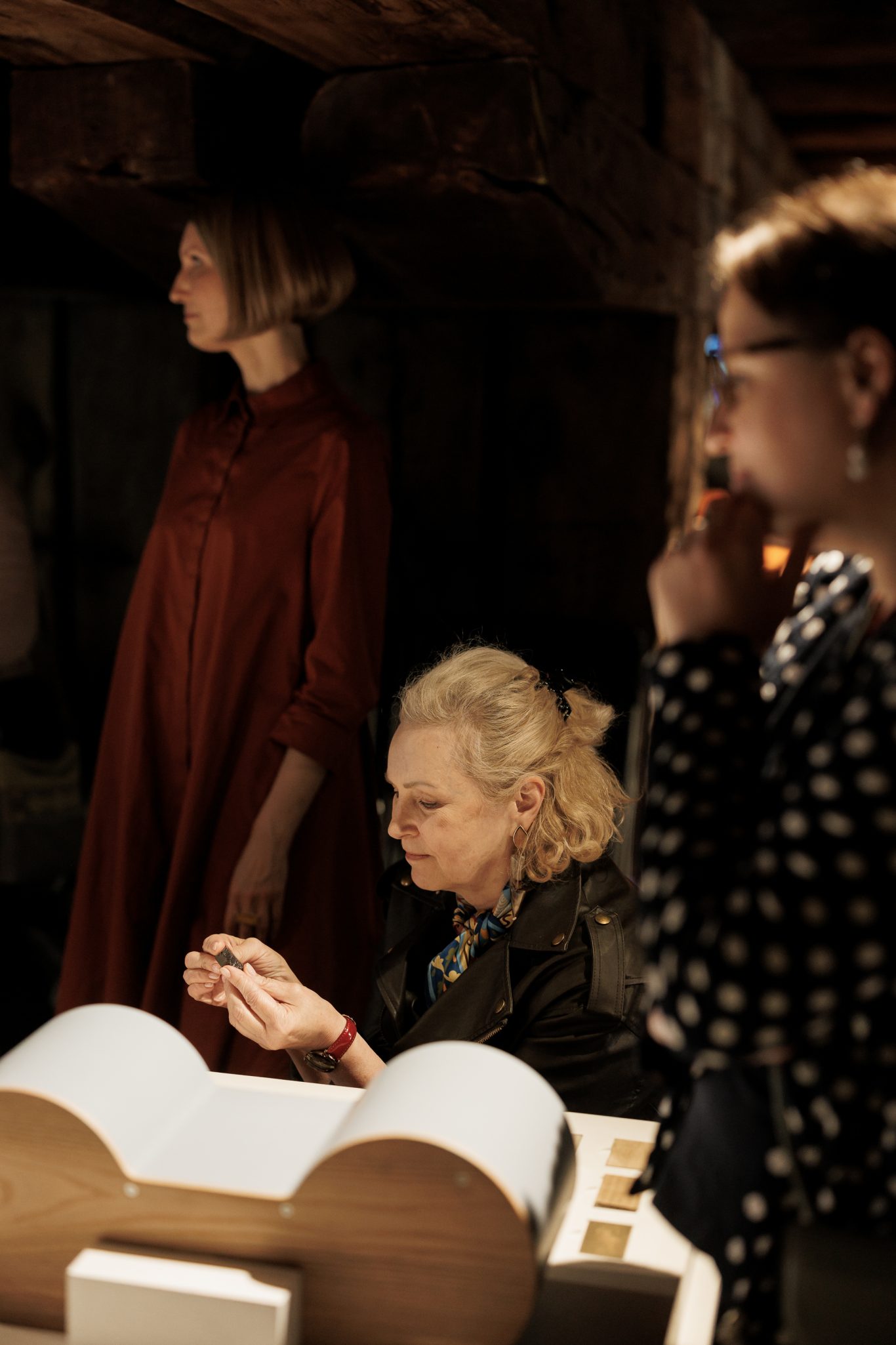
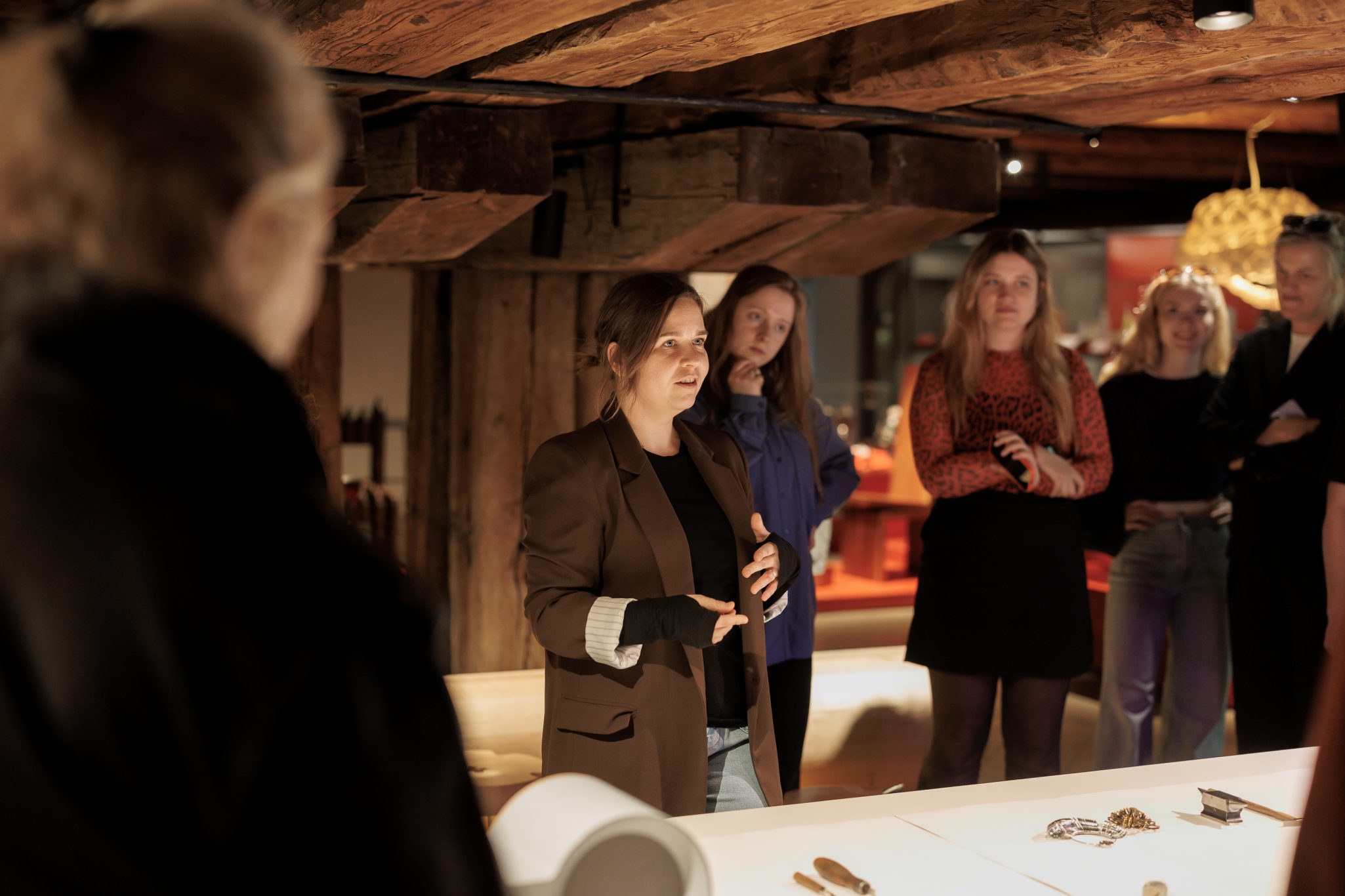
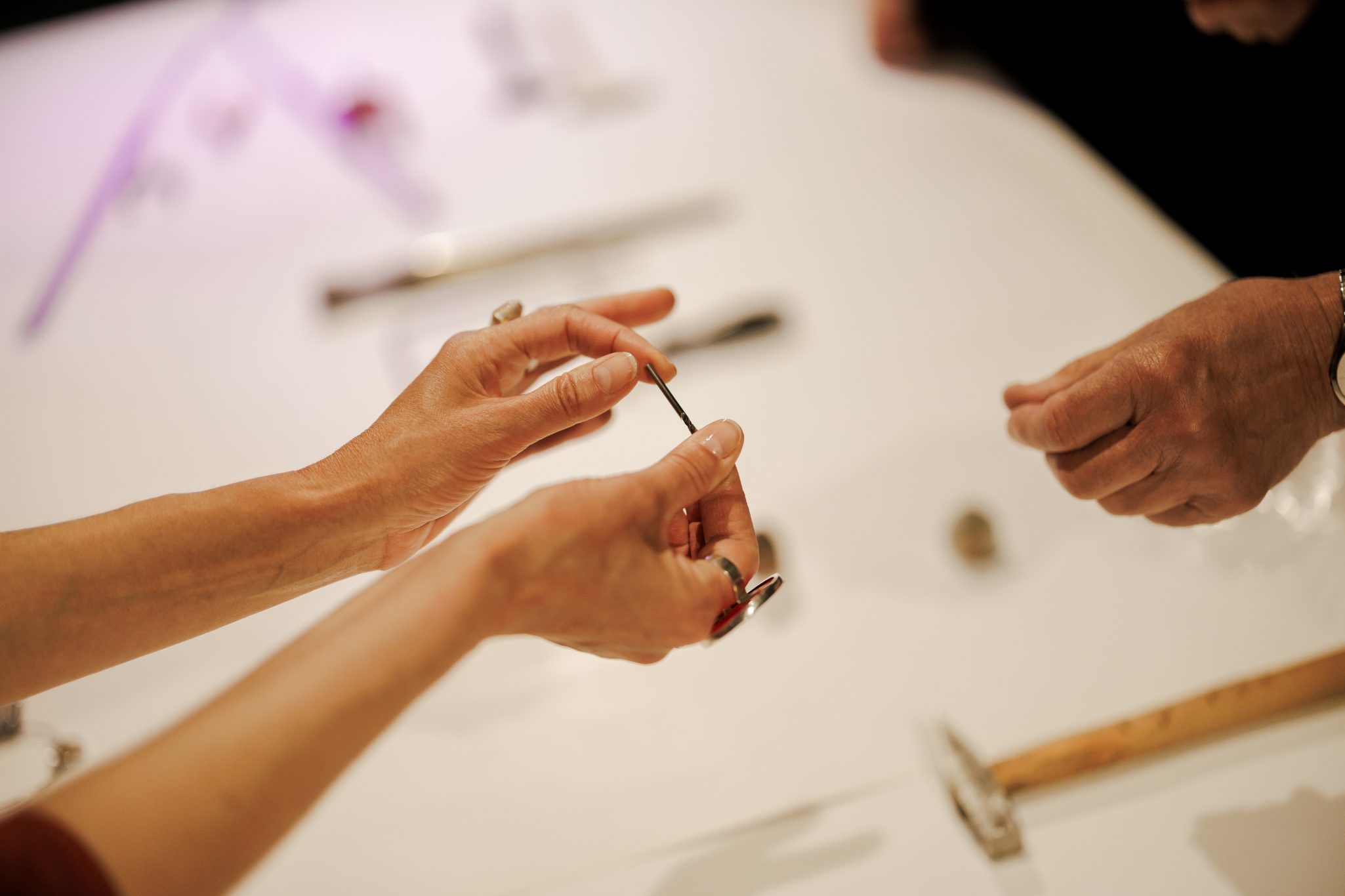
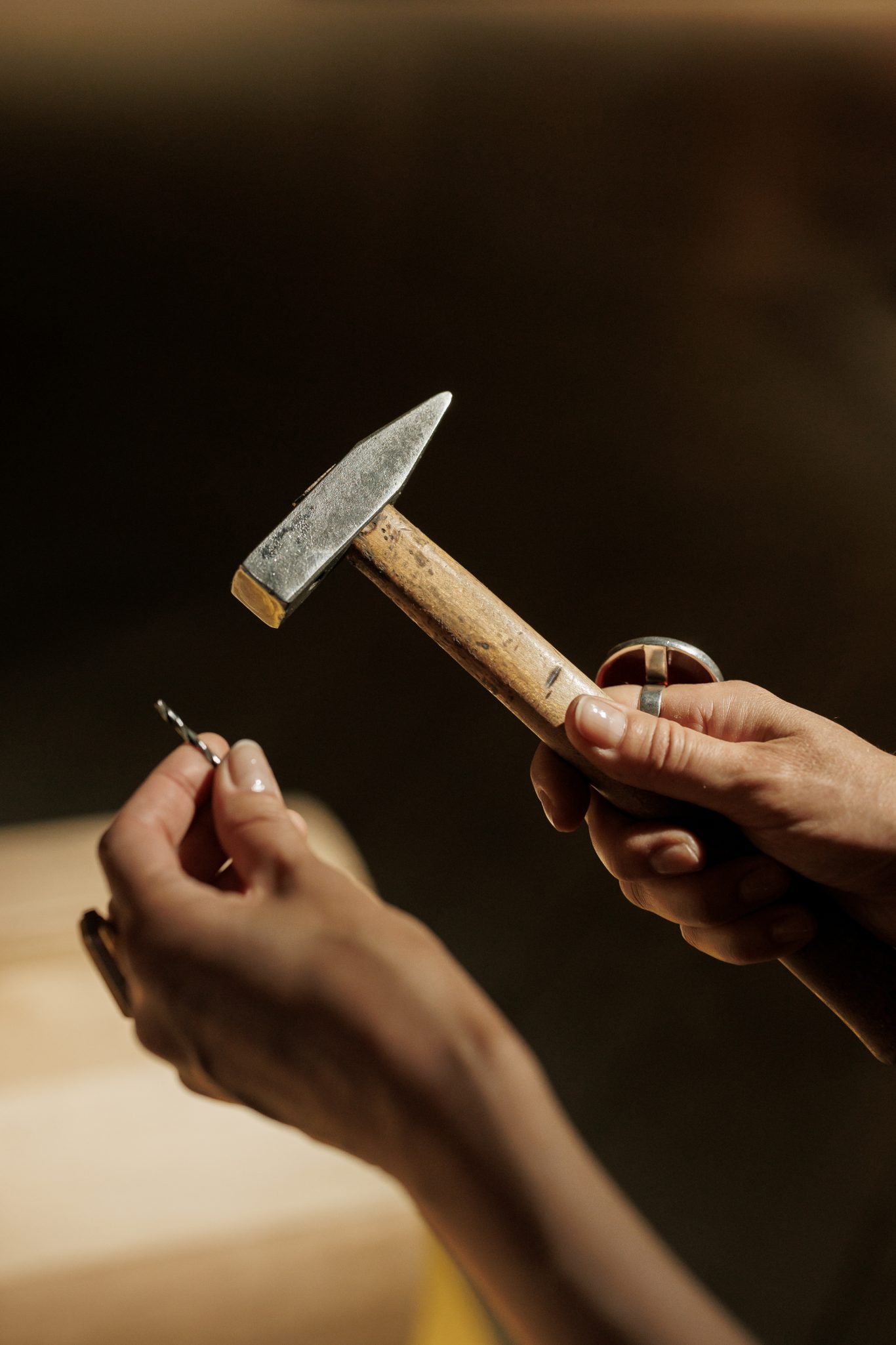
On the evening of 27 May, jewellery artists and visitors of Riga Art Week gathered on the third floor of the Museum of Decorative Arts and Design alongside the jewellery pop-up exhibition “Signature” (Rok-raksts). The event offered an opportunity to learn about the latest activities of the Latvian Jewellery Art Association and the most significant events of the past year, while also hearing personal stories about jewellery-making and the artists’ favourite tools. Visitors were invited not only to view the tools and raw material samples, but also to handle them, experiencing their texture and temperature firsthand.
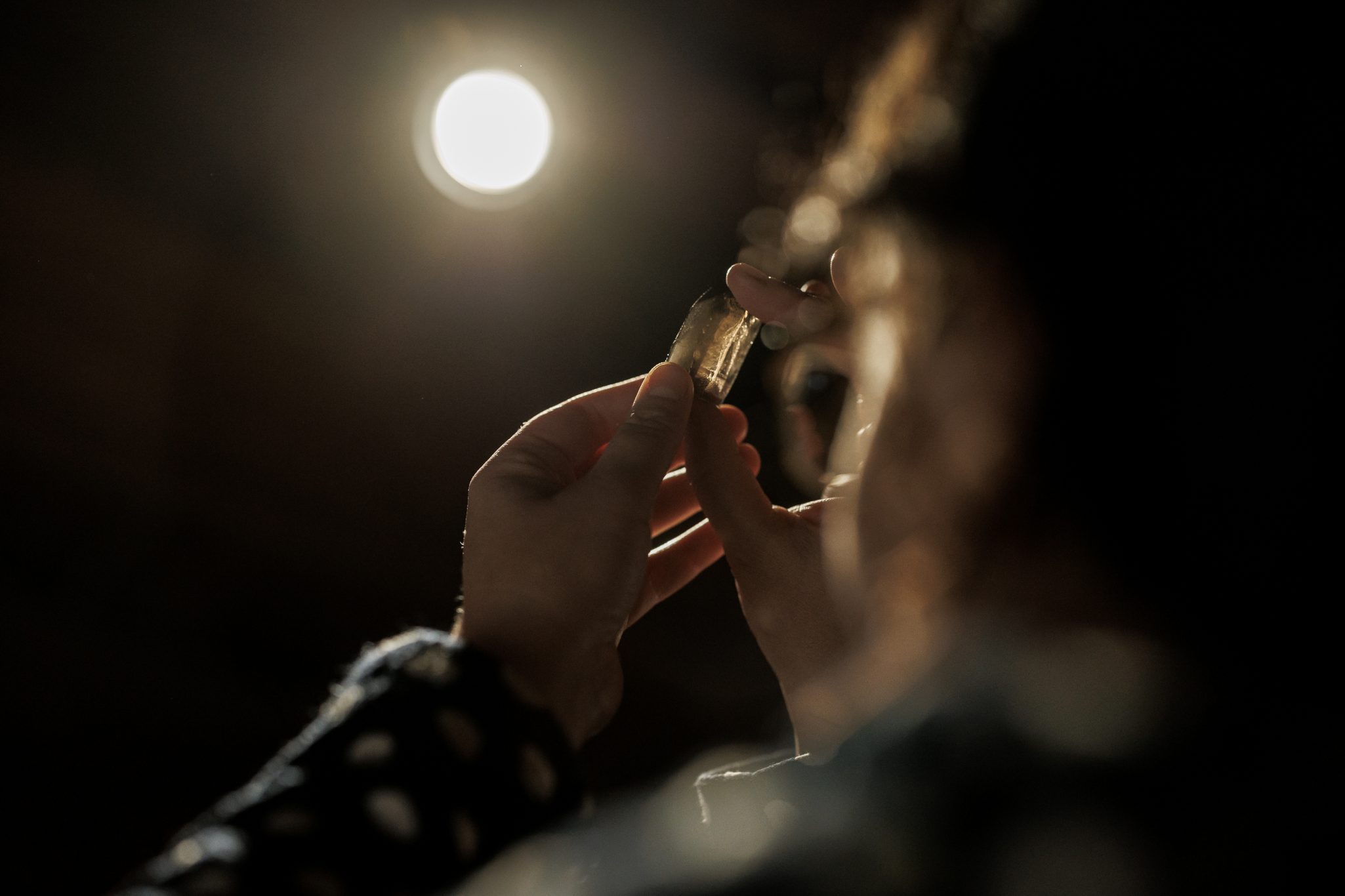
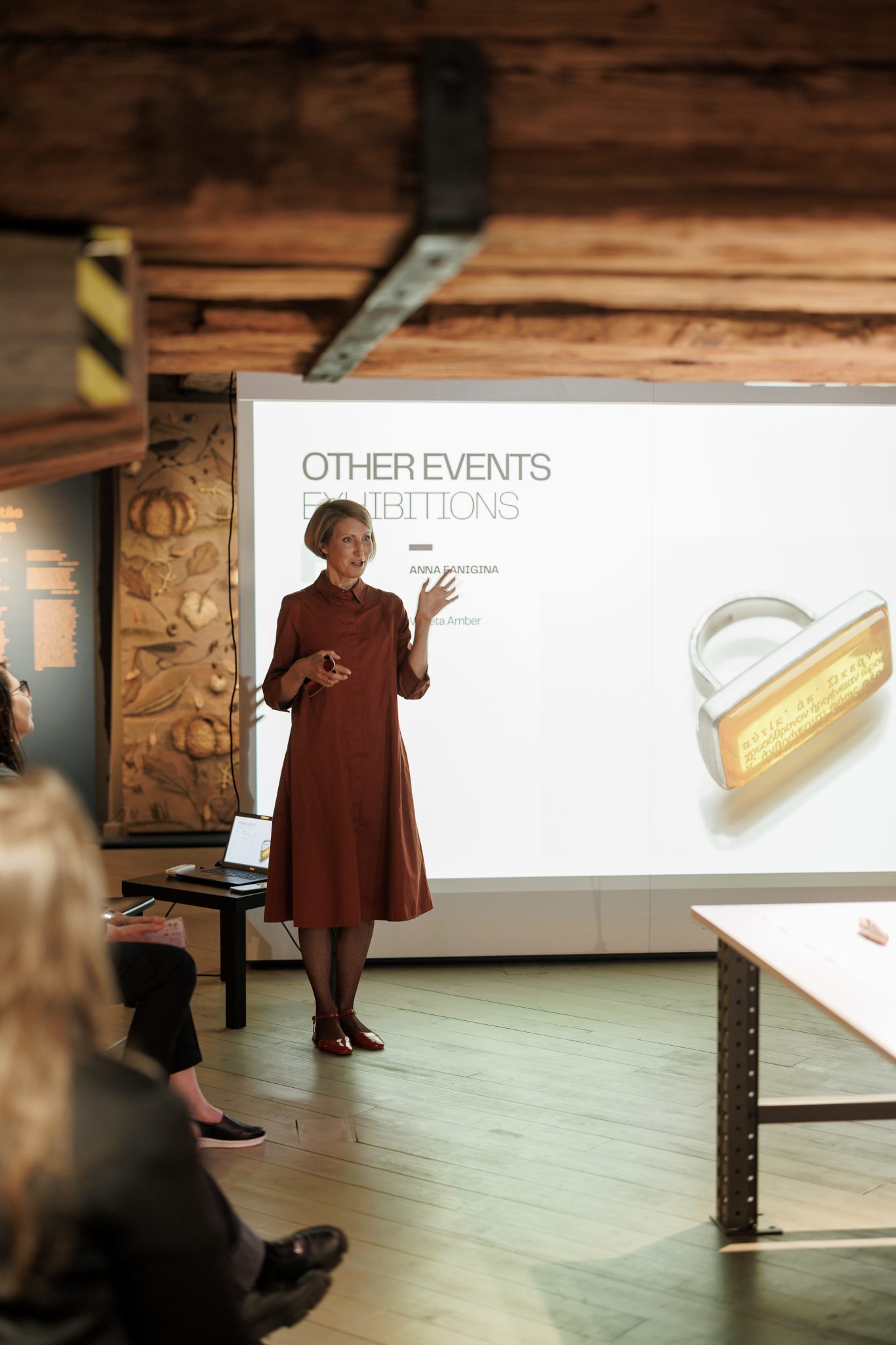
Jewellery artist Māris Auniņš shared stories about a family tradition of jewellery-making that spans several generations. He presented polished minerals, allowing visitors to examine them closely and test their clarity against the light. Anna Fanigina introduced the story behind her latest jewellery collection, “Veneta Amber”. Since her earliest steps in jewellery-making, she has used a special hammer inspired by one she discovered in her father’s workshop. She continues to use it today for stone-setting and surface finishing in her jewellery brand “Verba”.
The gathering also explored the differences between industrially manufactured tools and handmade ones. The specific nature of jewellery-making often requires unique tools that cannot be purchased and must instead be made by hand. Many of these tools originate during the artists’ studies as part of their training and continue to serve them for decades. They become highly personal objects, shaped by use and adapted to the needs of their owners.
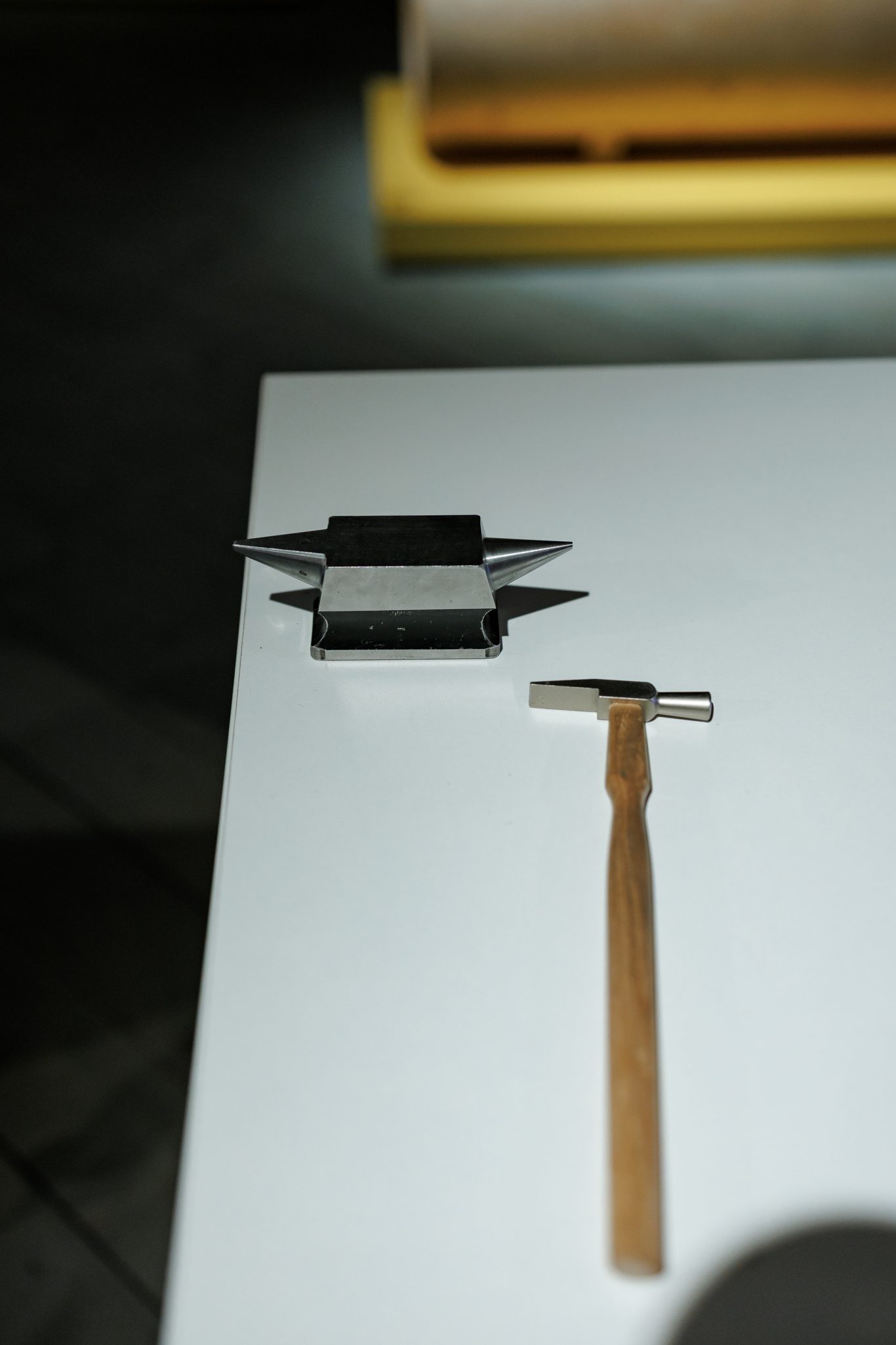
Rasma Pušpure still uses ring gauges she made during her student years, relying on them almost daily. Zane Vilka, meanwhile, almost always carries a tool in her bag, as she regularly lends tools from her workshop to students at the Riga School of Design and Art. Ildze Bogana spoke about her preference for a very small hammer and anvil, ideal for creating delicate textures and securing tiny rivets.
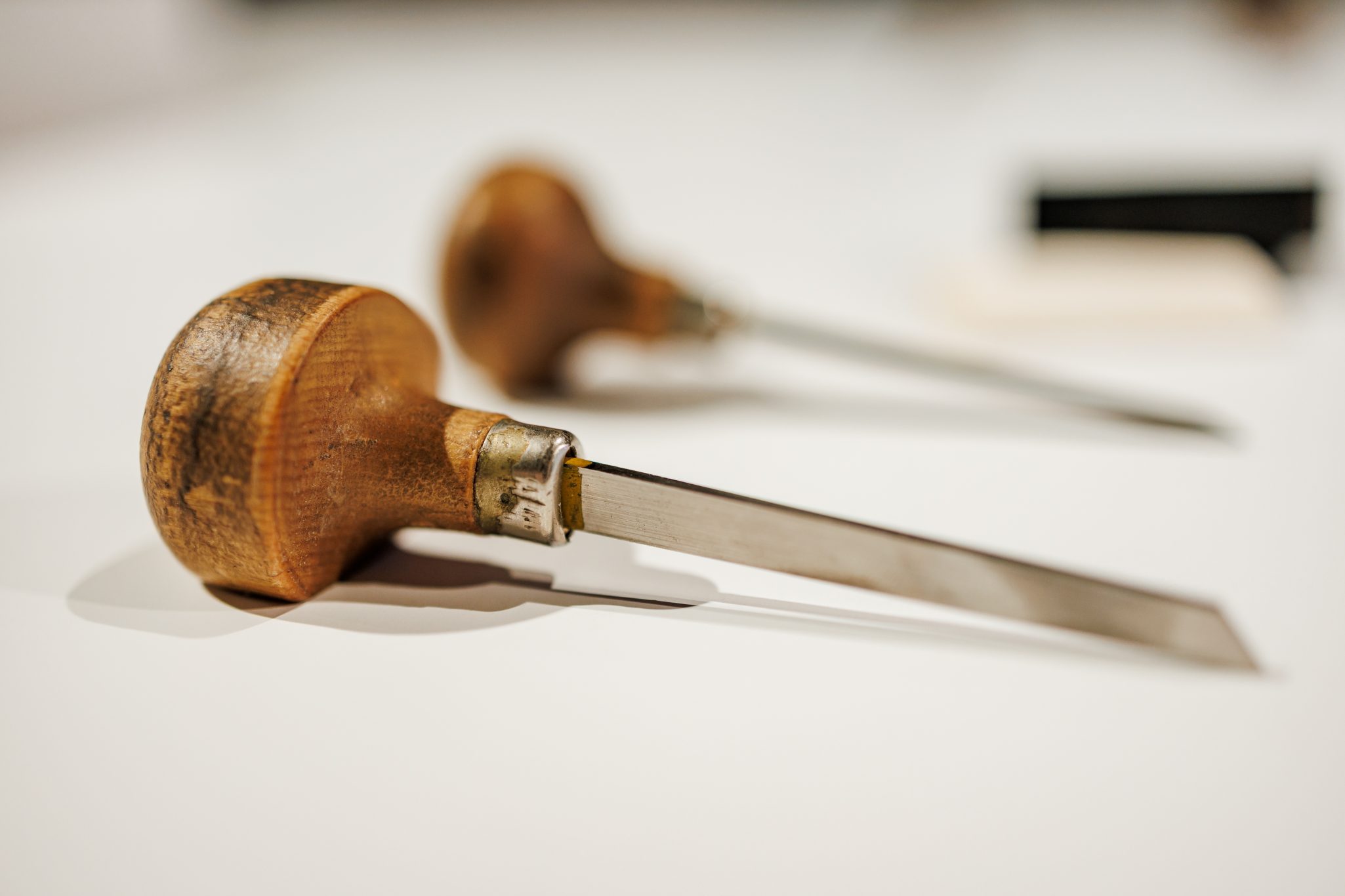
Maija Vītola-Zitmane revealed that she sources materials from suppliers serving musical instrument makers. Her jewellery “plays” in the tonalities of ebony and horn. Working with gravers, she carves her pieces entirely by hand—a slow process requiring patience and deep respect for the material. As the artist explained, working with organic materials represents a symbolic return to nature and an act of appreciation for materials that once belonged to the natural world before finding new life in her studio.
Works by Maija Vītola-Zitmane, Zane Vilka and other artists will soon be featured in the second exhibition of the “Spectrum” pop-up series, “Beautiful Nature” (Skaistā daba). The exhibition will open on 9 June at 2:00 PM on the third floor of the Museum of Decorative Arts and Design and will be on view from 10 June until 13 September.
This website uses cookies - small text files that are stored on your computer or mobile device when you visit the website. To find out more, click here.