
Exploring Marble at OBRAS Residencies
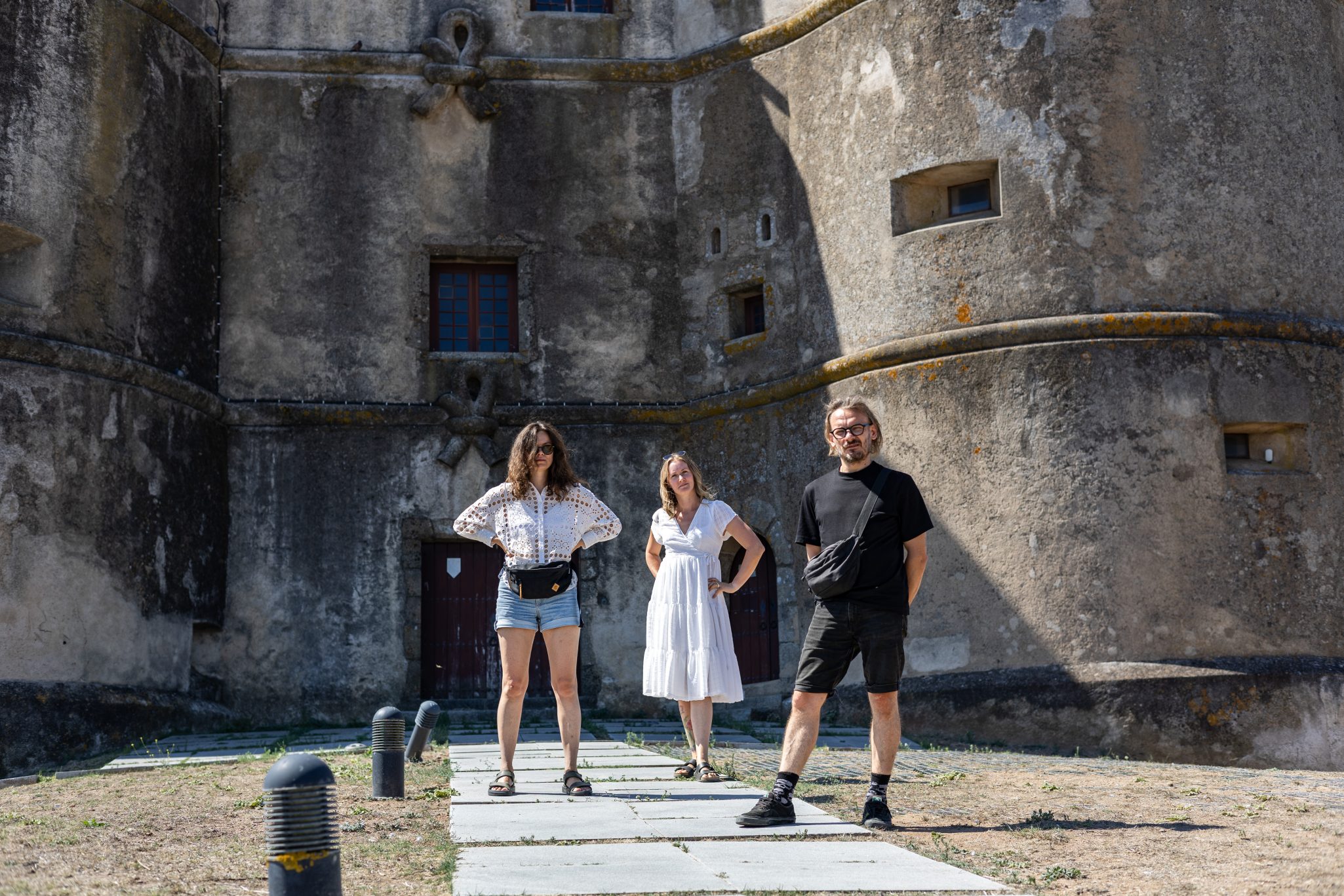
In September 2026, Latvian contemporary jewellery artists Rasma Pušpure and Ginta Grūbe returned to OBRAS Residencies in Portugal’s Alentejo region for the second consecutive year, continuing the work they began in 2025 with local materials – marble, cork and found objects. Installation and sound artist Modris Svilāns also joined them again this year. The ideas developed during the residency have become the foundation for a joint exhibition, Not Now, Marble, planned for August 2027 at Évoramonte Castle in Portugal.
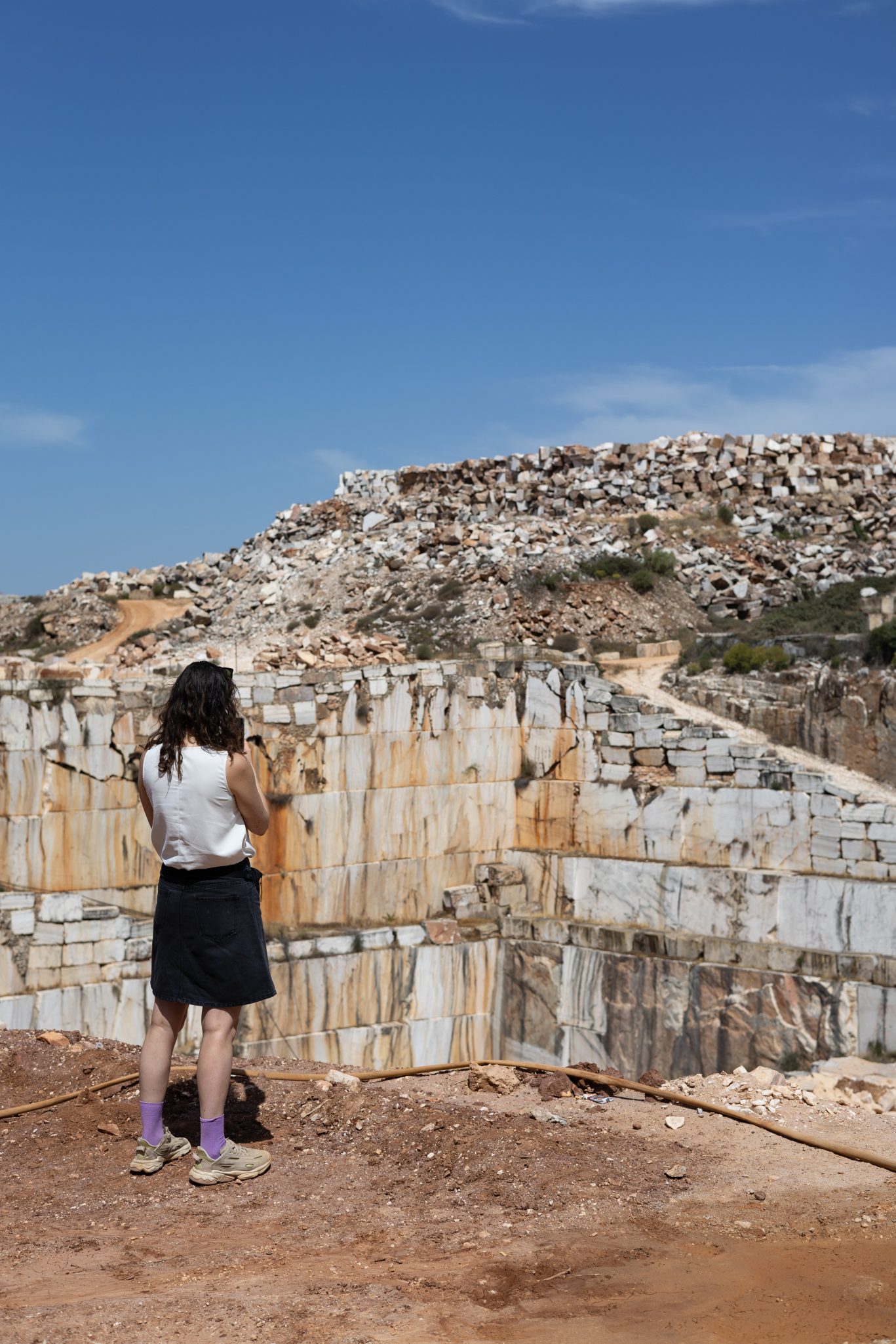
While the artists’ initial residency focused primarily on exploring unfamiliar materials and their possibilities, this year the place itself became increasingly important – its landscape, history, people and processes of material extraction. Alentejo is a region where extensive marble quarries exist alongside olive groves and cork oak forests. Here, marble is both an important material in local culture and architecture and an integral part of the industrial landscape.
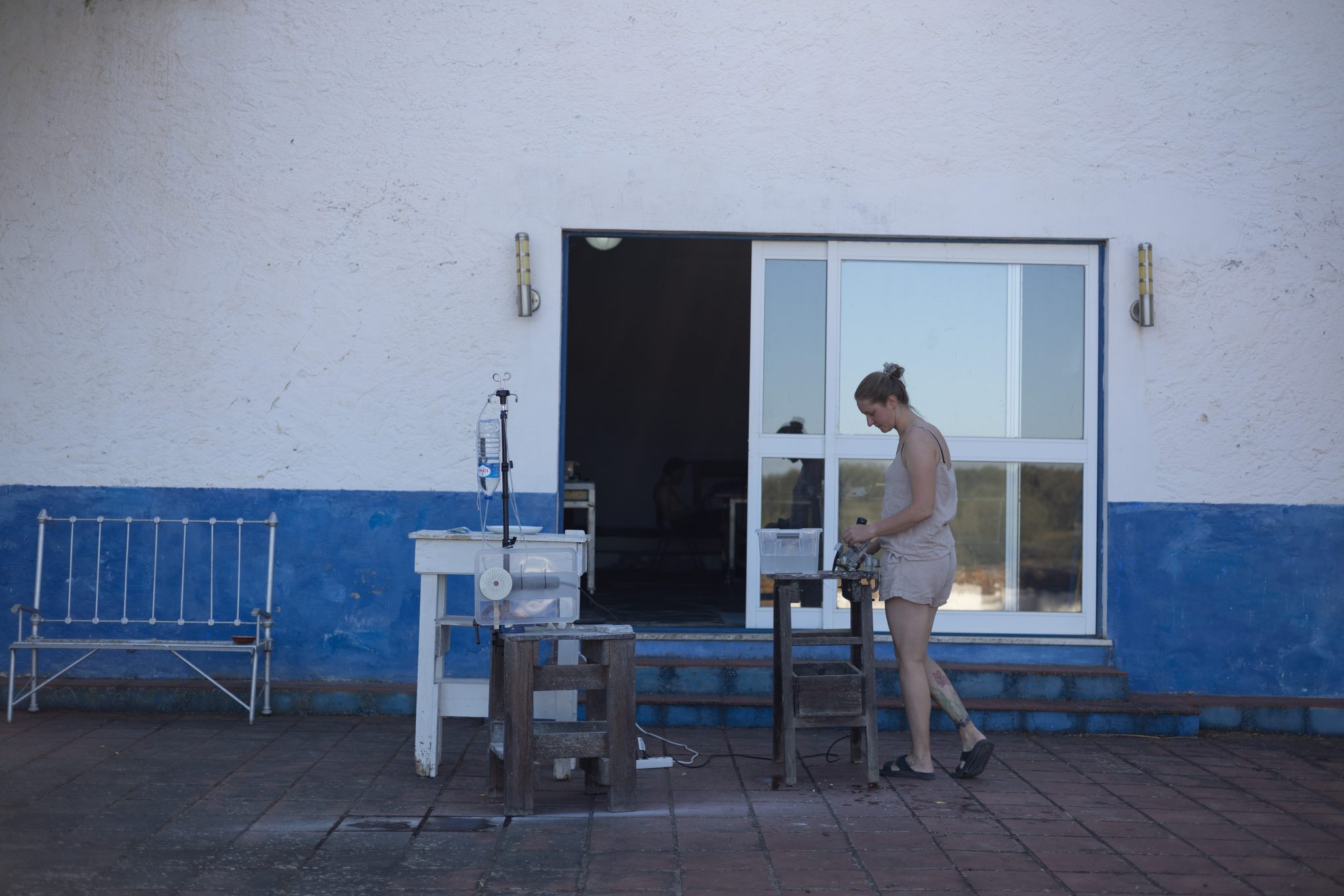
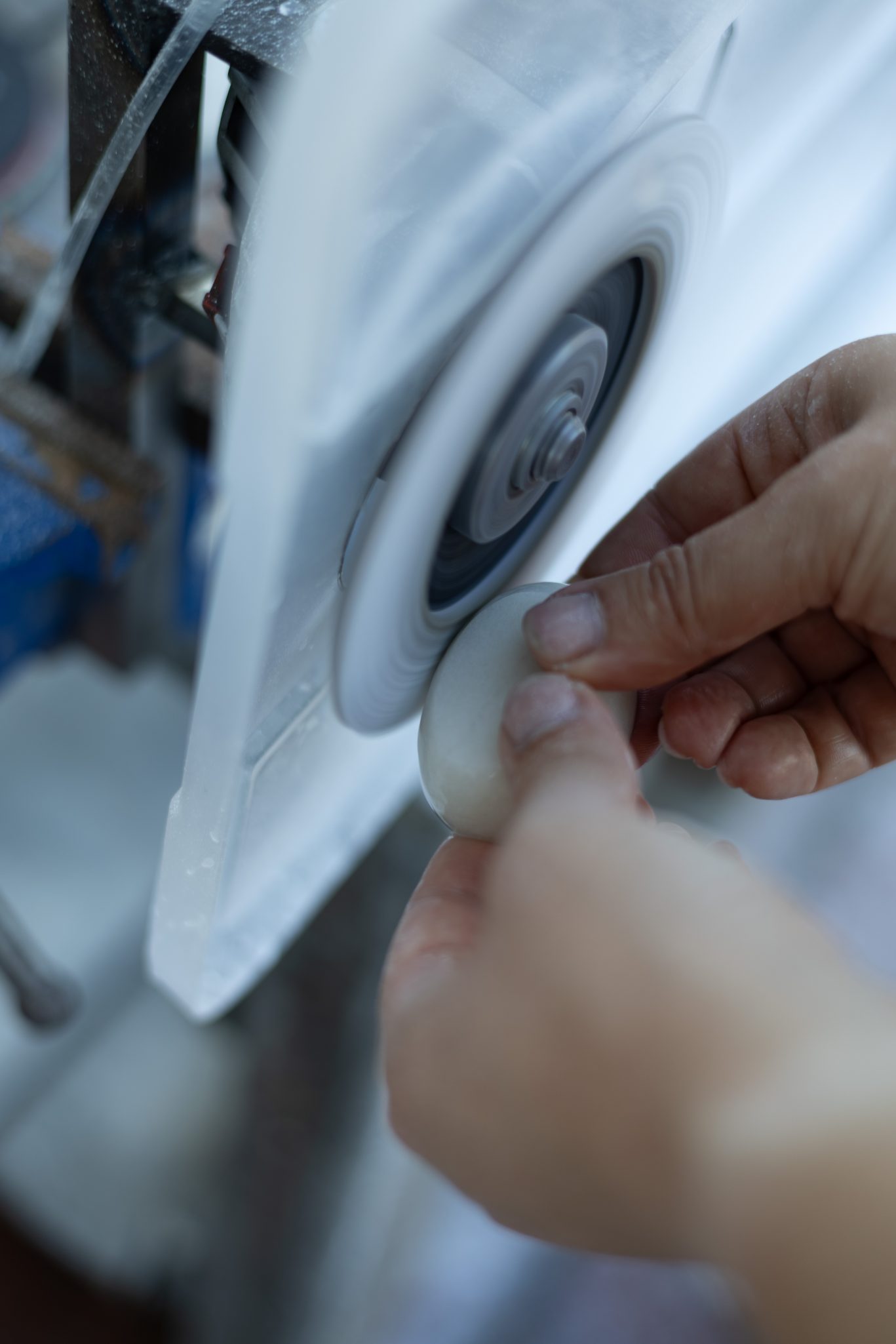
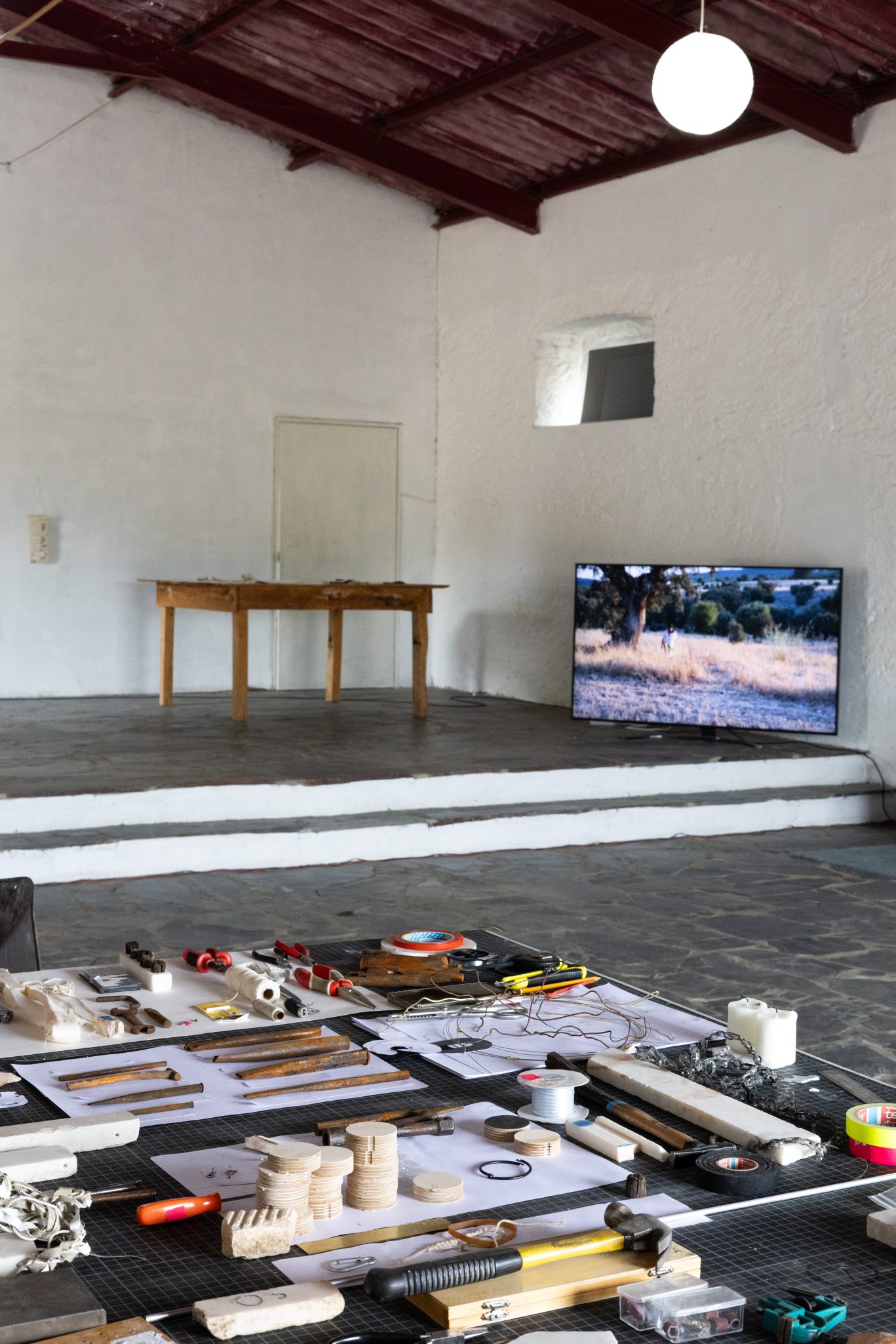
Rasma Pušpure continued her exploration of marble, which began during her 2025 residency at OBRAS. Her initial curiosity about the material led her to independently learn techniques for cutting, grinding and shaping marble, drawing on her knowledge of jewellery making and gemstone processing.
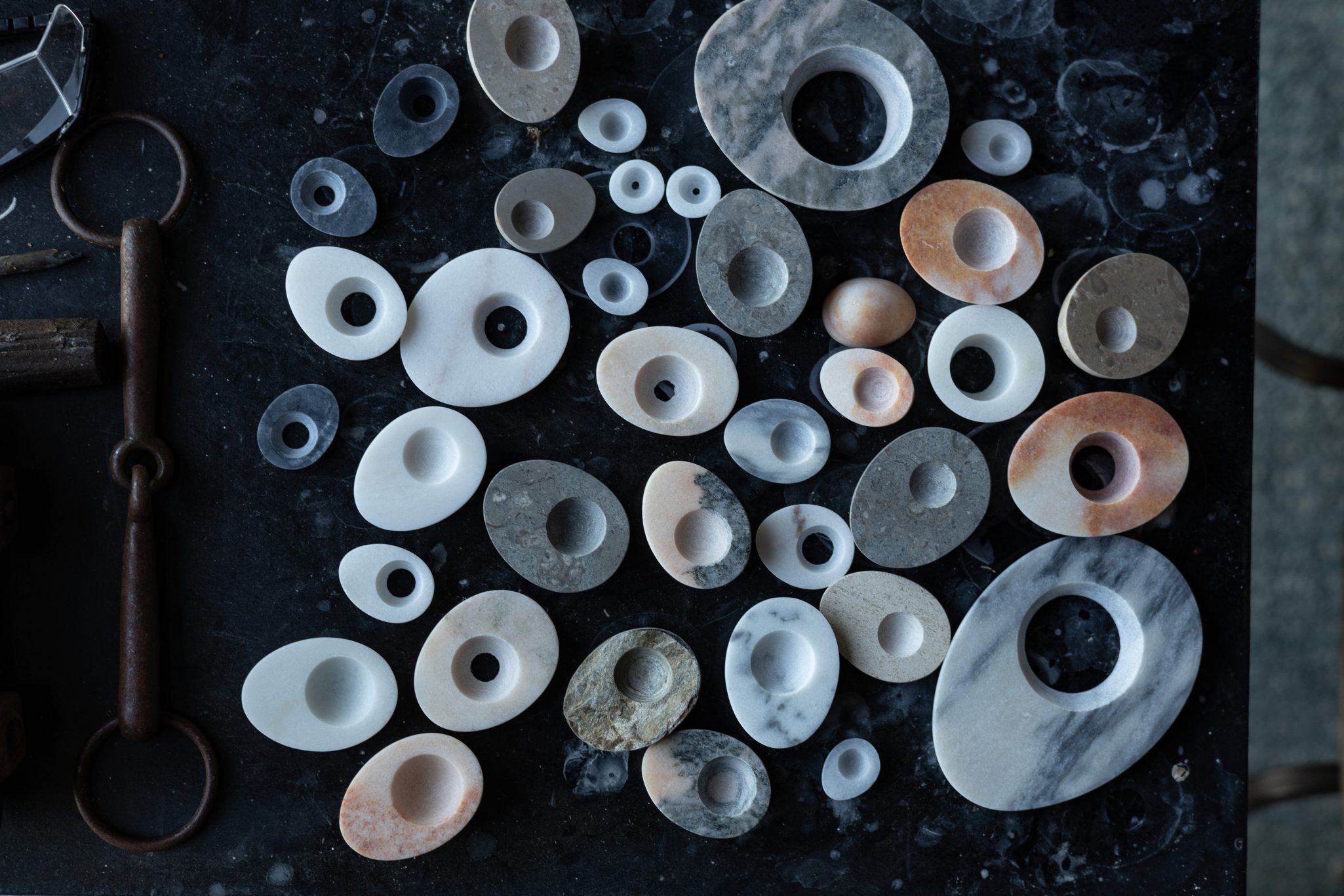
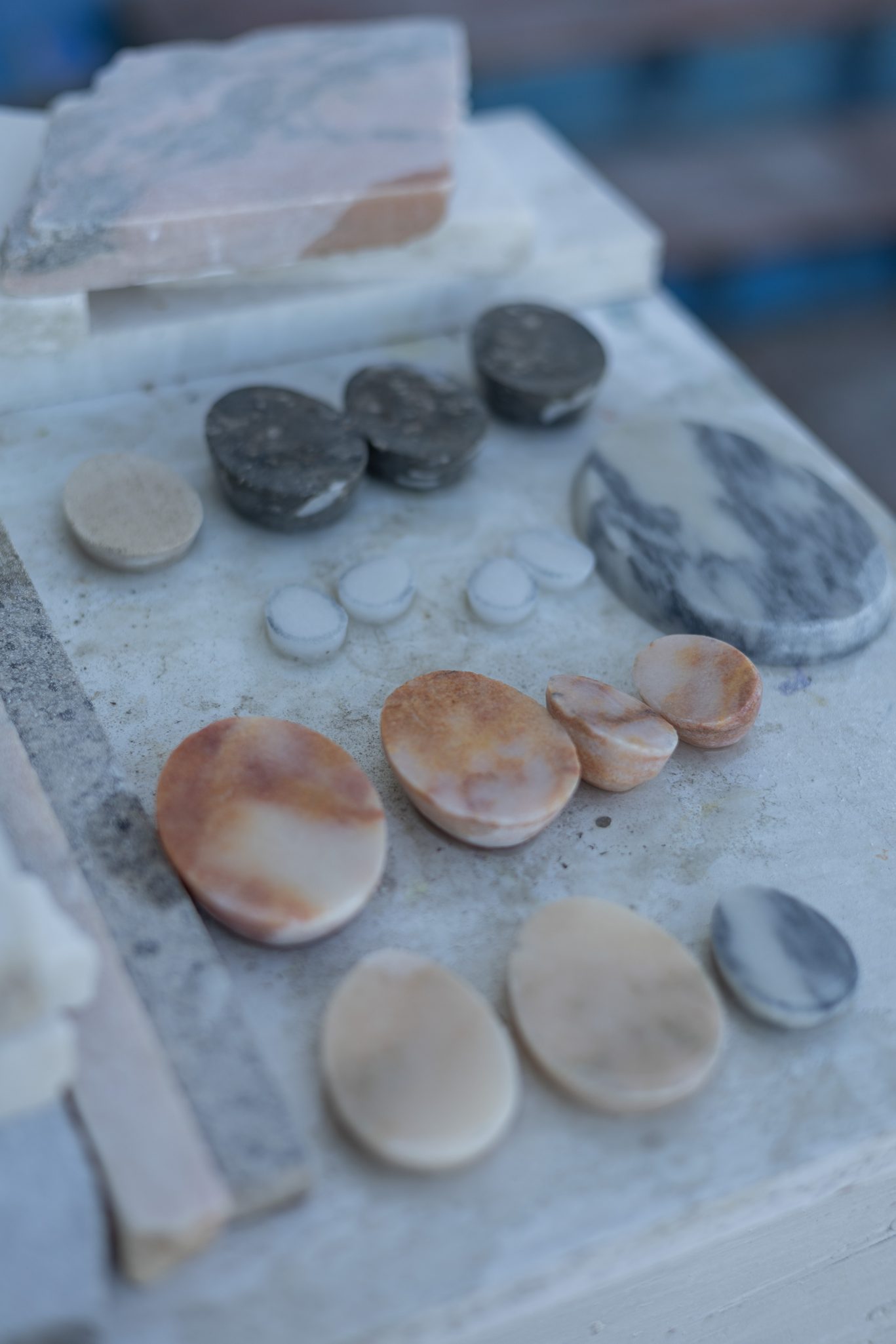
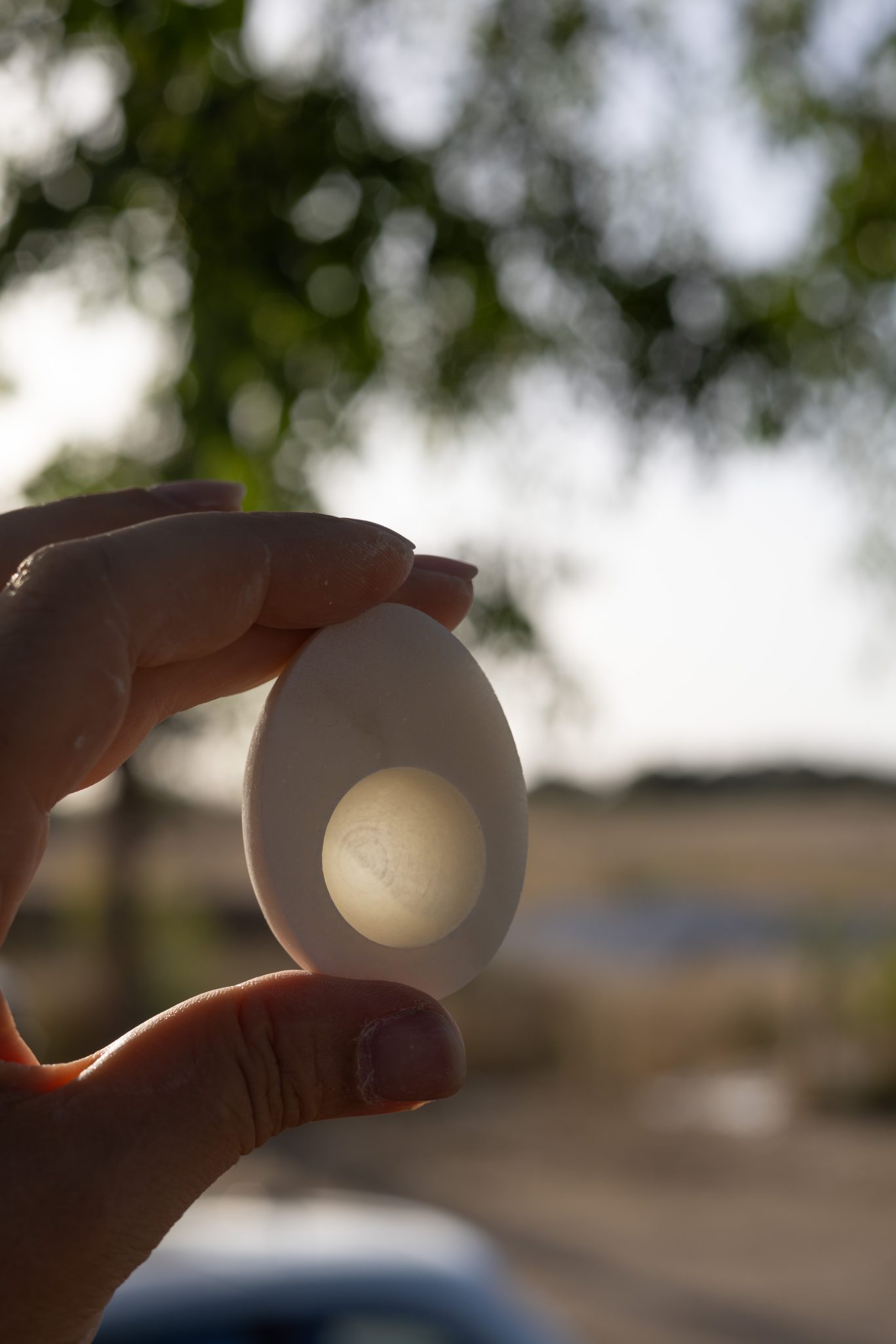
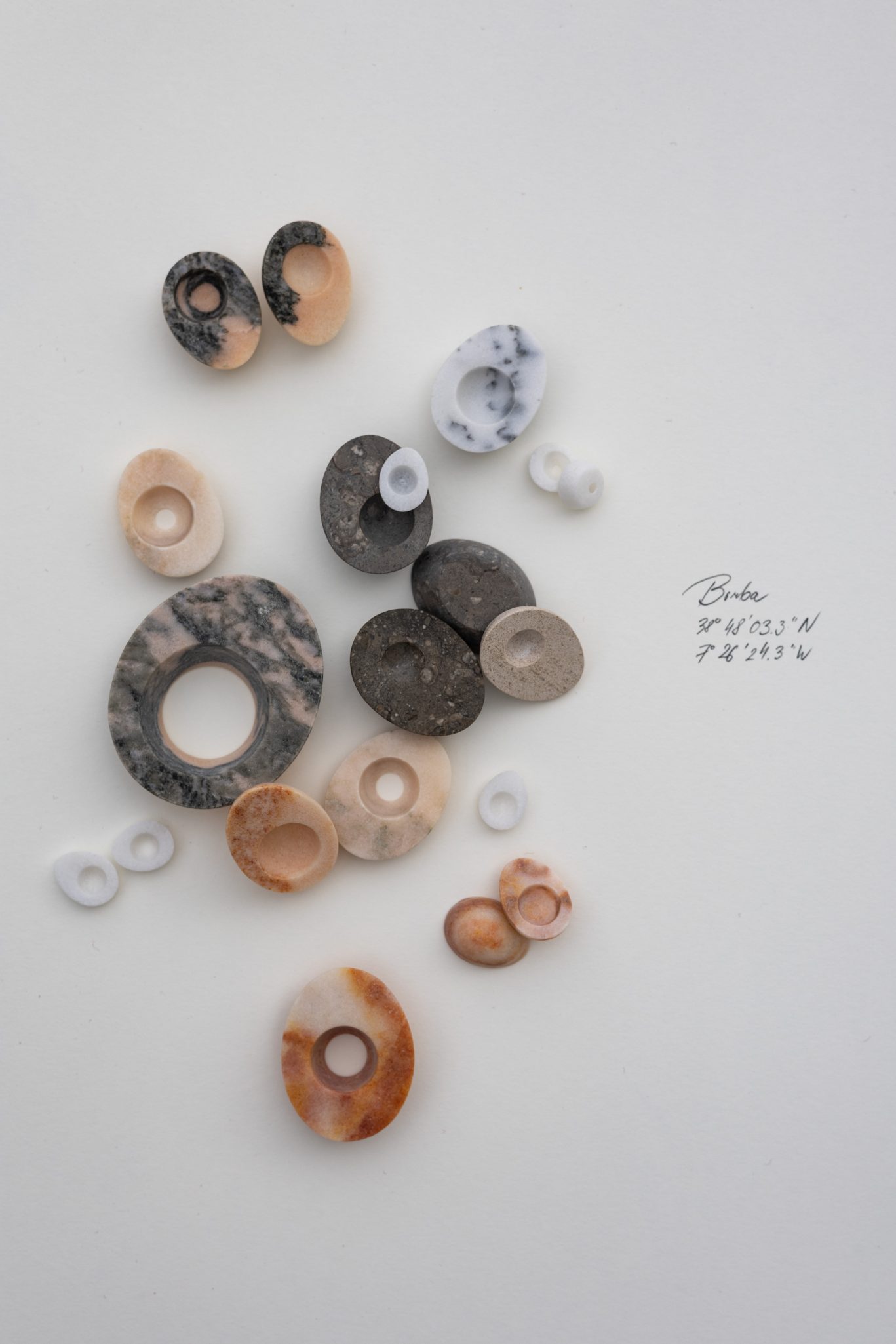
During this residency, Rasma developed an idea: to create one marble egg each day. Twenty-nine days at the residency, twenty-nine eggs. However, she eventually exceeded her original goal, creating a larger collection of marble objects in different sizes, colours and textures. The egg shape became a starting point not only for technical experimentation but also for reflecting on the value we assign to materials.
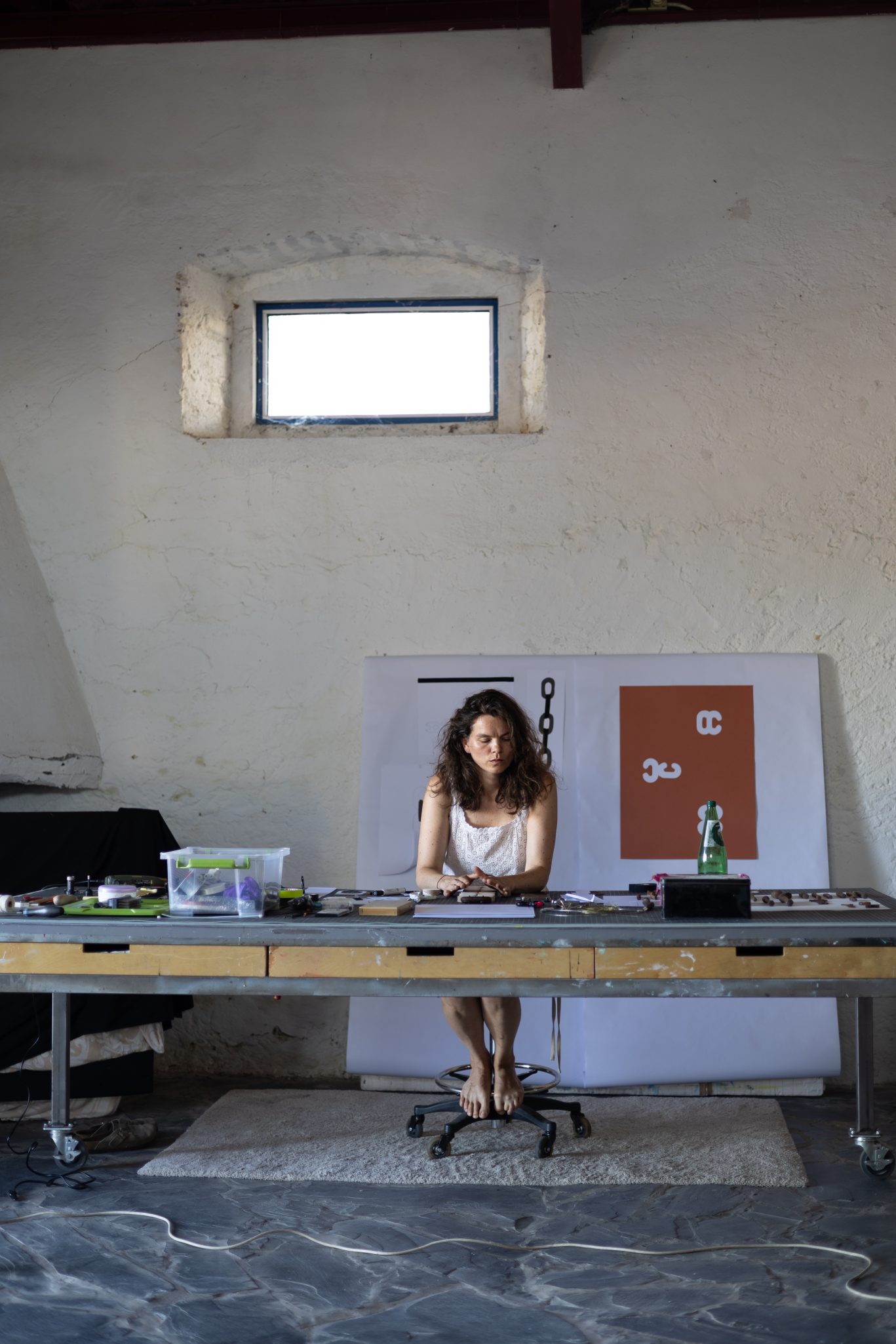
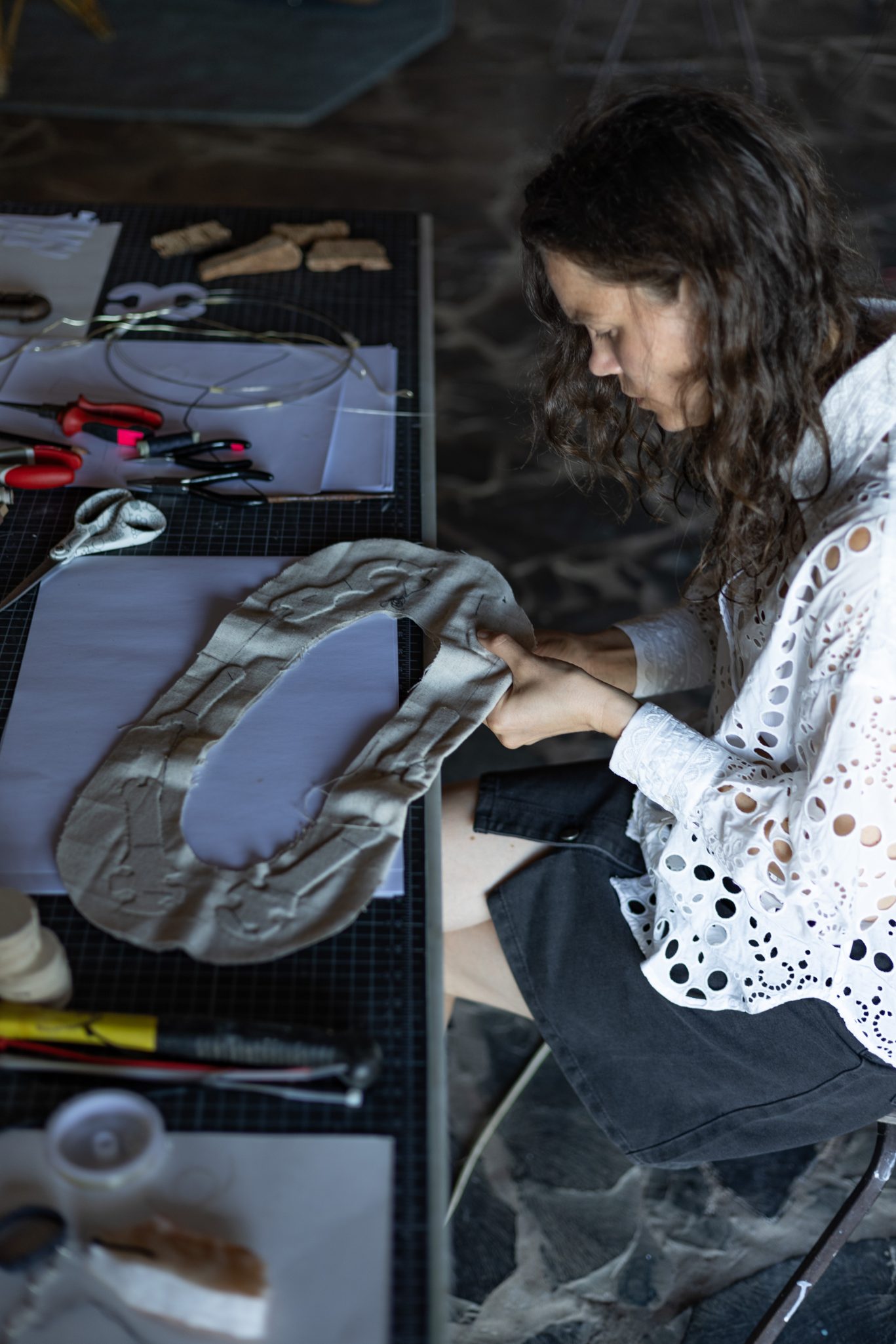
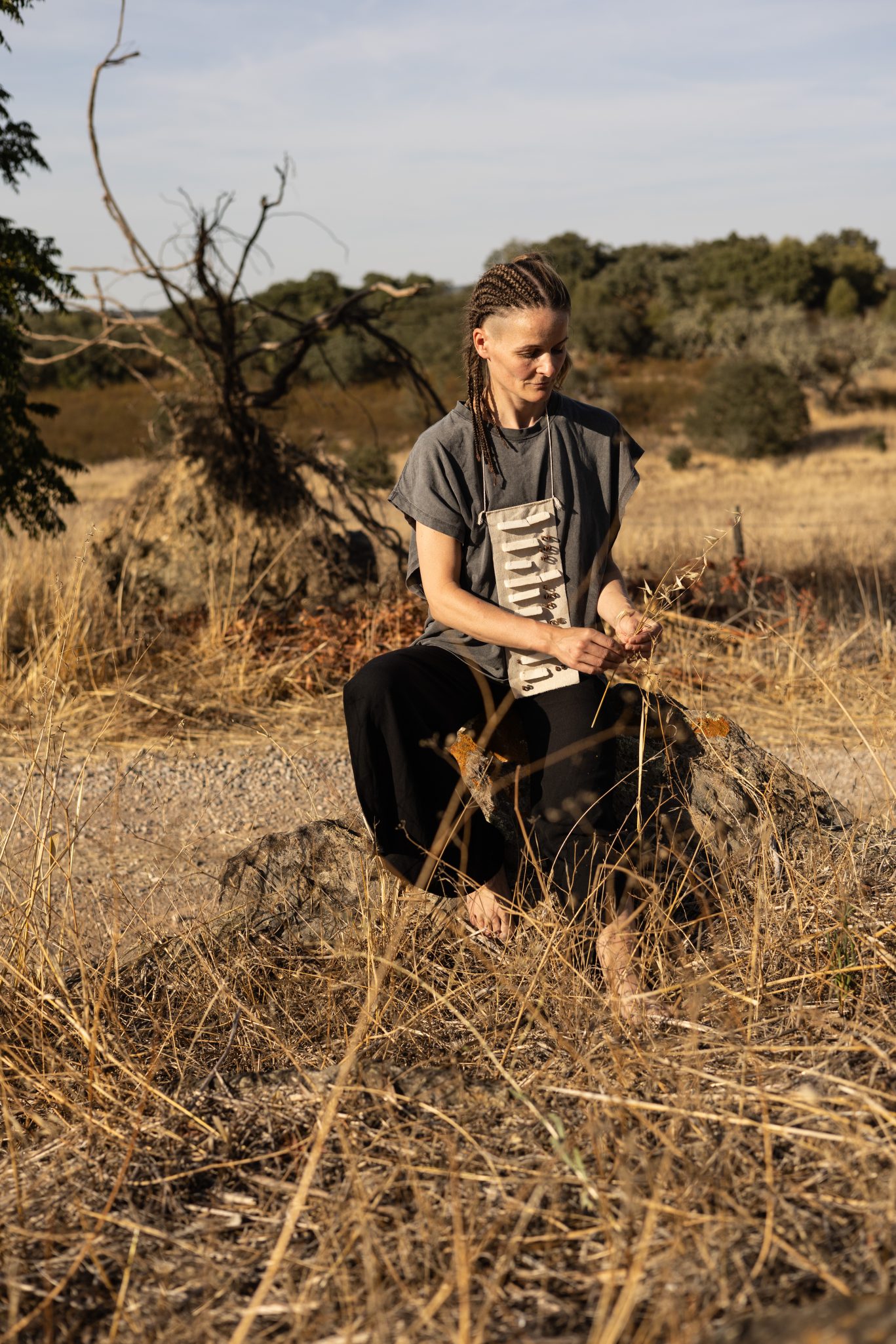
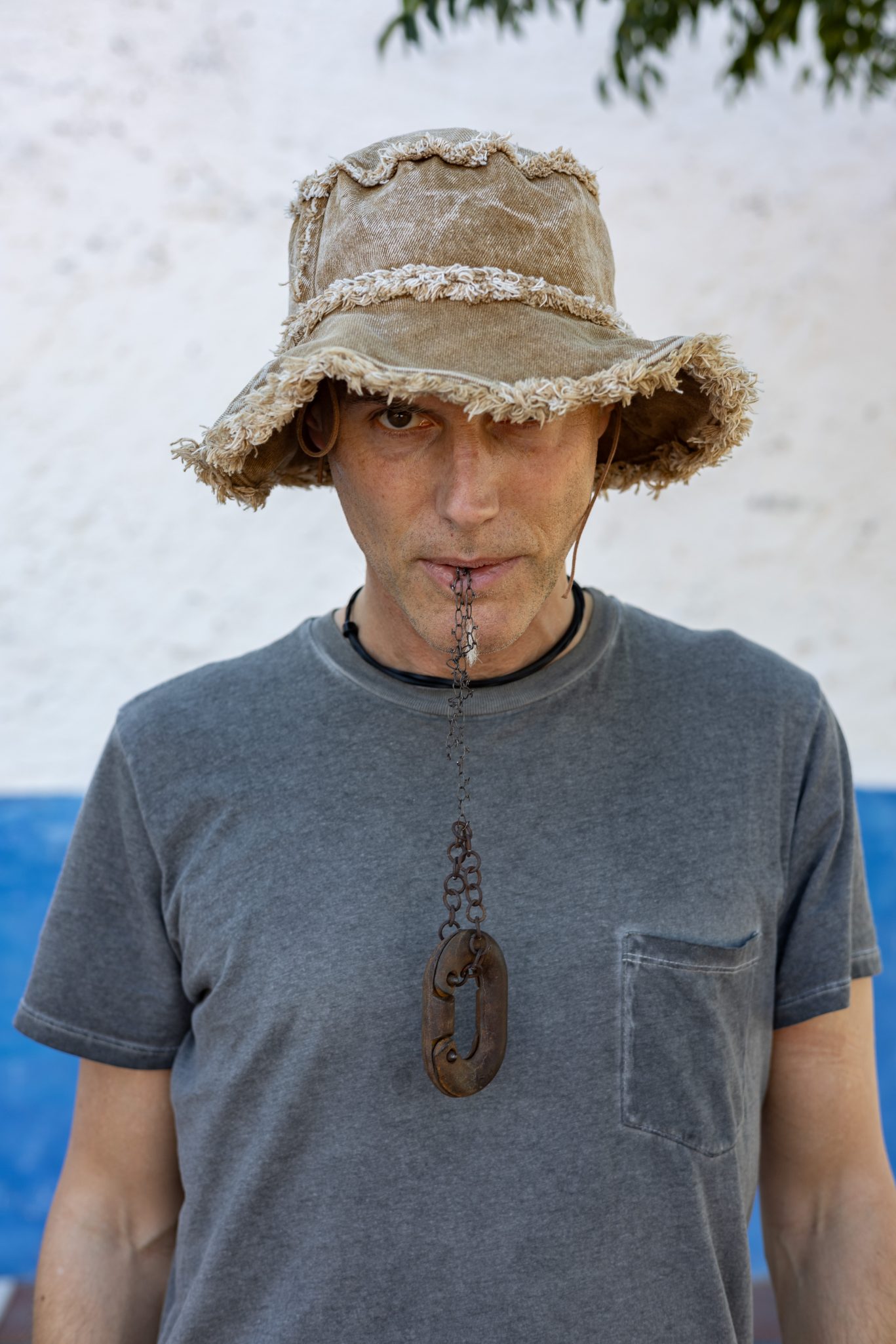
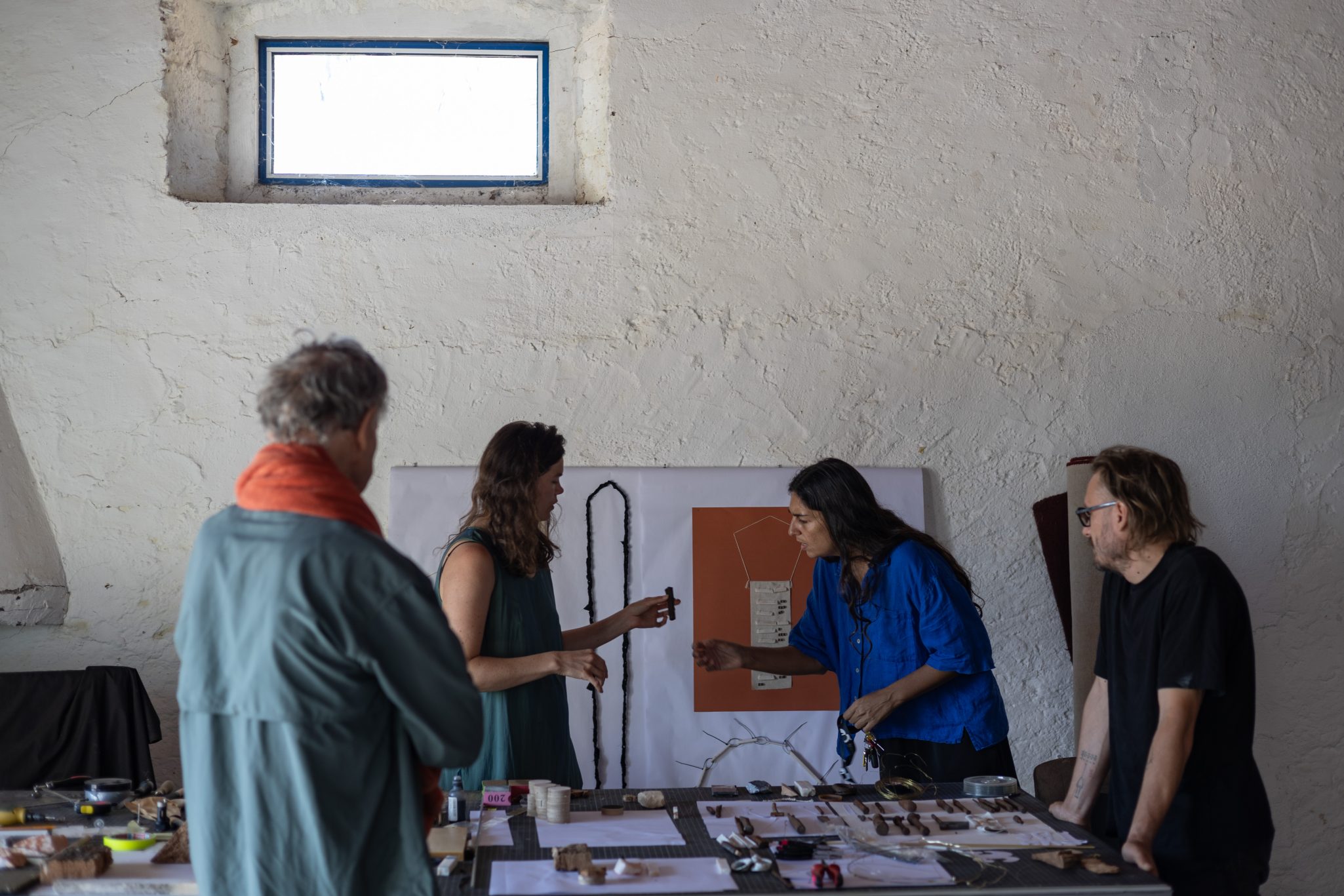
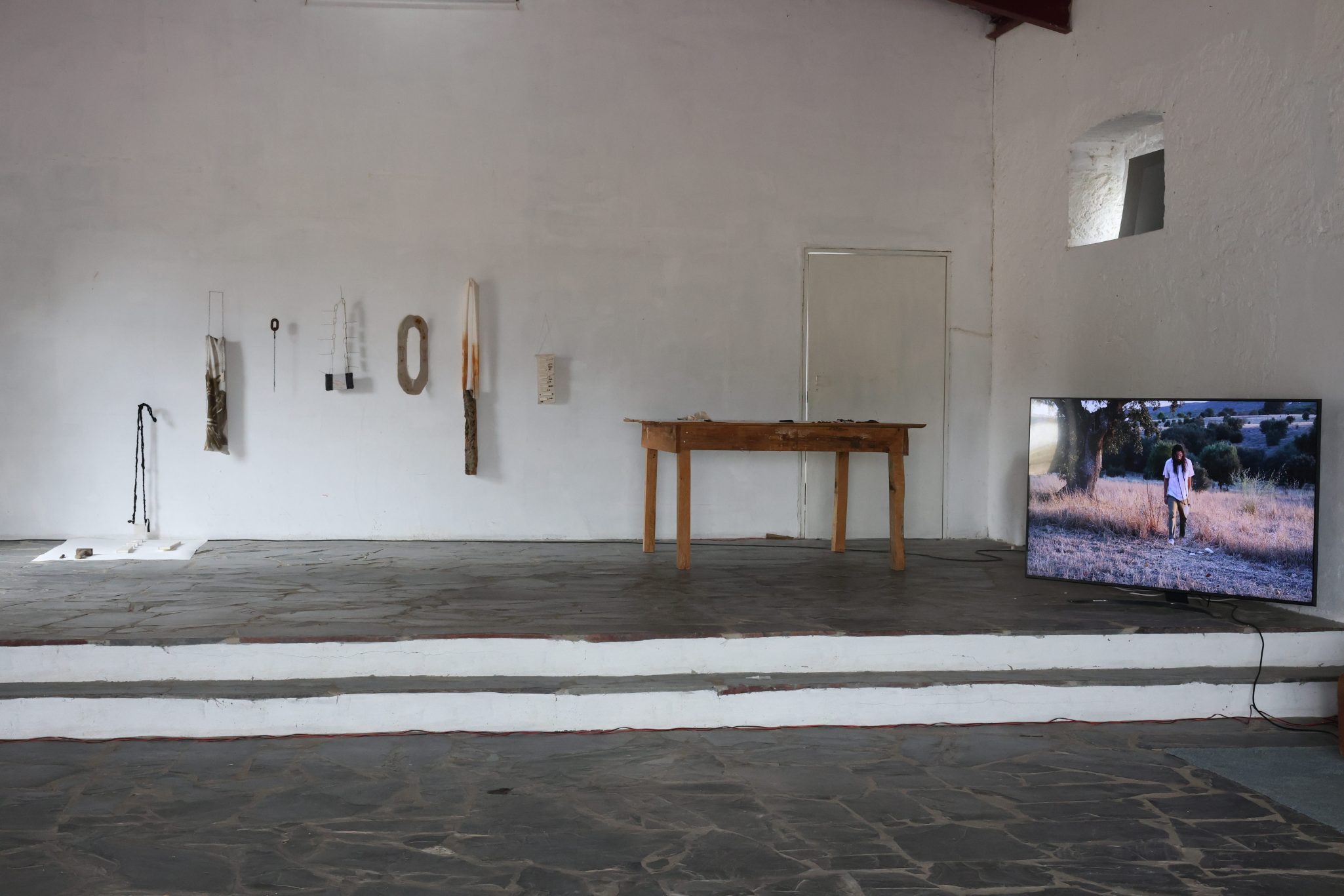
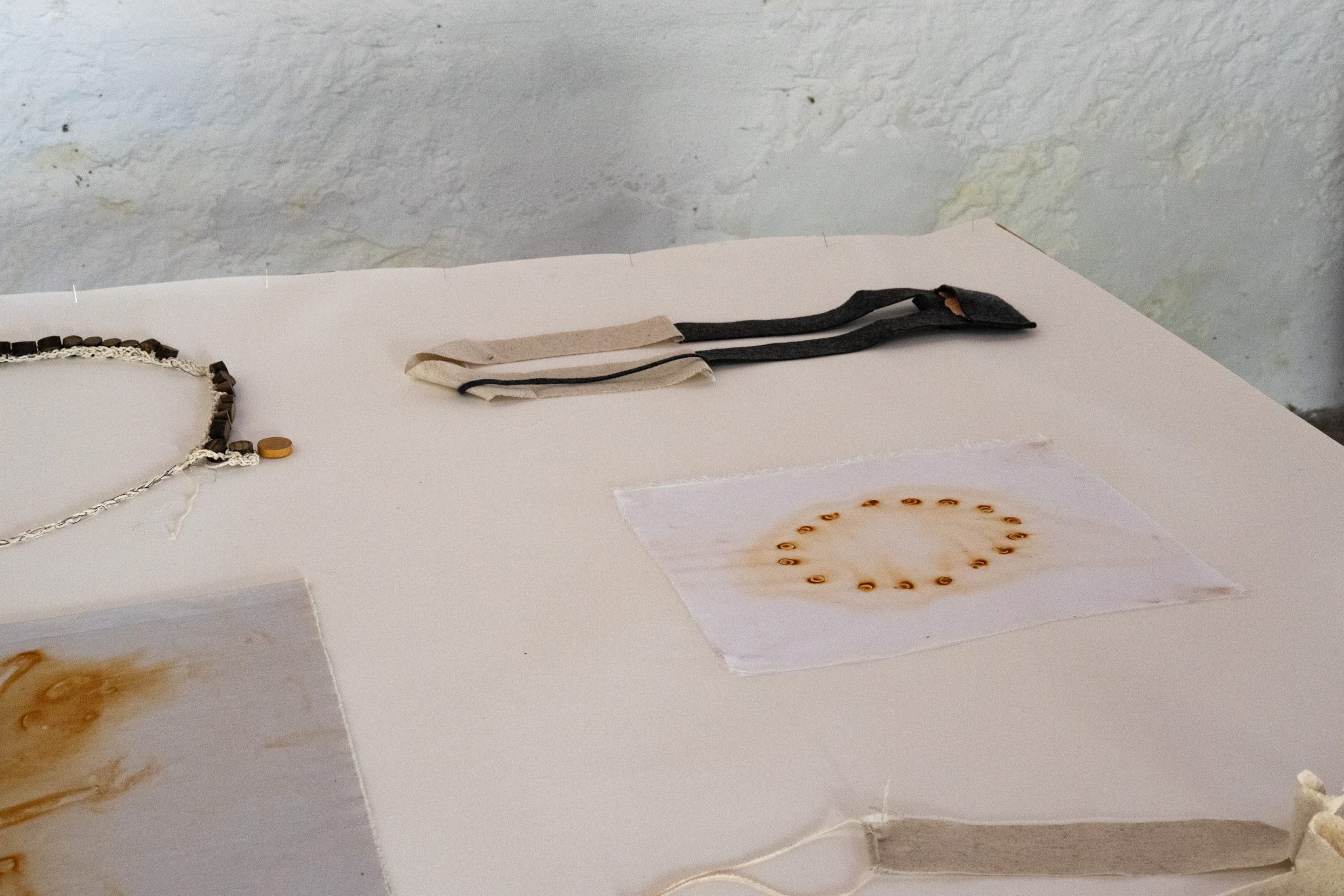
Ginta Grūbe, meanwhile, explored the boundaries between jewellery, object and sculpture. Found objects, material remnants and the reinterpretation of their original functions play an important role in her artistic practice. In her series The Missing Link, developed during the residency, marble encounters everyday objects and locally sourced materials, creating unexpected relationships between an object’s history, its symbolic meaning and the human body.
The artist is also interested in the tension between the monumentality of marble and the intimate scale of jewellery. A material traditionally associated with architecture and monuments becomes an object whose weight and form challenge conventional ideas of wearability.
Modris Svilāns worked with kinetic objects, a modular synthesizer and sound experimentation. In his practice, mechanical movements and bioelectrical signals from living organisms become elements of sound generation. His works also incorporate field recordings made in Portugal. In this way, the region’s material environment is explored not only visually and through touch, but also through sound.
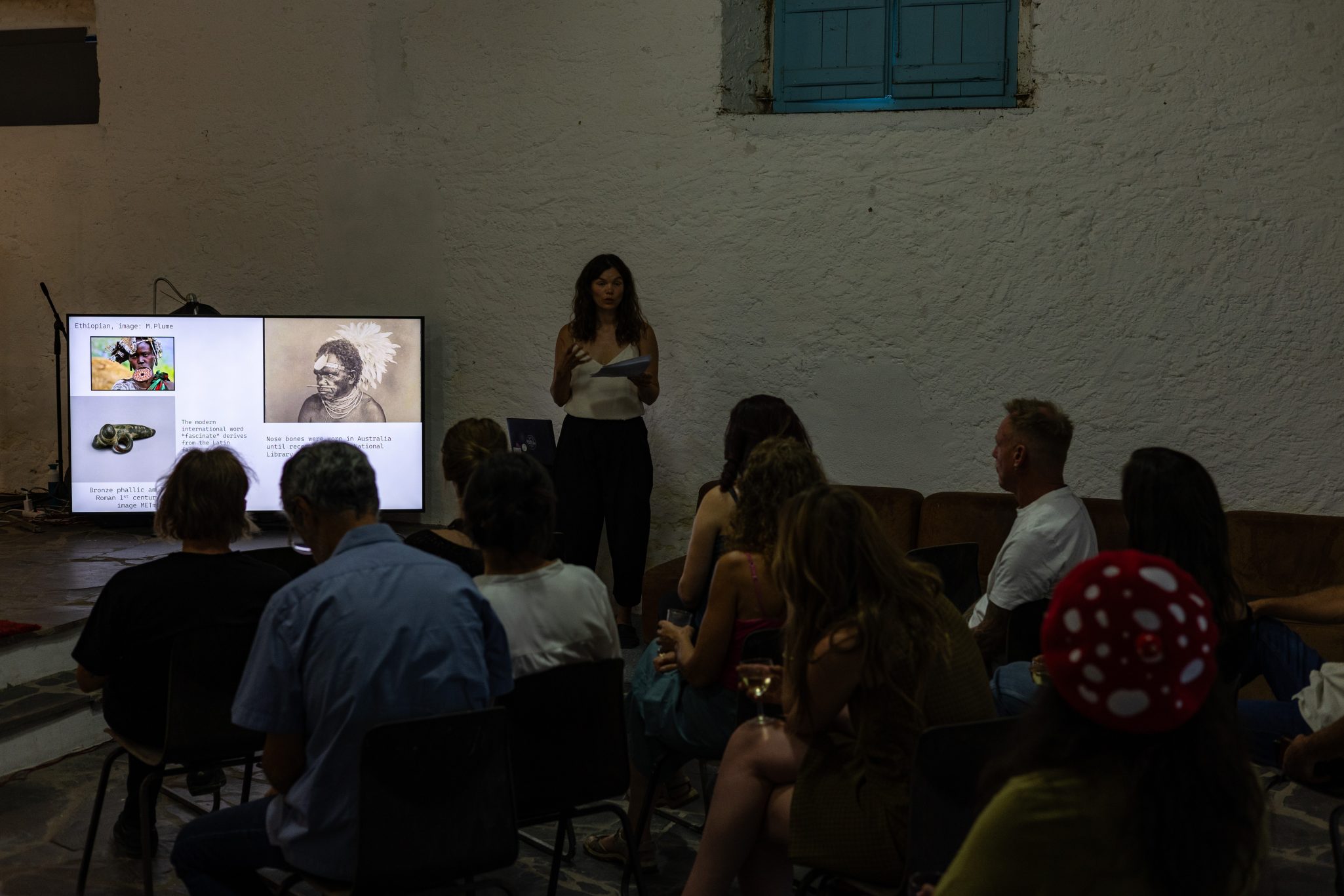
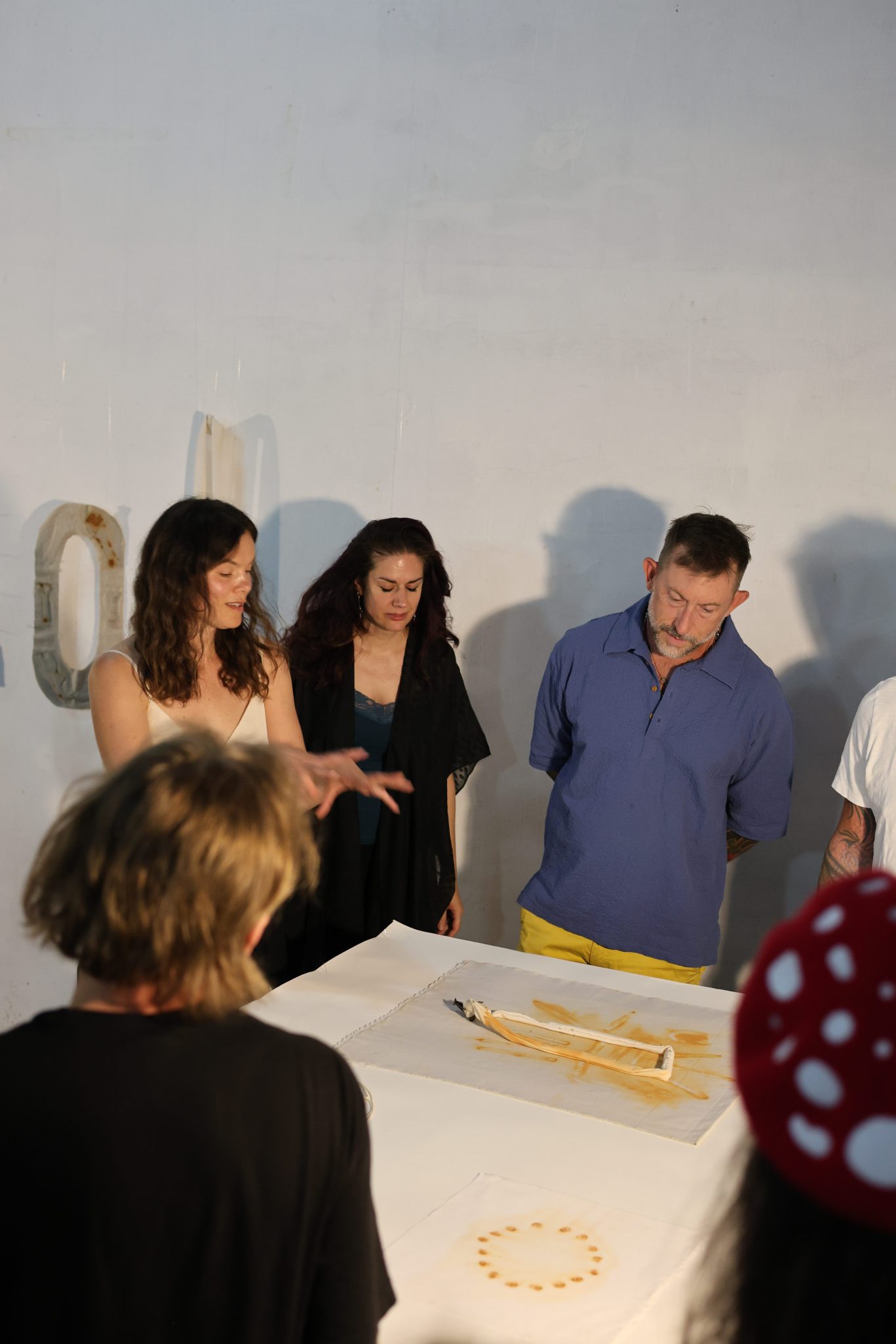
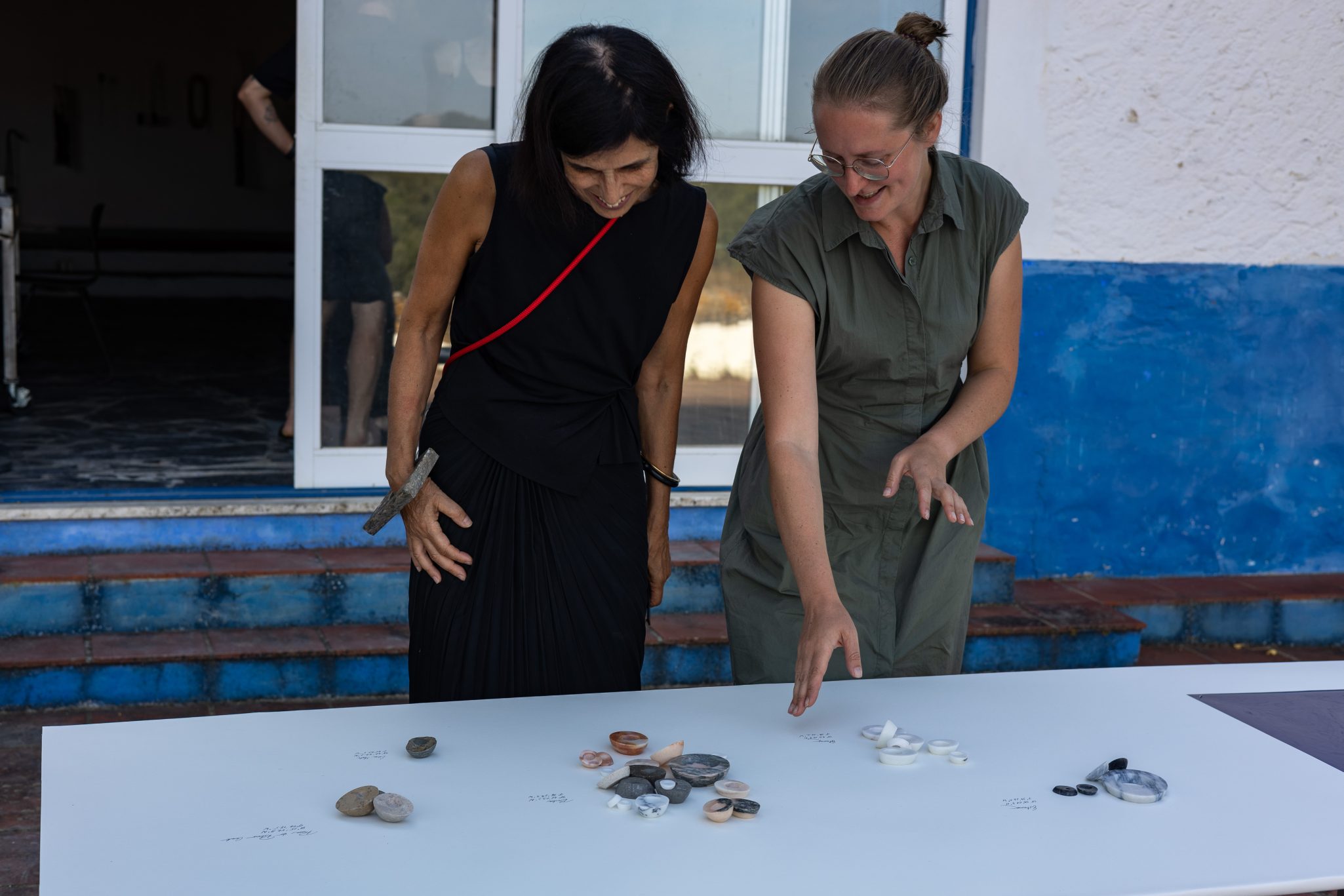
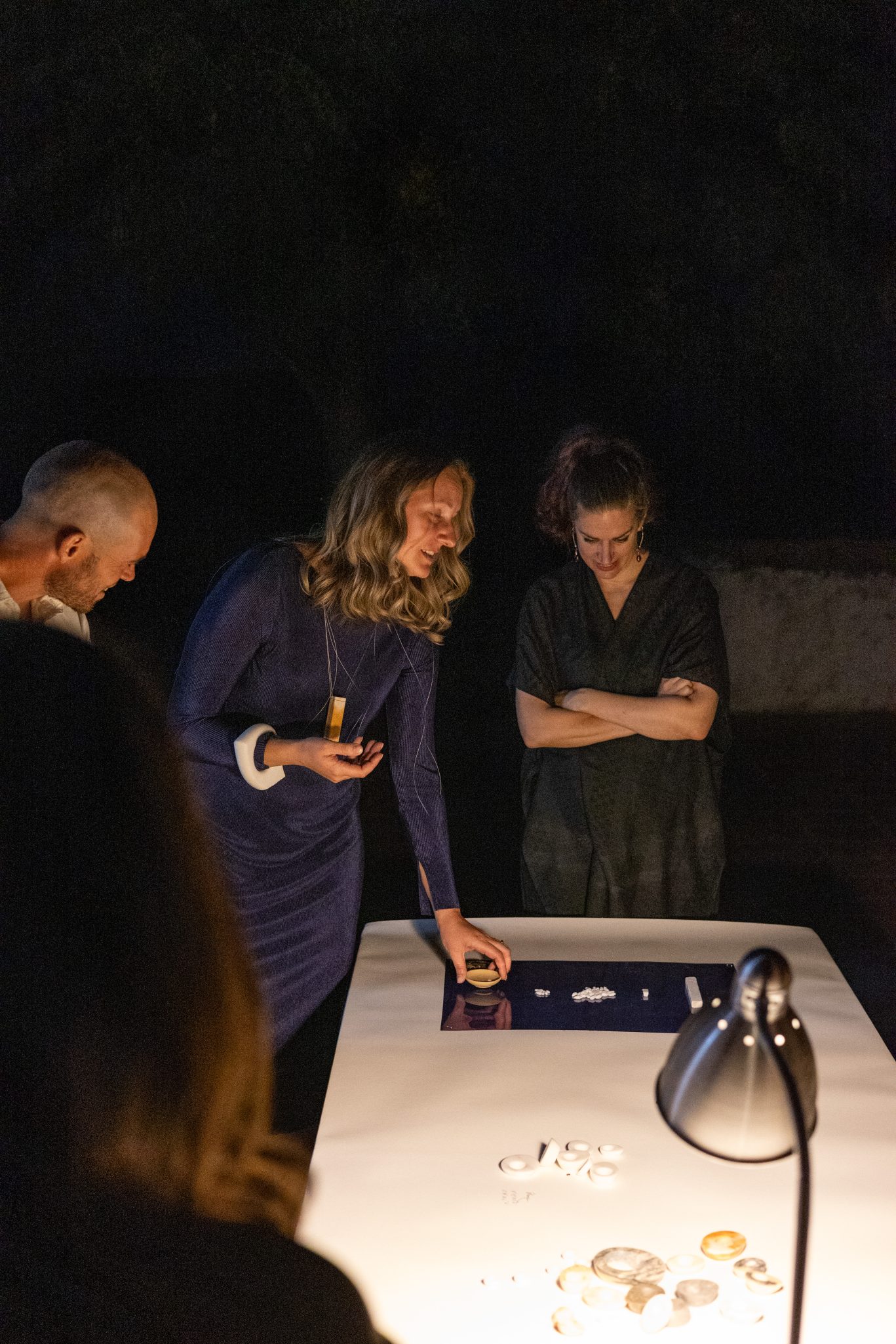
At the end of the residency, on 27 September, OBRAS hosted an Open Studio Day, giving visitors an opportunity to explore the artists’ working processes and experiments developed during their stay. Ginta and Rasma presented their works and artistic practices, while Modris performed together with vocalist and experimental music artist Sophie Tassignon, combining electronic sound experimentation with live vocals. Such encounters are an important part of the OBRAS residency programme, allowing artists to exchange experiences and engage in dialogue with an international audience.
During their stay, the artists also visited the 3rd Lisbon Contemporary Jewellery Biennial and met with Portuguese jewellery artist, researcher and curator Cristina Filipe. Their collaboration will continue in the development of next year’s exhibition.
Not Now, Marble – Continuing in 2027
Over the course of two years, the material research initiated at OBRAS has developed into an interdisciplinary exhibition project, Not Now, Marble, bringing together contemporary jewellery, sculptural objects, kinetic installations and sound.
The exhibition is planned to take place from 5 to 22 August 2027 at Évoramonte Castle, a historic architectural monument in the Municipality of Estremoz. The project will be curated by Cristina Filipe and developed in collaboration with OBRAS Residencies. The exhibition has been confirmed as part of the official programme of BIALE_27 – Bienal Internacional do Alentejo, while collaboration with Évora_27 – European Capital of Culture is also being developed.
At the heart of the exhibition is the question of the different timescales of materials and human existence. Marble, formed through geological processes and used for centuries in monumental architecture, comes into direct contact with the human body when transformed into jewellery. This mismatch of scale and time becomes one of the project’s central themes, alongside questions of material extraction, landscape transformation and local cultural heritage.
The exhibition programme will also include a public discussion with Portuguese archaeologist Maria de Magalhães Ramalho, addressing cultural heritage, landscape and the use of natural resources.
The collaboration with OBRAS will continue ahead of the exhibition. In January 2027, Rasma Pušpure will lead a three-week marble carving workshop, inviting participants to explore the local material and experiment with its possibilities in contemporary art and design.
Registration for the workshop is available here: OBRAS Marble Carving Workshop.
What began in 2025 as an interest in marble and cork has gradually evolved into a broader artistic investigation and a long-term collaboration. In this process, OBRAS has become more than simply a place to work – it is an environment where different artistic practices, local knowledge and new ideas come together.
Text: Ginta Grūbe