Ildze Bogana: “When I become absorbed in an idea, time almost ceases to exist.”
Interview conducted by Elīza Dzērve, a third-year BA student in Metal Design at the Design Department of the Art Academy of Latvia, as part of the History of Jewellery course.
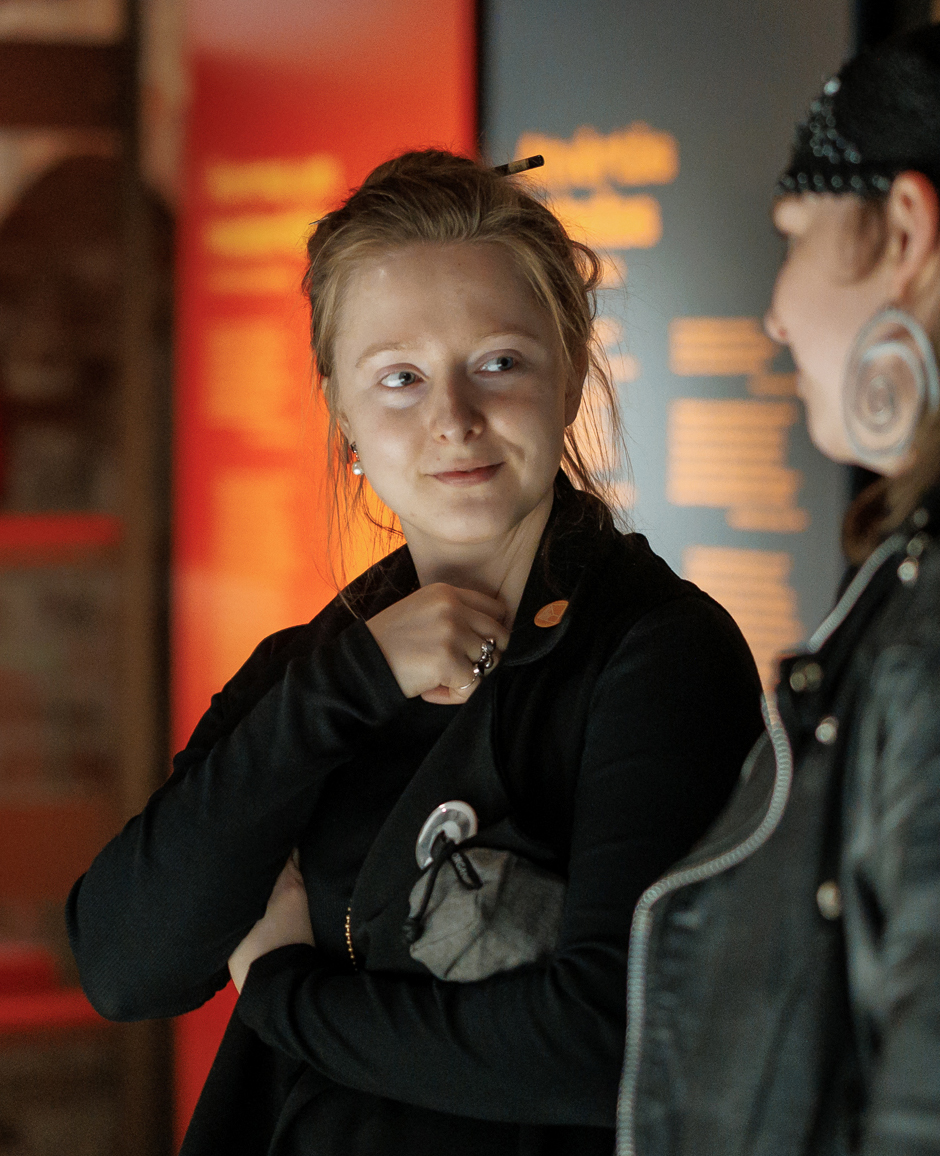
Ildze Bogana belongs to a new generation of Latvian contemporary jewellery artists whose work combines traditional craftsmanship with experimentation and interdisciplinary thinking. After graduating from the Graphic Arts Department of the Art Academy of Latvia in 2016, she gradually found her way into contemporary jewellery, first working in the studio of jewellery artist Laura Selecka and later continuing her studies at the Royal Academy of Fine Arts Antwerp. In 2024, she received her Master’s degree and was awarded the prestigious Mathilde Horlait-Dapsens Prize for her graduation project.
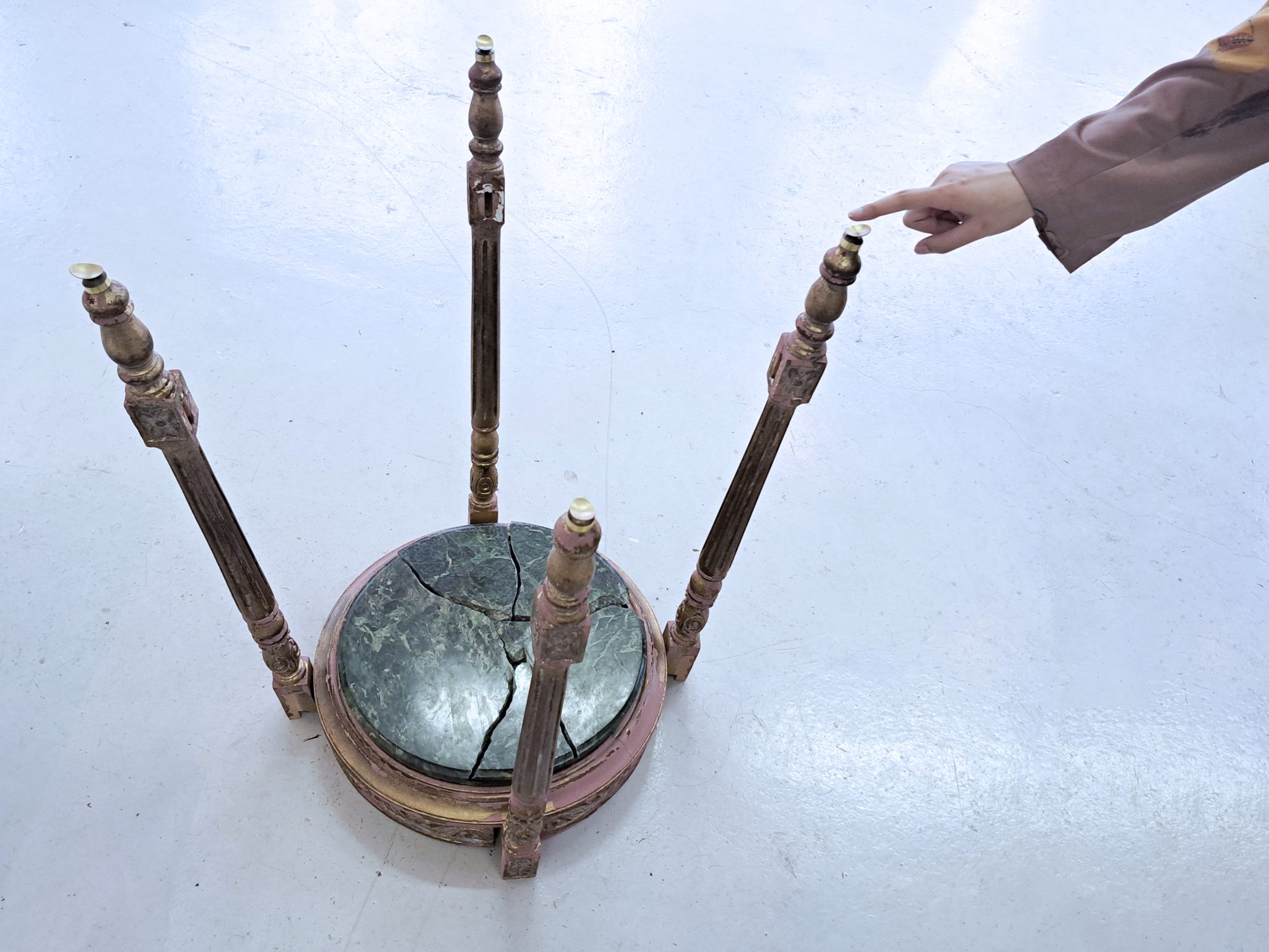
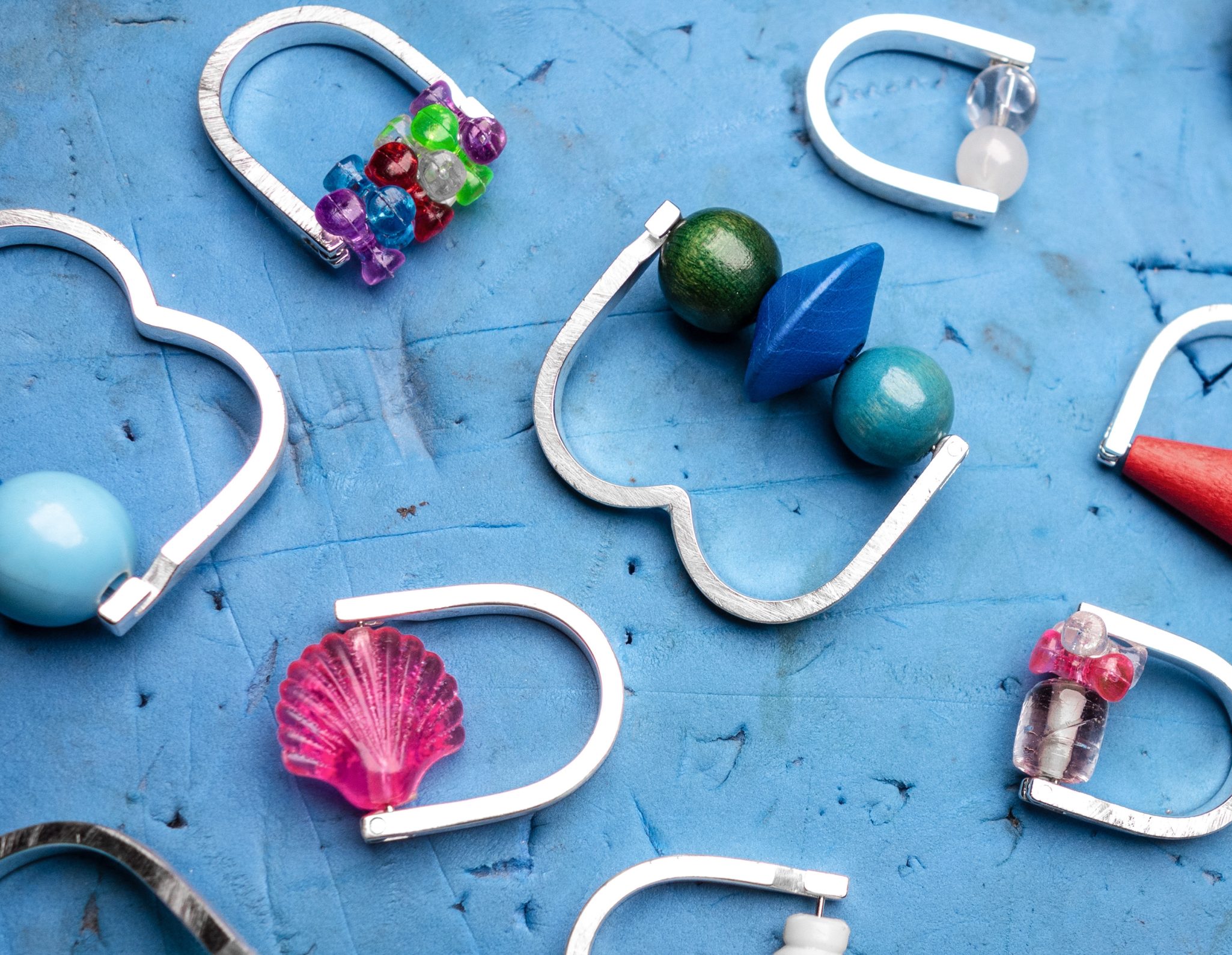
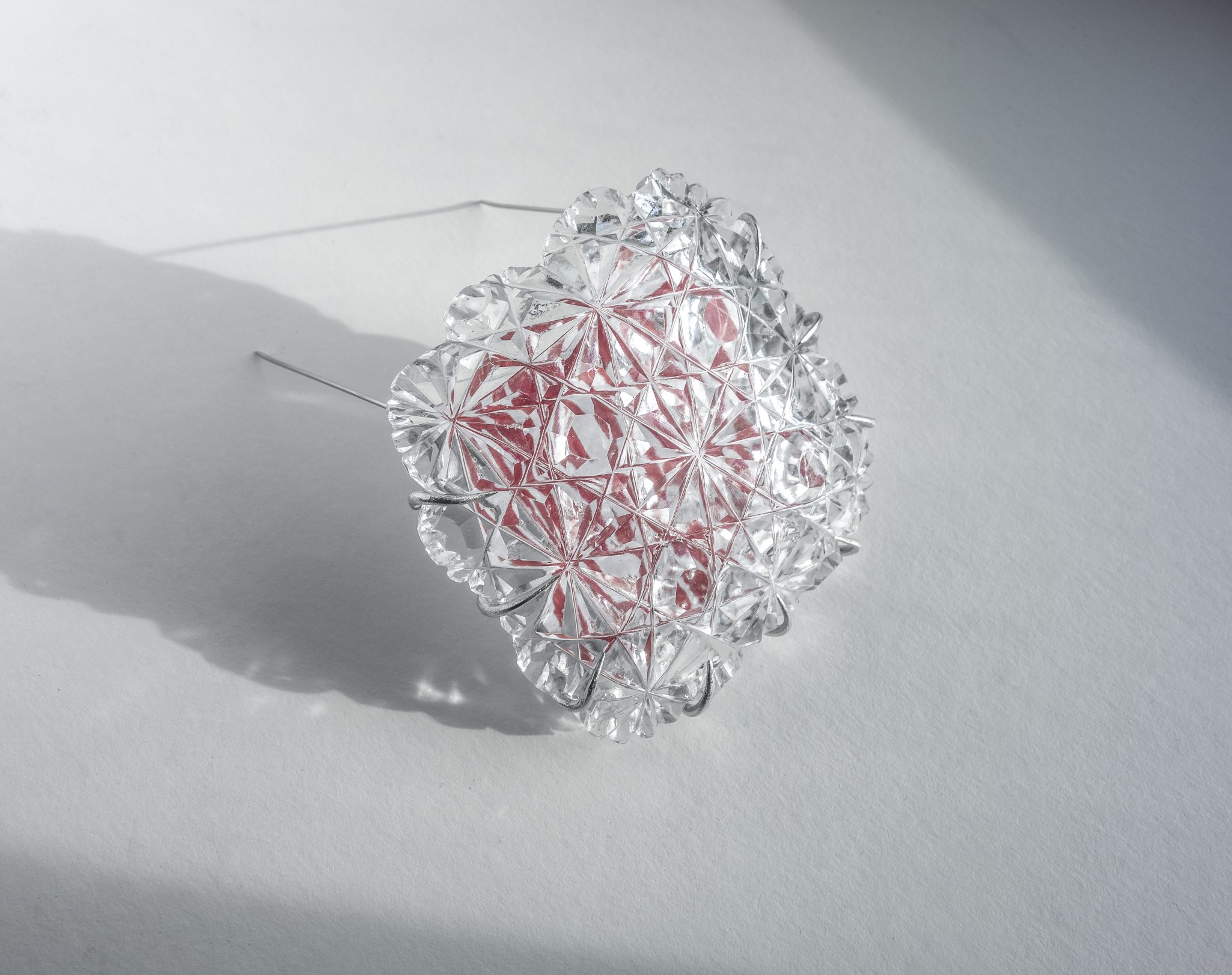
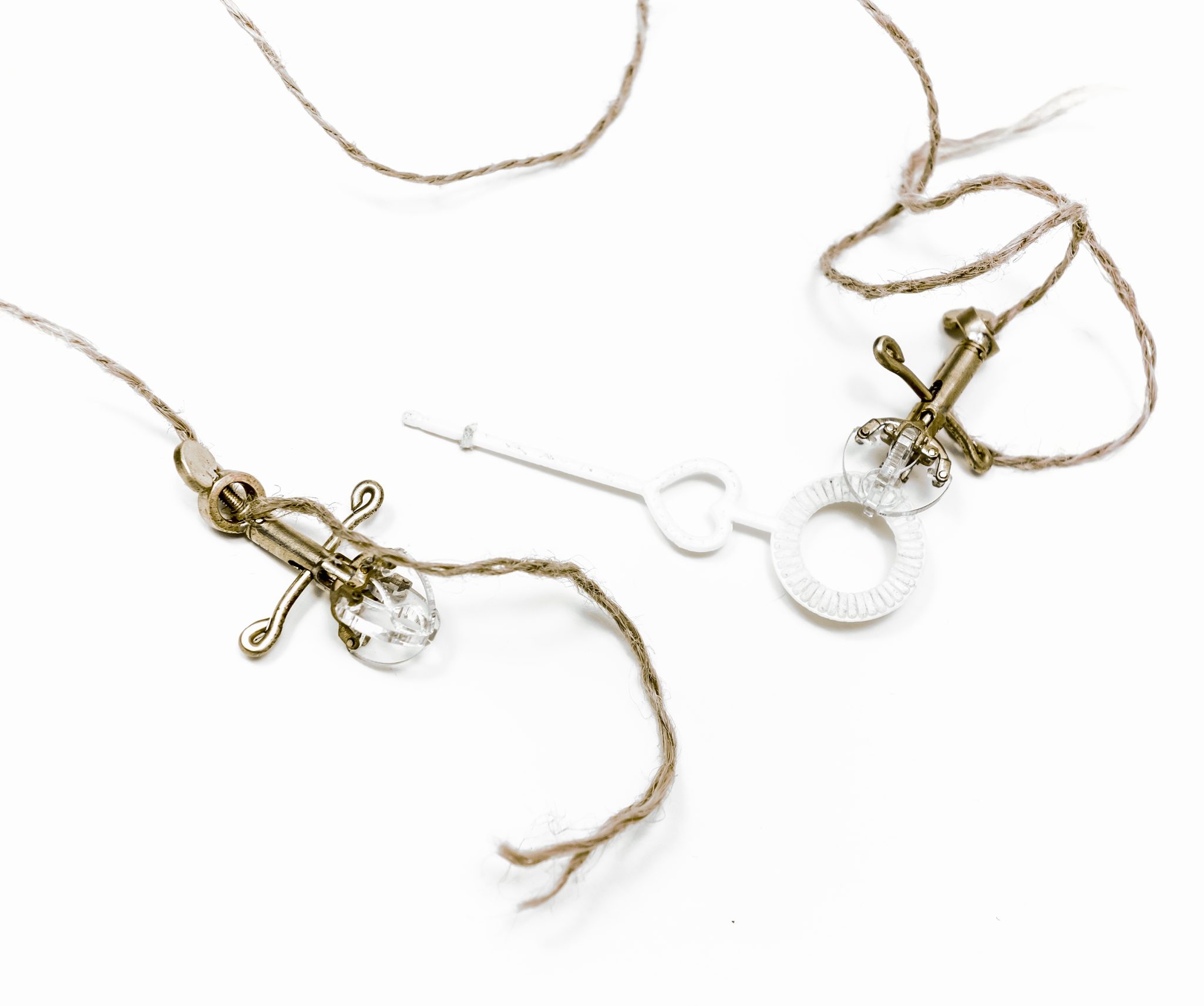
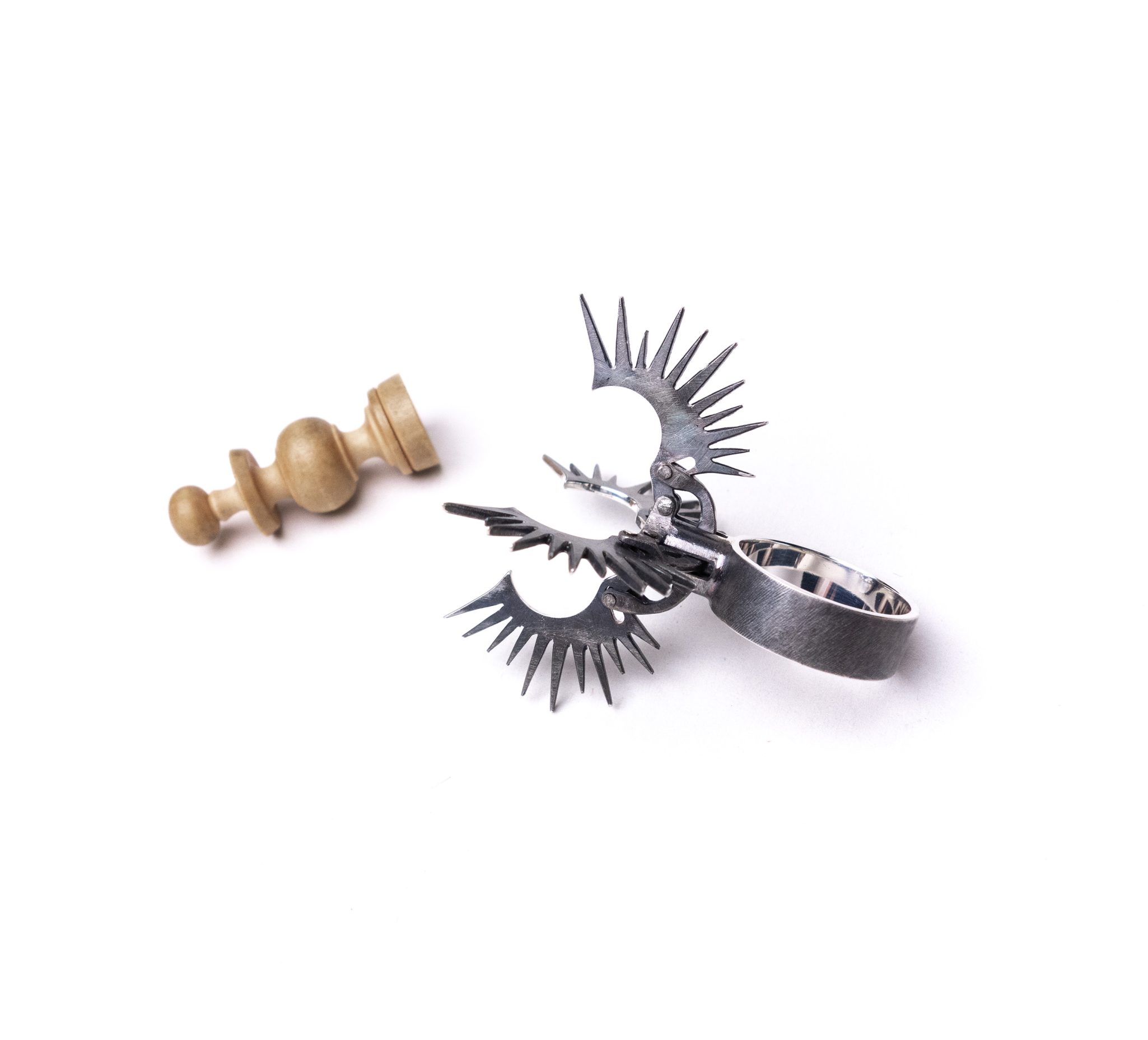
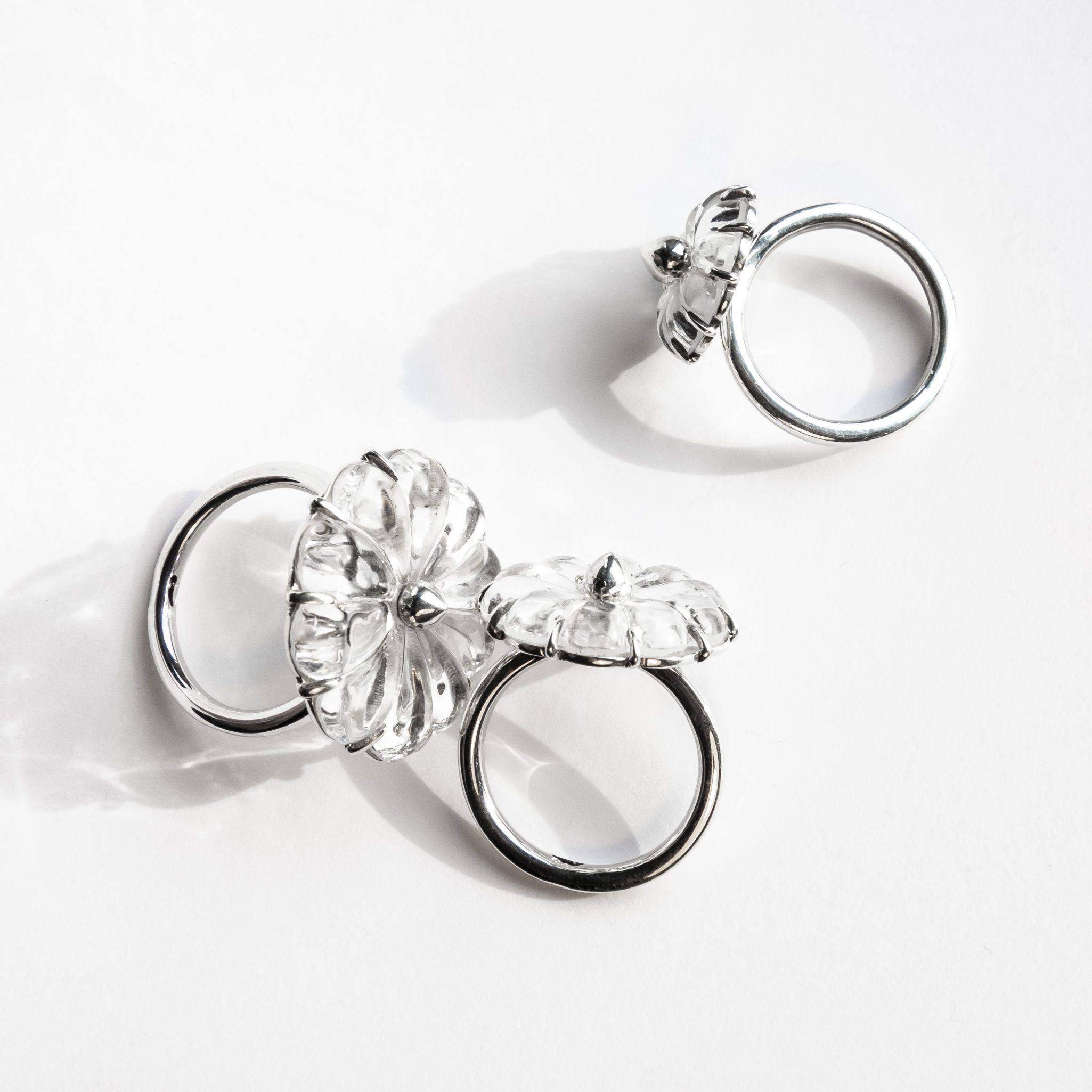
Although Ildze’s artistic journey began in graphic arts, she became increasingly drawn to three-dimensional objects, metal, and mechanical structures. She describes her transition into jewellery as a gradual process driven by an interest in materials and construction. “I have always been fascinated by metal, various mechanisms, and objects with interesting textures. Jewellery is not merely decorative for me – it is a way of exploring ideas and creating narratives.” This fascination with the inner workings of things remains one of the foundations of her artistic practice. Many of her works exist somewhere between jewellery, sculpture, and mechanical construction, where movement, balance, and the relationships between materials play a central role.
Studying in Antwerp allowed her to view her practice from an international perspective. While the beginning was challenging and adapting to life abroad was not always easy, the experience became a significant turning point in her professional development. “Studying abroad gave me the opportunity to encounter different approaches to art and develop a much broader view of the world.”
Materials occupy a central place in Ildze’s creative process. More often than not, it is the material itself that becomes the starting point for an idea. She believes that every material possesses its own energy and potential, guiding the direction of thought and experimentation.
To develop her ideas, she creates detailed sketches and technical drawings. This is particularly important when working with moving elements or complex mechanisms. Sketches function as a kind of laboratory, allowing her to test proportions, structures, and possible technical solutions long before the work is realised in material form.
Inspiration comes not only from art but also from everyday life. Flea markets, found objects, and the mechanics of various devices often become catalysts for new projects. Among the artists who have had a significant impact on her work, she particularly highlights the Norwegian contemporary jewellery artist Sigurd Bronger. When asked to describe her artistic language, Ildze avoids defining it through a recognisable style. Instead, she sees continuity in her way of thinking. “I don’t think I have one specific style. Rather, there is a recurring interest in combining materials, movement, and mechanical structures.”
The work she considers most significant in her career so far is her Master’s project in Antwerp. It was the first time she successfully integrated metalworking and mechanical systems in a way that fully reflected her artistic ambitions. The award the project received further confirmed the importance of the direction she had chosen.
However, the path has not been without setbacks. She recalls one of her undergraduate graphic arts projects that proved too ambitious for the available time and resources. The experience became an important lesson in project planning and realistic expectations. Speaking about materials, Ildze emphasises an intuitive approach. She is interested not only in a material’s visual qualities but also in how it behaves, what technical possibilities it offers, and what associations it evokes. Metal continues to occupy a special place in her work because of its durability, longevity, and capacity to support complex constructions.
Her working rhythm does not follow a strict schedule. Some projects develop over the course of several months, while others materialise within a matter of days. When she encounters a creative block, she usually chooses to step away from the work and return to it later. “Sometimes it helps to simply push through, but more often distance allows you to see the solution.”
Looking ahead, Ildze hopes to continue developing the Master’s project she began in Antwerp and present it in exhibitions both in Belgium and Latvia. She is increasingly interested in creating more complex mechanisms, exploring new metalworking techniques, and developing kinetic objects. Alongside her creative practice, she also reflects on the practical realities of professional life. Pricing artworks remains one of the most challenging aspects of being an artist, as every object embodies not only materials and labour but also a deeply personal investment. “Sometimes a work becomes like a friend that is difficult to part with.”
This emotional connection to her creations characterises Ildze’s approach to art as a whole. Her works are not simply jewellery or mechanisms; they are the result of an ongoing dialogue between an idea, a material, and the person who ultimately encounters the piece. Perhaps the most accurate description of her creative process is her own observation: “When I become absorbed in an idea, time almost ceases to exist.”